100 Nights of Hero is the modern feminist fairy tale Queer, pop and hypnotic (with an elegant Charli xcx)
G-Club
September 7th, 2025
September 7th, 2025
Stories can save our lives. And who tells us this, if not a story itself? 100 Nights of Hero is the closing film of the Critics’ Week section at the 82nd Venice Film Festival. Based on the graphic novel by Isabel Greenberg published in 2016, the film, written and directed by Julia Jackman, is a reinterpretation of the myth of Sharazad in an overtly feminist key. The original Arabic fable also revolved around the intelligence of its protagonist, enslaved for a thousand and one nights. The eldest daughter of the Grand Vizier, who, in order to put an end to the bloodshed caused by King Shahriyār of Persia, sacrificed herself to try to stop his plan to sleep each night with a different woman and kill her the following morning. If Sharazad’s endlessly unfolding story allowed her to survive, with the king sparing her life each night to hear how it continued, in 100 Nights of Hero, Greenberg and then Jackman translate the character’s plan into a mannerist and fantasy setting. The intertwining of a collective female memory resurfaces to preserve the lives of daughters and allies, oppressed by the arrogant and sinister vices of patriarchal culture and society, both in the hypothetical era of the work and in dialogue with our own reality.
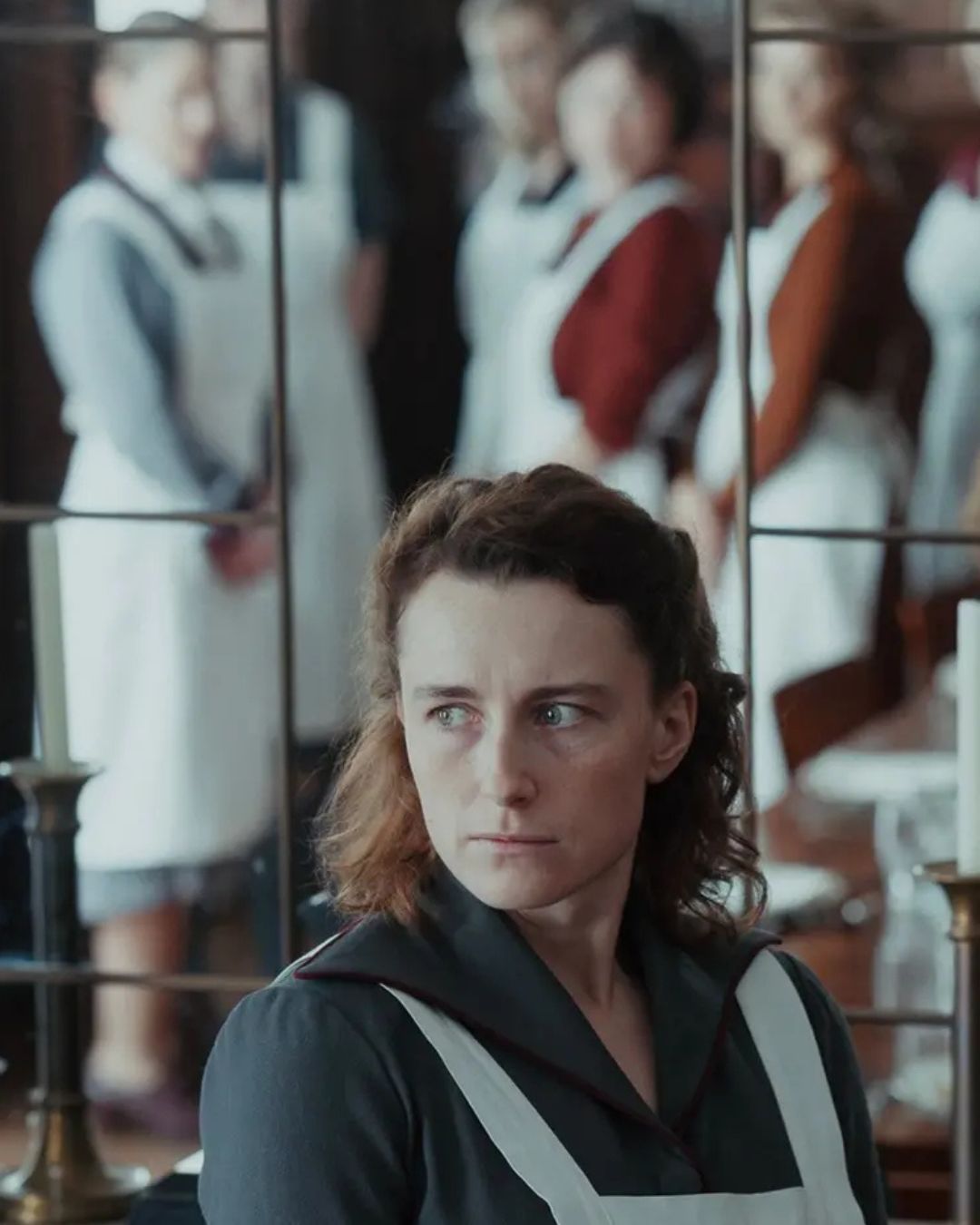
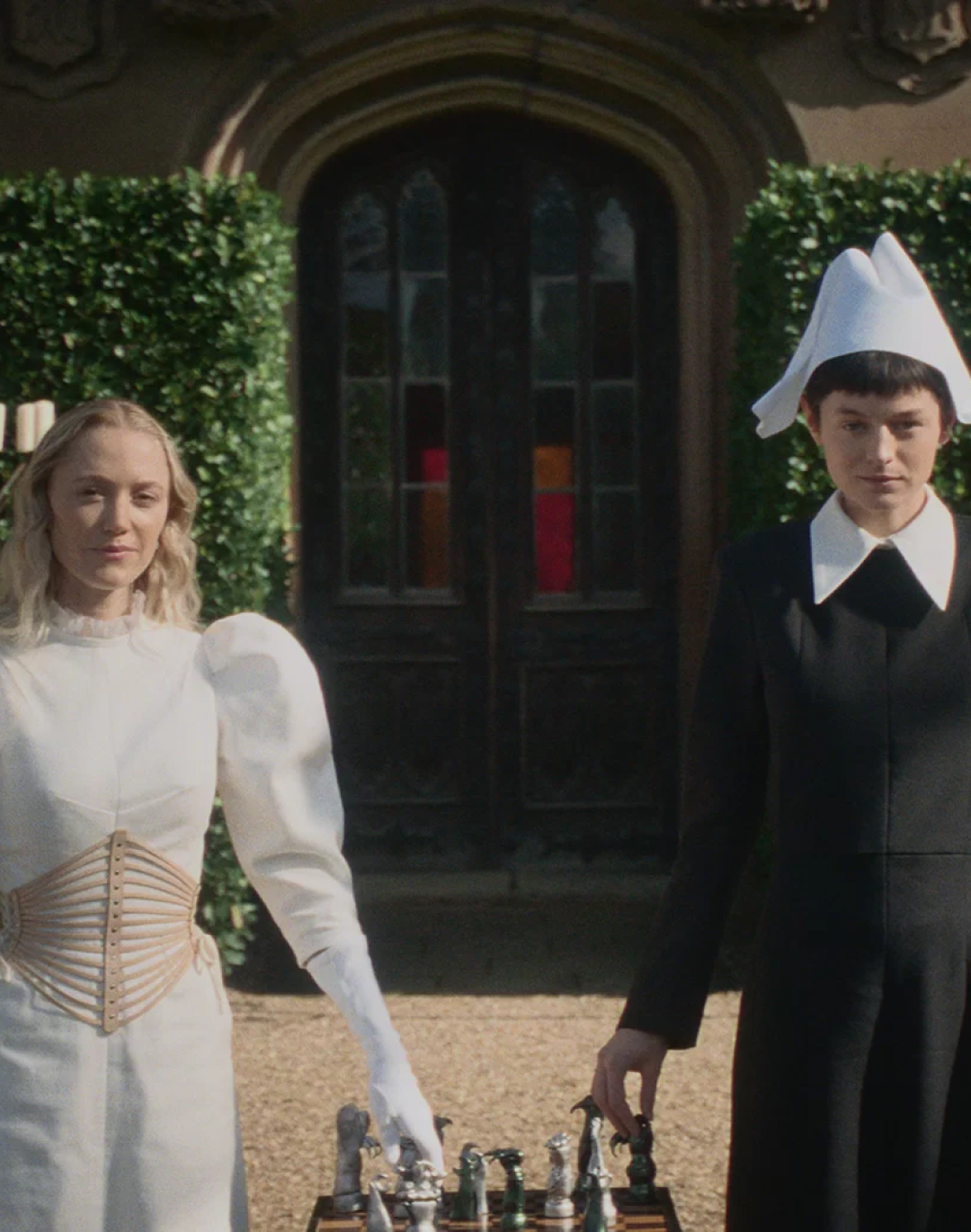
With a pop cast that mirrors the film’s stylistic and narrative flair, alternating on screen are Emma Corrin and Maika Monroe, Nicholas Galitzine and Charli XCX, with cameo appearances by Richard E. Grant and Felicity Jones. The protagonist of 100 Nights of Hero is Cherry (Monroe), the perfect wife, unable to conceive an heir due to her husband’s failure to share the marital bed. The religion governing the kingdom’s dictates compels the young woman to procreate in honor of God Birdman (Grant), a task which, if unfulfilled within the next one hundred and one nights, will result in her death. This ultimatum coincides with the arrival at the castle of the handsome Manfred (Galitzine), who wagers with Cherry’s husband that he can taint her irreproachable virtue. Cherry’s modest essence, purity, and loyalty are put to the test while, in an attempt to cool Manfred’s advances, she has her maid Hero (Corrin) tell her a story filled with endless cliffhangers, each serving as an excuse to delay and interrupt his seduction.
10 minutes standing ovation for film of the year #100nightsofhero julia jackman you did the MAGIC as long as Nicholas, Emma, Maika..oh my god what a BRILLIANT MOVIE pic.twitter.com/FsVyer6vNT
— ale (@sxftbrina) September 5, 2025
A circular structure that finds a way to move from legend into reality, creating a constant in-and-out that highlights the importance of passing down knowledge, wisdom, and above all, memory, in order to resist abuse and prejudice that have historically afflicted women. A film that, with its alluring and mesmerizing packaging, breaks the chains of single-voiced storytelling and redeems female figures from their role as witches, crones, and enchantresses, accused simply for being steadfast, wise, and literate. It is an invitation to embrace a braver life, set in a powerful visual frame that imposes its own imagery, recalling the graphic novel spirit from which it stems and adapting it for the big screen.
@100nightsofhero happy remix day from the set of 100 Nights @Charli XCX #100nightsofhero #emmacorrin #nicholasgalitzine #maikamonroe Apple - Charli xcx
While Cherry and Hero are forced to obey numerous laws, the writing of 100 Nights of Hero soars with a disjointed yet harmonious narrative arrangement, free even within a kingdom of rules and decrees. The performances are infused with Julia Jackman’s chimeric world, marked by bizarre and whimsical irony that guides the actors’ portrayals—with Charli XCX not only continuing her acting journey, but showing a sophisticated and graceful presence in this invented universe resembling a modernized Middle Age. Queer and auteur, profound yet unafraid of a little frivolity, 100 Nights of Hero is the remembrance of all silenced female spirits who have finally found a megaphone. A chorus of wives, mothers, maids, princesses, and goddesses that, once united, cannot be stopped.