






































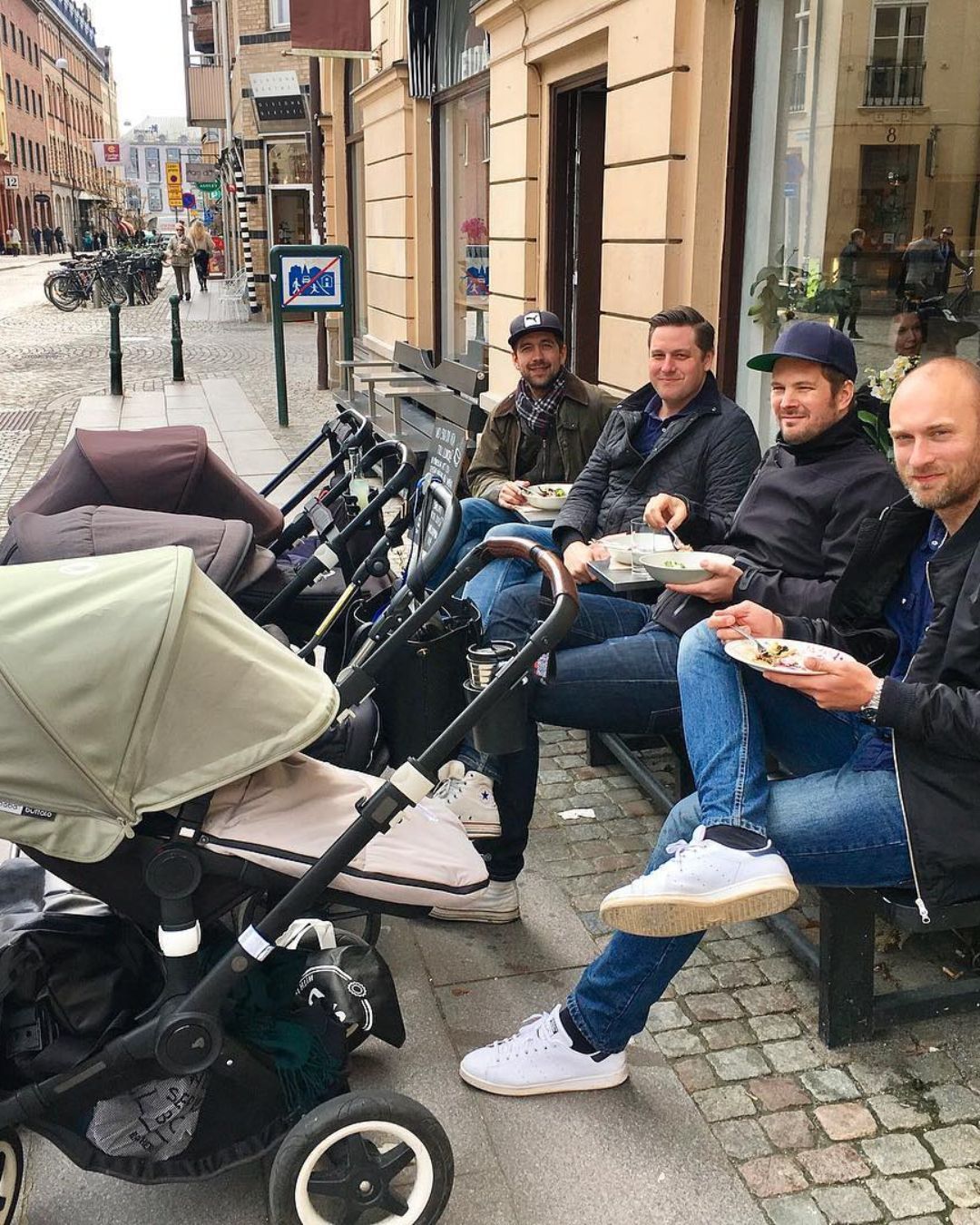
The "Latte Dads" and the new Nordic masculinity Parenthood in Sweden
Walking through the streets of Stockholm, it’s impossible not to notice them: young, well-groomed men, with a stroller in front, a baby carrier on their back and a cappuccino in hand. In Sweden they even have a specific name: "latte dads." Do I like this definition? Not particularly: I would simply prefer "dads." Yet, it seems to have become a real trend. This is not an image from an H&M catalog (which, yes, is Swedish), but the symbol of a profound social transformation. These are fathers who don’t see childcare as an exception or a sacrifice, but rather as an integral part of their identity. A new masculinity, built on presence, responsibility, and pride. Behind this seemingly ordinary scene lies a revolution that, in recent decades, has reshaped parenting in Northern Europe. A revolution made possible by forward-thinking public policies, an inclusive family welfare system, and a collective reflection on what it means to be a man today. Returning from yet another trip to Sweden, I can only face our own reality check: the often unpleasant one we still experience in Italy.
The secret of latte dads? Scandinavian welfare
At the heart of this transformation lie social policies. In Sweden, every couple is entitled to 480 days of paid parental leave per child, to be used until the child turns 12. The state covers up to 80% of the salary and encourages both parents to share childcare equally. A portion of these days is also exclusively reserved for fathers: if they don’t use them, the family loses the benefit. The result has been groundbreaking. Since 1974, the year parental leave was introduced, male participation has grown exponentially: fathers initially used just 1% of available days; today they take about 30%. In 1995, with the introduction of 30 days reserved exclusively for men, the participation rate jumped to 75%. Norway and Finland followed the same path. In Finland, since 2022, parental leave is perfectly equal: both parents are entitled to the same number of non-transferable days. Policies that not only lightened the burden on mothers but also redefined fatherhood as an essential part of family life.
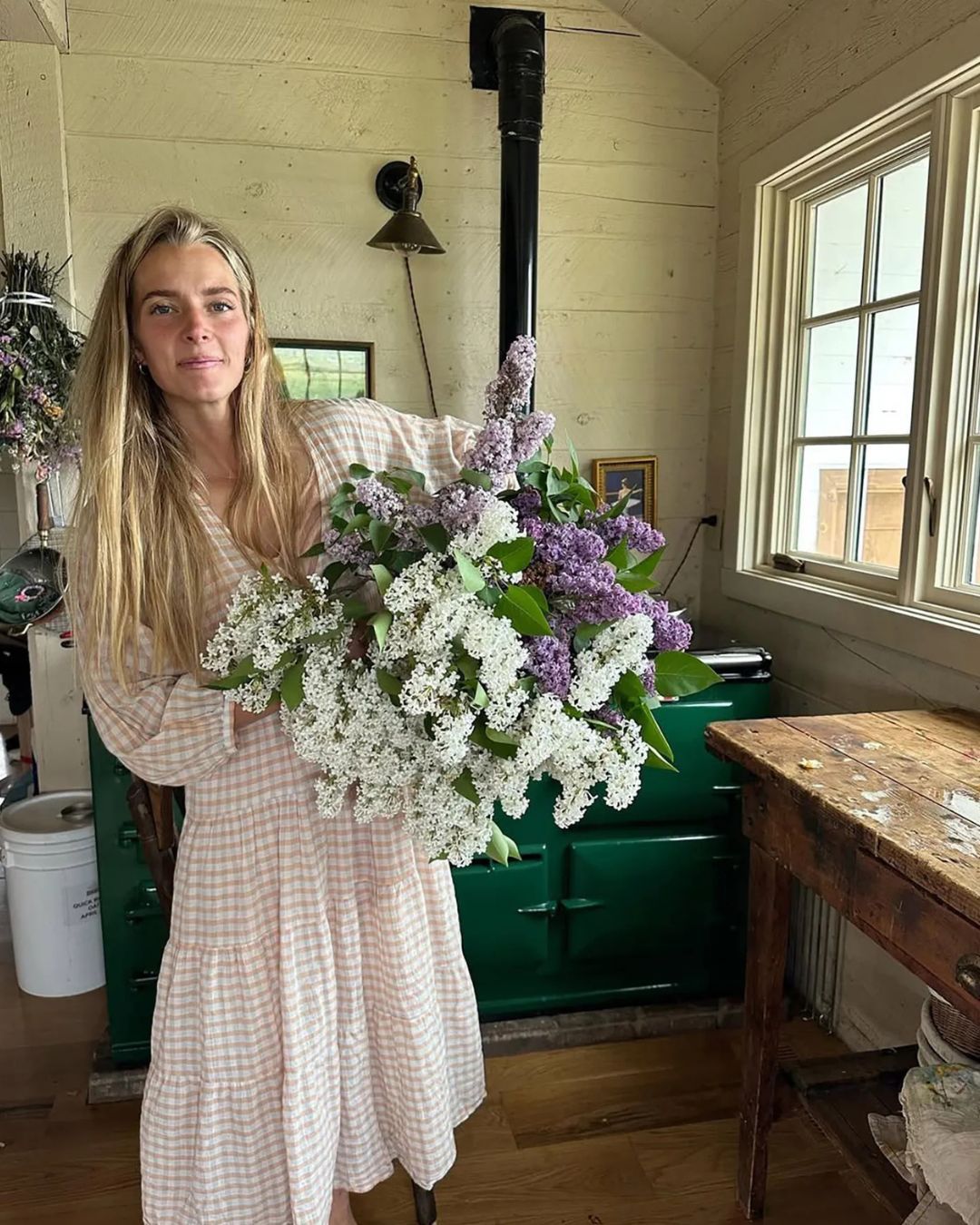
@madelineraeaway My heart melted when i looked out the cafe window while ordering us lunch to-go and saw my husband waiting outside singing to our daughter
Beyond the image: social and health effects
Paternal presence is not just about image or fashion. Several studies have shown that the introduction of mandatory leave for fathers has had concrete social effects. A study by Stockholm University revealed that, in the two years following the birth of a child, hospitalizations for alcohol abuse among fathers decreased by 34%. Staying at home doesn’t just mean changing diapers, but also adopting healthier lifestyles, reducing stress, improving mental health, and building stronger relationships with children. The phenomenon of latte dads is also reflected in public life: playgrounds and cafés in Nordic cities are populated not only by young fathers but also by grandfathers taking care of children. It is a continuum of male caregiving relationships that goes beyond the traditional idea of man as a breadwinner, the sole provider of income.
A new and attractive masculinity
The Nordic model has sparked admiration well beyond Scandinavia. In the United States, where many new mothers have access to just two weeks of leave and fathers almost none, the figure of the latte dad has become almost a pop icon. A viral TikTok video triggered mixed reactions: "I didn’t know whether to laugh or cry. I was jealous," admitted Erin Erenberg, co-founder of the Chamber of Mothers. In the comments, the phenomenon is described as "the first truly positive and attractive masculinity," though some rightly point out that "we are celebrating men just for taking care of their own children." Yet this very ambivalence shows how deeply the issue resonates. The latte dad is not sexy just because he’s tall, blond, and holding a cappuccino (a Swedish cliché): he is because he represents a different model of masculinity, based on care and sharing.
@ahsenfilm test-driving to parenthood #lattedad Push It - Salt-N-Pepa
"New Masculinities in the Nordics": a project for the future
This is not a spontaneous or temporary change. In the Nordic countries, masculinity is the subject of reflection and study. The New Masculinities in the Nordics project, born out of collaboration between institutions, academics, and associations, explores how the concept of manhood is evolving. At its core lies the awareness that the traditional model, based on strength, dominance, and emotional silence, is no longer adequate to meet contemporary challenges. New generations are building a different imaginary, where vulnerability, care, and sharing are not signs of weakness but of maturity and responsibility. "Many men want a different way to live their masculinity, and our task is to give them tools and spaces to reflect," say the project’s promoters.
Why it matters to Europe (and Italy)
If in Scandinavia seeing men pushing strollers is the norm, in the rest of Europe there is still a long way to go. In Italy, data show a significant disparity in the time mothers and fathers devote to childcare. Men who want to be more involved often encounter cultural and structural barriers: limited leave, inflexible workplaces, social stigma. Looking to the Nordic model means imagining a future where fatherhood, when chosen, is not an accessory figure but a fundamental one. A future where masculinity is no longer measured in power and distance but in responsibility, care, and the ability to build bonds.
@livilavita Risposta a @03mely02 Congedo parentale 2025: Novità! Ora i primi 3 mesi sono retribuiti all’80%! Scopri tutti i dettagli nel video. Condividi per far conoscere questa novità! #CongedoParentale #GenitoriLavoratori #ParentalLeave #INPS #LavoroEFamiglia #WorkLifeBalance #MaternitàFacoltativa #TikTokItalia #ParentingTips #mammeitaliane #pregnancy #newmom #mammeitaly #neomamma #gravidanza #MammeItaliane #FutureMamme #momtipsandtricks #momtips #PregnancyJourney #ExpectingMoms #momsoftiktok #momlife #sahm #sahmlife #mammabis #livilavita #livilavida Vibes do Studio Ghibli - Dandara Music
The challenge ahead
What in Sweden is now normal—the father pushing a stroller while sipping a cappuccino—still appears in many countries as an unusual, even revolutionary image. Yet it is precisely in that image that the essence of a cultural transformation is condensed, one that concerns not only the family but society as a whole. The challenge will be to export this model and adapt it to different contexts, overcoming cultural and political resistance. One thing, however, is clear: latte dads are not just an aesthetic or folkloric phenomenon. They are the portrait of a new masculinity, one centered on care, sharing, and equality. And perhaps that is why, as reported by the New York Post, it feels so irresistibly attractive.
