




















What’s the deal with berets? You either love them or hate them. There's no middle ground
Years go by and few accessories remain as controversial as berets. Some love its effortless elegance and irresistible je ne sais quoi, while others dismiss it as a tiresome cliché. I’m sure you pictured a Parisian with a cigarette in one hand, a striped shirt à la l'Enfant terrible de la mode, and a black beret. Bonus points if they have a baguette.
The true origins of the beret
Though often hailed as the ultimate symbol of Parisian chic, the infamous soft, round hat actually originated far from Paris. Similar styles have been worn since the Bronze Age across Northern Europe, as well as in ancient Crete and Italy, according to Valerie Steele's Encyclopedia of clothing and fashion. The beret as we know it today, however, emerged from the Basque region of France and Spain as a way for shepherds to protect themselves from mountain winds. By 1840, the beret was first industrialized by Maison Laulhère, quickly etching its place into French culture. And by the 1920s, over twenty other factories produced berets for international markets.
The beret as a cultural and political symbol
Over time, this hat became a symbol of many things: part artsy, part rebellion, as seen with revolutionaries like Che Guevara and the Black Panthers, and part military. In the realm of the army, the beret was initially donned by French mountain troops and later embraced by soldiers worldwide, ranging from United Nations troops in light blue berets to the green ones of the U.S. Special Forces.
From rebellion to Parisian fashion: the beret becomes a fashion icon.
And in the 1960s, a new status arrived at the infamous accessory: fashion staple, as seen in actress Faye Dunaway, who played the legendary Bonnie in Bonnie and Clyde, and French icons Catherine Deneuve, Brigitte Bardot, and Jane Birkin. The ‘70s and ‘80s kept up the pace, with stars like Bianca Jagger and Joni Mitchell adopting the headwear and elevating it from an elegant French accessory to an edgy one. By the '90s, the beret had fully ascended to iconic status. It was worn by style legends like Janet Jackson, Christy Turlington, and Tyra Banks, and it appeared on runways like Chanel, Alaïa, and Fendi. It was during the sleek decade, too, that the accessory was immortalized on-screen by Alicia Silverstone’s Cher Horowitz in Clueless and Julia Roberts’s character in Notting Hill. Its fascination only grew during the 2000s thanks to Britney Spears, Cher, Beyoncé, and Paris Hilton. Now, the accessory has not only been worn by multiple style powerhouses, such as Rihanna, and Bella Hadid, but also by many iconic characters, such as Gossip Girl’s Blair Waldorf and The Devil Wears Prada’s Andy Sachs.
From chic symbol to tourist cliché
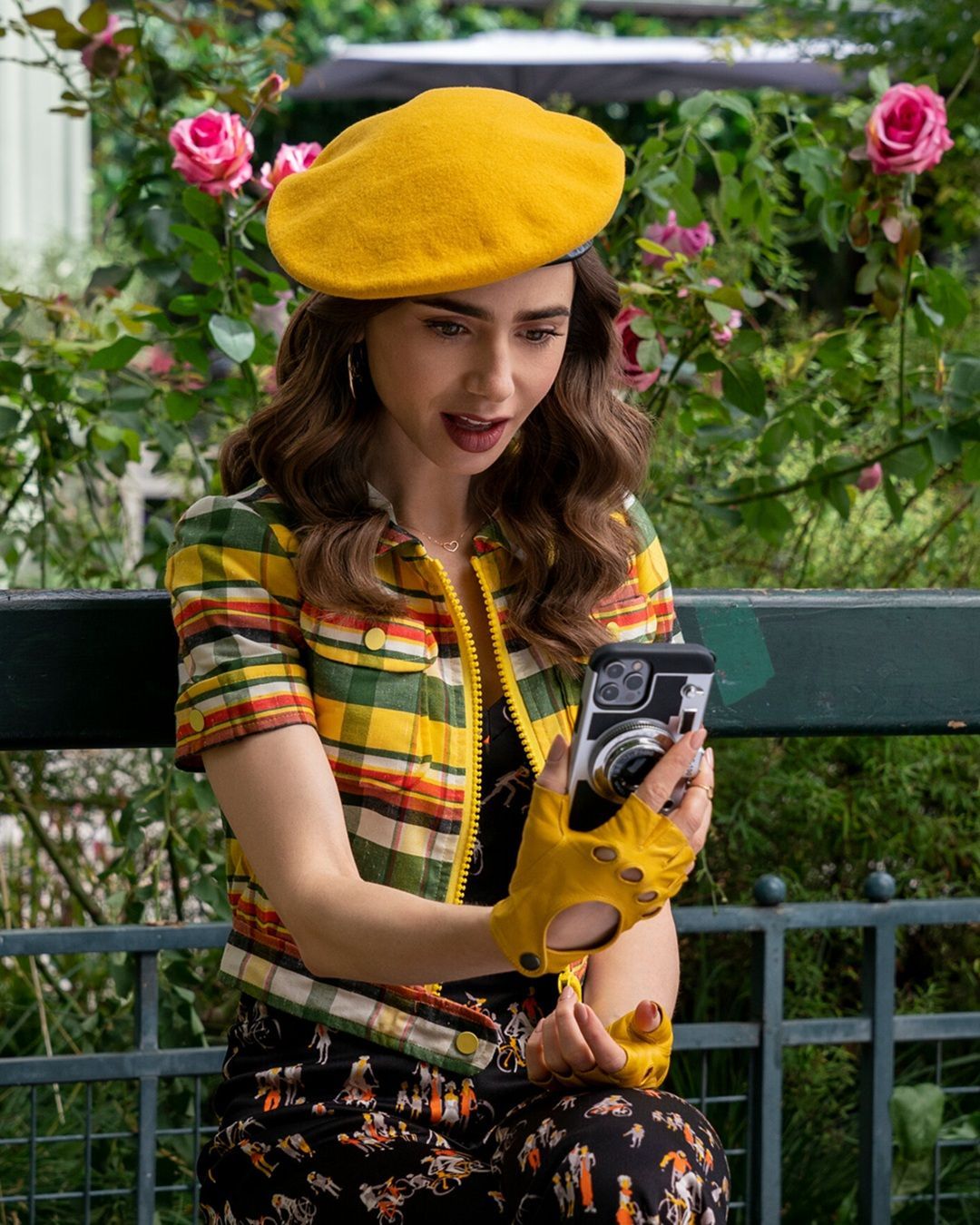
Considered by many to give any outfit a certain edge, perhaps that’s why it feels so irresistibly cool, especially in times when fashion feels very dull and stagnant, the beret has definitely etched itself in the culture zeitgeist. But over the years, the accessory has become the pinnacle of the tacky tourist in Paris. Think of Emily in Paris’ ever-enthusiastic American marketing genius, proudly donning a red beret at everywhere she could after landing in the City of Love. Or Sex and the City’s sexpert Carrie Bradshaw, channeling her idea of the effortlessly quirky, laid-back girlfriend, showing up to Mr. Big’s with McDonald’s French fries in hand and a black “French hat.’’ Later, when the infamous columnist moves to Paris with her artsy beau, she takes to the streets in a furry white version, embodying every French cliché.
An accessory full of contradictions
By now, the beret has fed into stereotypes, making them exhausting for many locals and earning the hat a complex and often controversial reputation. But then, why do our feelings run so strong around a hat? According to fashion design consultant Amanda Jane Valentine, since the beret is so heavily tied to subcultures movements through history, such as military attire, Beatnik archetype or even caricatures of the French, when the hat is ‘‘worn in a casual way it lands as ignorant or ill informed, even costume-y.’’ The inability to define exactly what the hat embodies is what stirs up such complex feelings about it, because it has too many identities. When someone puts it on, we're never really sure what they're trying to convey. Rebellion? Artsy? French stereotypes? Authority? It could be anything. And the uncertainty drives us crazy.
@thewowanthology Iconic celebrities and “The beret” Beret also called french beret hat or basque. Berets were traditionally worn by military men in France and Spain in the 19th century. However, they eventually evolved from the fringes of culture and entered the mainstream. Movie stars the likes of Greta Garbo, Brigitte Bardot, Marlene Dietrich, Lauren Bacall and Faye Dunaway. Each actress adopted the beret to her own signature style, both on and off-screen. Once the beret hit Hollywood, it formed its own star status. Take inspiration from the most iconic and incredible actresses and models of all time: learn how to wear a beret with style! #frenchberet #actresses #fayedunaway #beret #iconicactresses #fashionicon #laurenbacall #juliaroberts #natalieportman #fashioninmovies #basque #fashionhistory La femme à la peau bleue - Chez toi - Vendredi sur Mer
The future of the beret
‘‘I encourage research behind the history of a garment to give a better understanding of its context and whether or not you align with it,’’ says the fashion design consultant. Still, Valentine worries that younger generations too often hold themselves back, hesitant to wear anything unconventional for fear of being labeled “cringe” or committing a fashion faux pas. “For god’s sake, don’t let someone’s personal preference stop you from living your best life on the Riviera (or the local Hudson River),” the fashion design consultant concludes. Ultimately, love it, loathe it, or something in between, the beret will always stick around, because it has the ability to represent so many things and appeal to so many people. Perhaps that’s the beauty of it: an accessory that shapeshifts with every person.