



















Will whimsical fashion beat normcore?
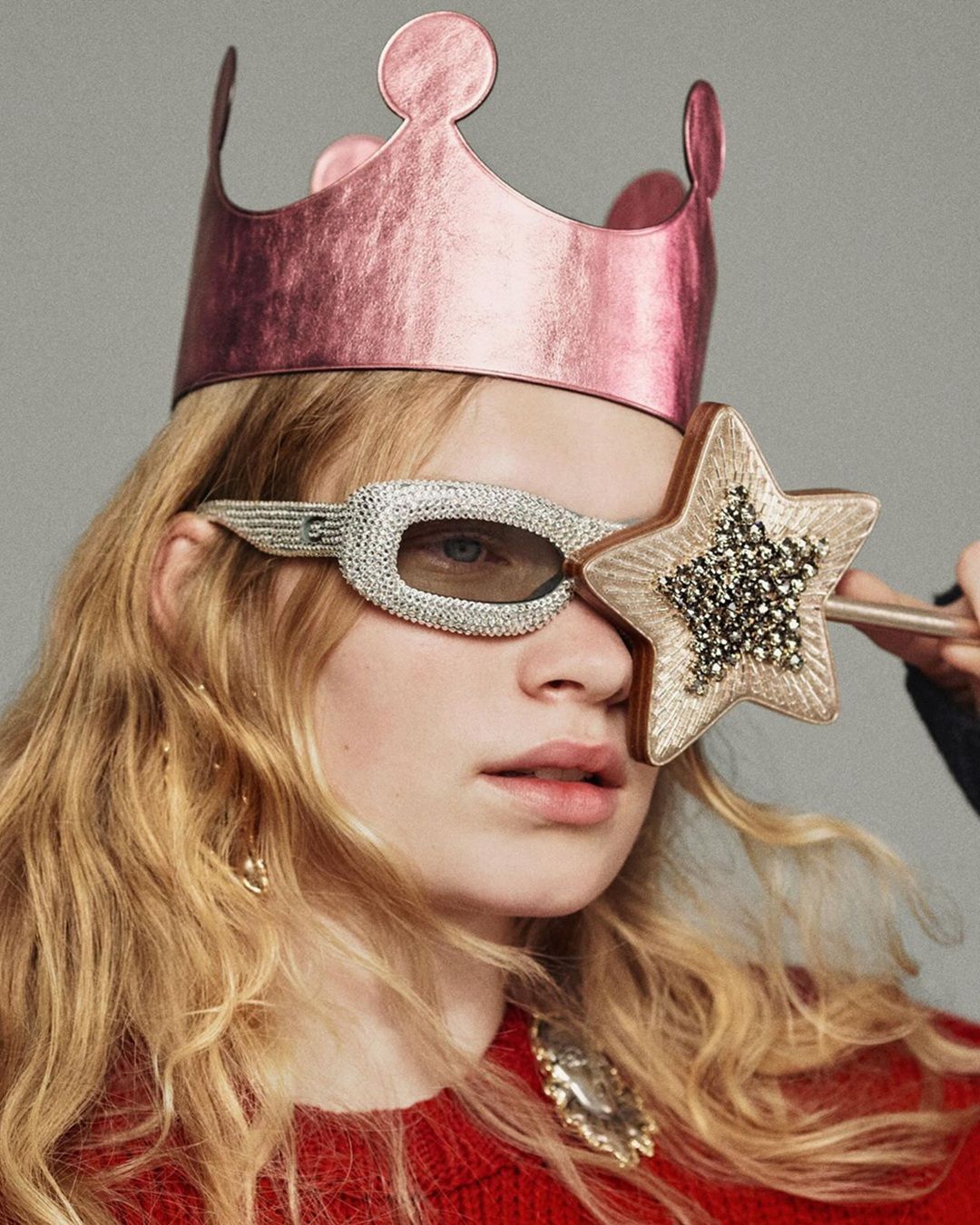
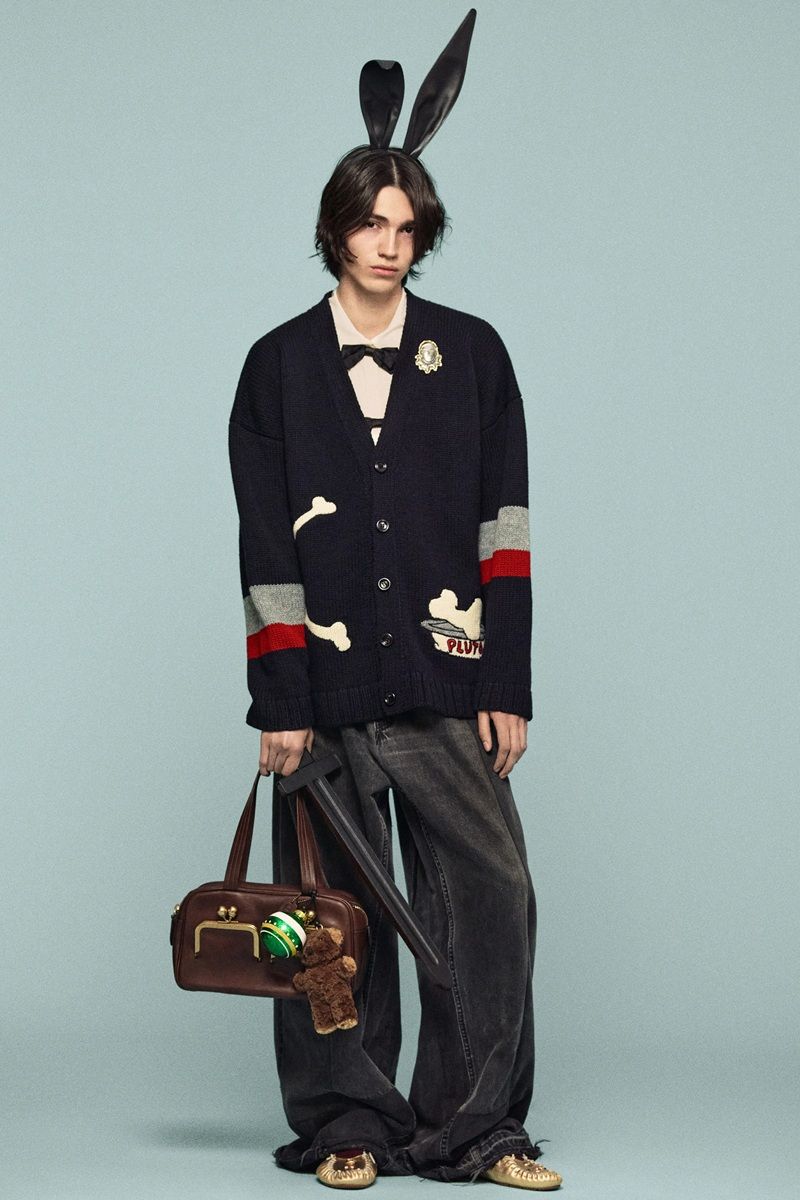
The bunny ears à la Donnie Darko seen at Coach or the retro-inspired astronaut suit proposed by Acne Studios don’t belong to a Stanley Kubrick movie set nor to a Richard Kelly film, but rather to an aesthetic language that is gaining more and more space on the runways: whimsical fashion. It’s an eccentric style that reworks ready-to-wear codes with irony, contaminating them with inspirations from the cartoon world, theatrical costumes, and magical or fairy-tale imagery. But what are the socio-cultural dynamics that explain its return in a contemporary key?
Maximalism and menswear
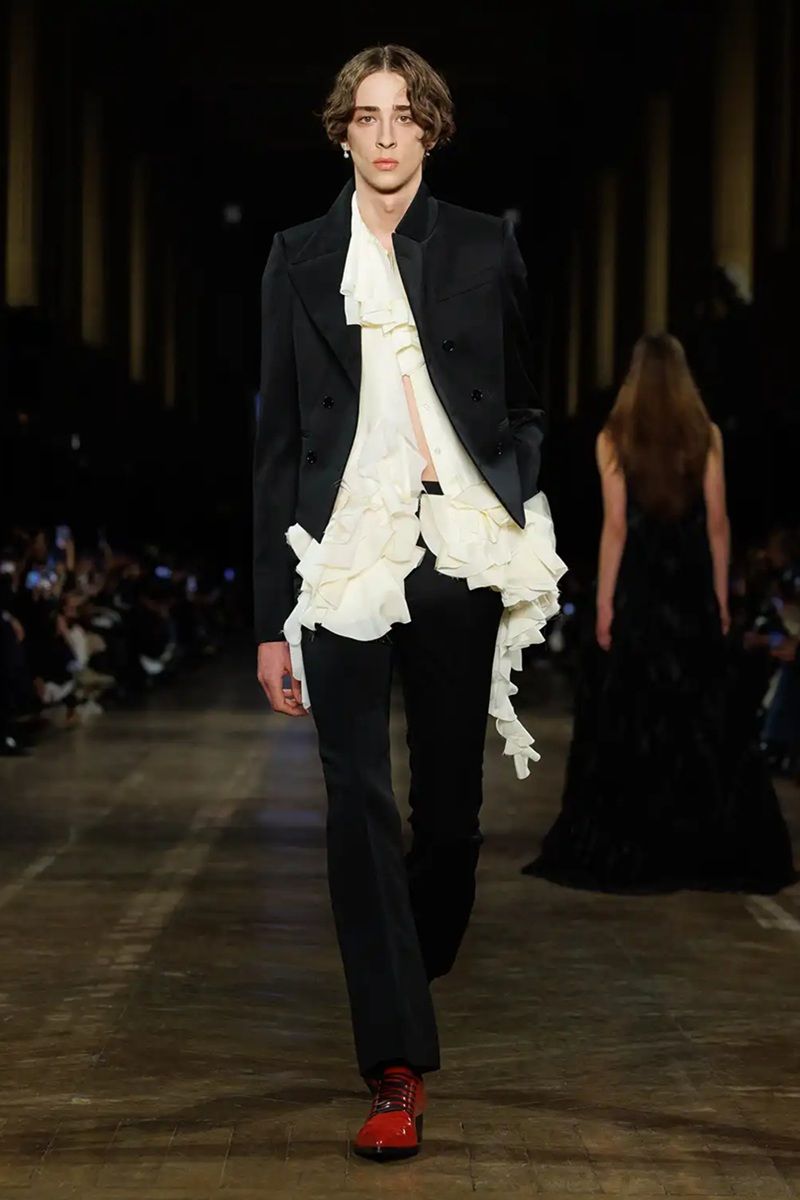
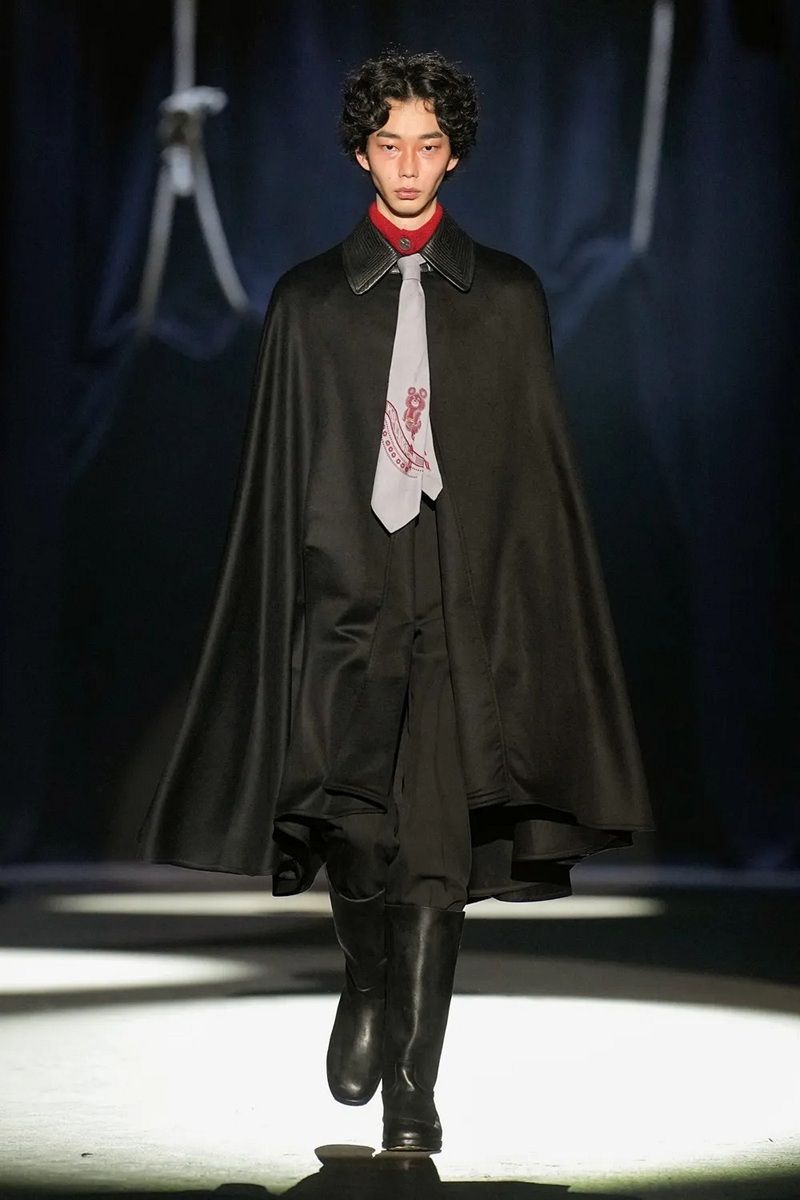
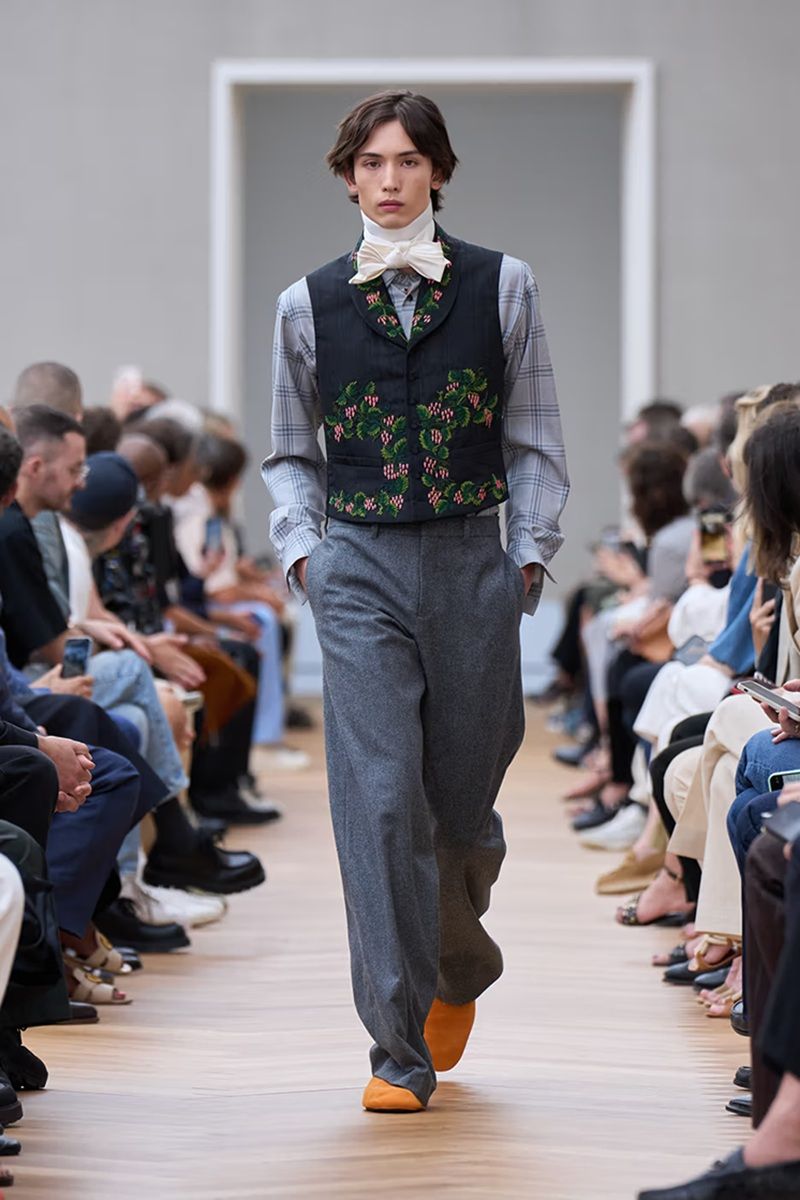
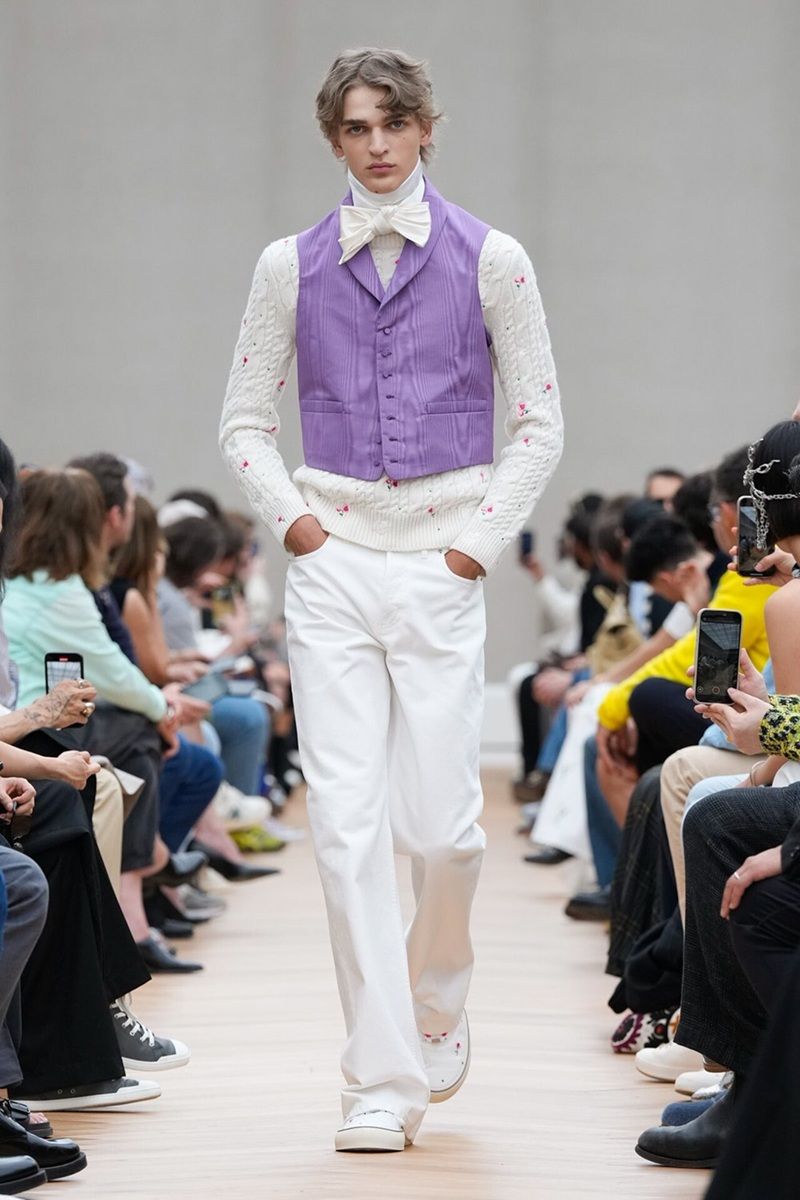
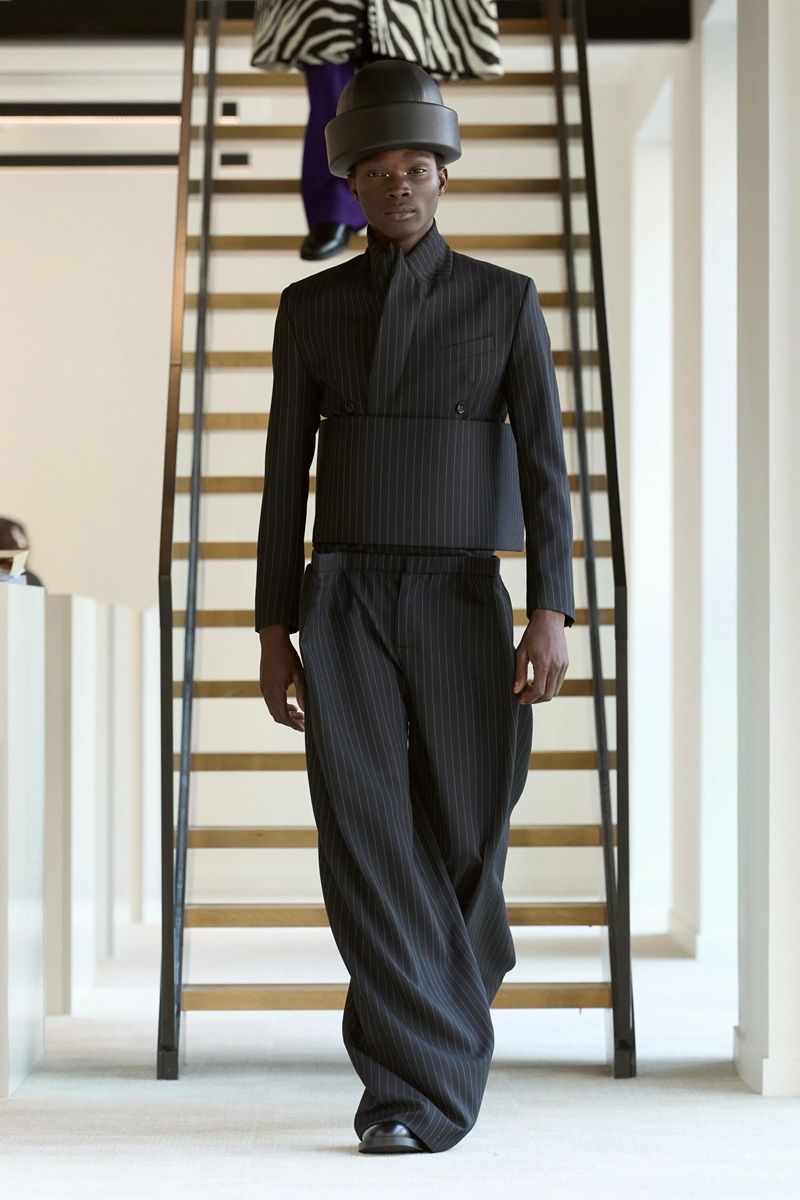
The rise of whimsical fashion is linked to a new, already announced phase of maximalism and ornamentation within the fashion system, as well as to a broader trend that reinterprets costume history and catapults it into everyday wear. Think of medievalcore, the comeback of Victorian style with ruffles and ruff collars, or the dandy aesthetic that has long influenced menswear. In fact, it is precisely in men’s fashion that whimsical fashion is finding growing space. Jonathan Anderson’s debut at Dior embodied this trend perfectly: in his first men’s collection for the French maison, references to regal style evoked both Louis XIV’s court and the fairy tales of the Brothers Grimm. At Enfants Richés Déprimés and McQueen, however, the atmosphere is decidedly more gothic and dark: we find trailing Dracula-style jackets, drama coats, and lace high collars reminiscent of a contemporary take on the 19th-century costumes of Nosferatu. Whimsical fashion also expresses itself through silhouettes that transcend human boundaries. Think of Duran Lantink’s fashion, which challenges natural body proportions by using silicone prosthetics, turning models into hybrid, alien-like creatures. In Marc Jacobs’ latest collection, the female body was transformed into something bordering on fantasy: exaggerated volumes, surrealist-inspired shoes, and distorted proportions created figures resembling eerie dolls, not far from the unsettling aesthetic of Lady Gaga’s recent Dead Dance video.
Playful and childlike fashion
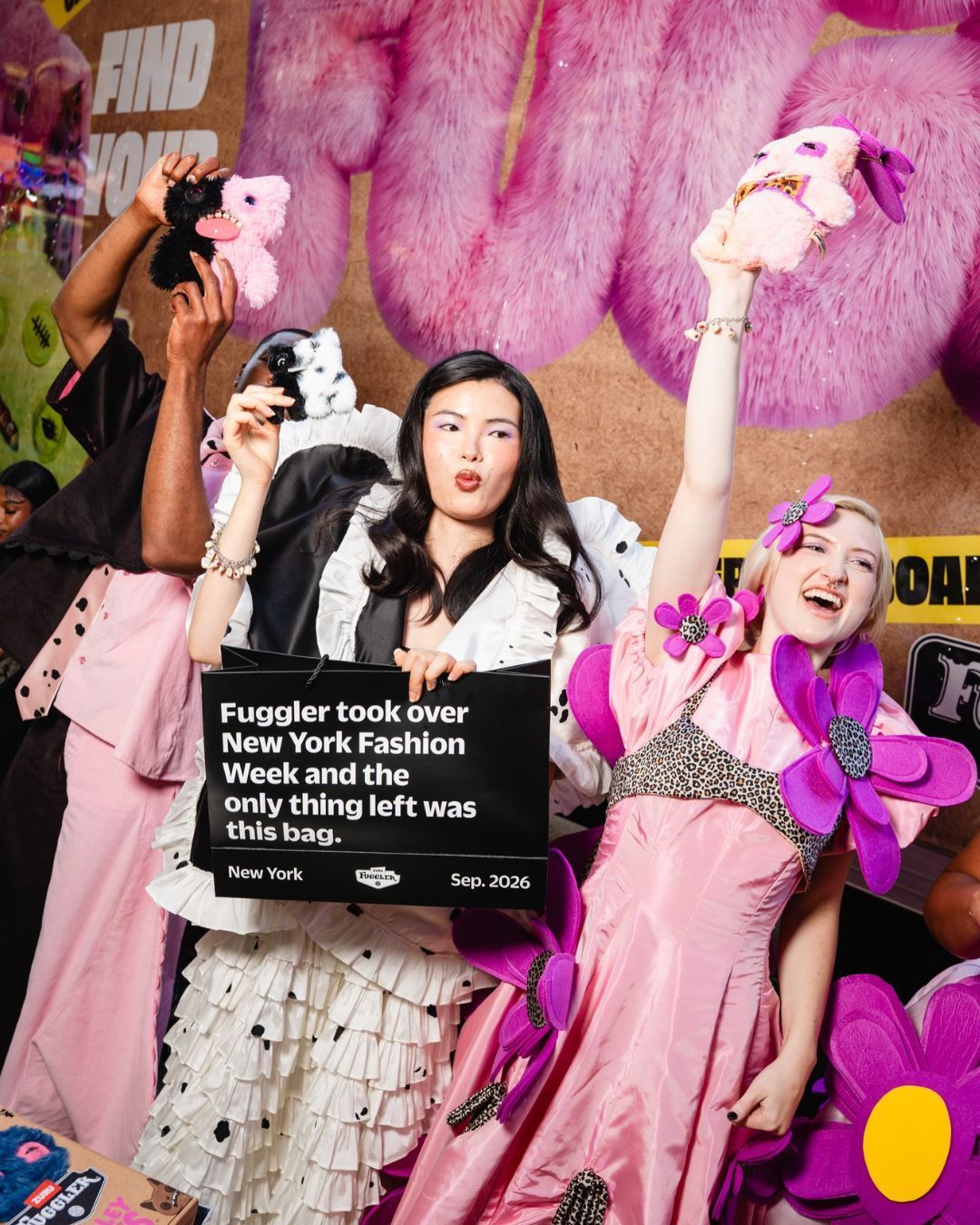
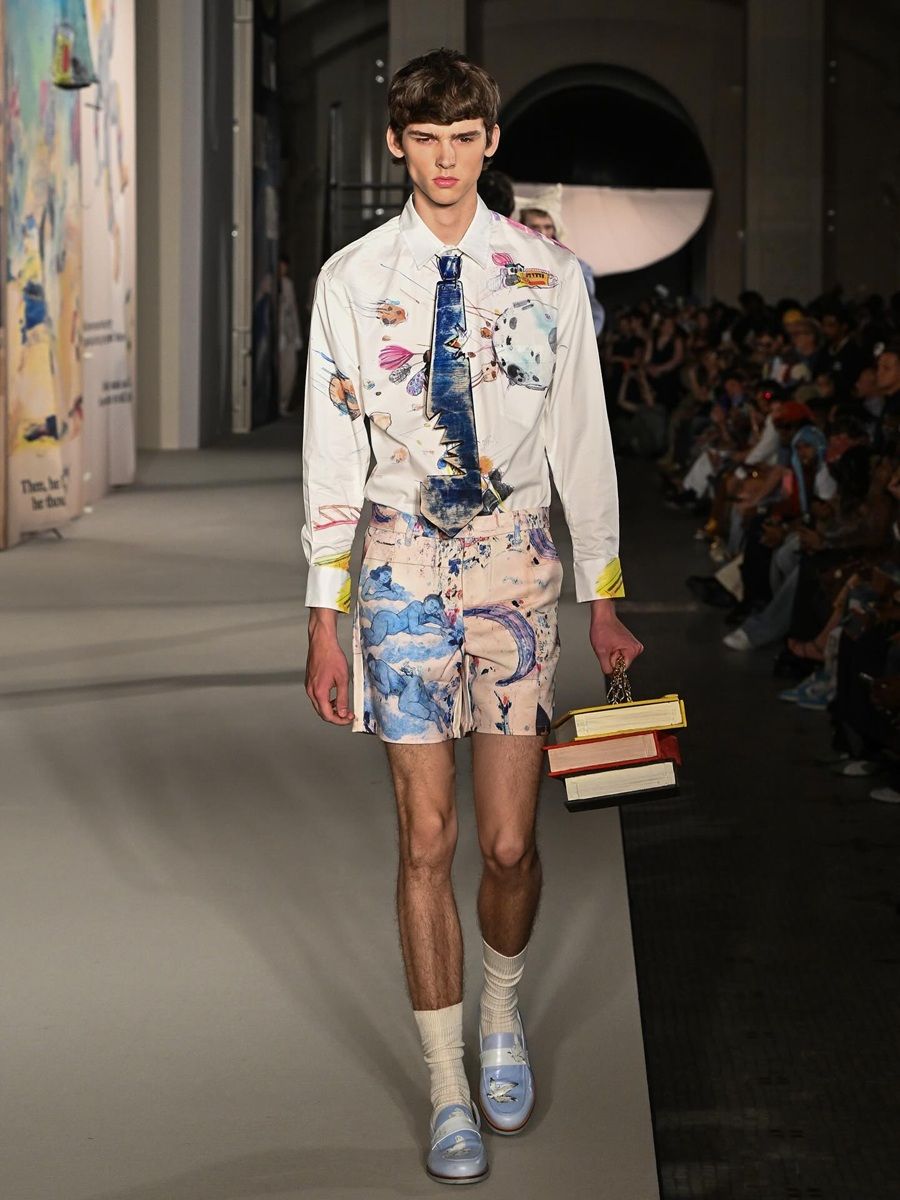
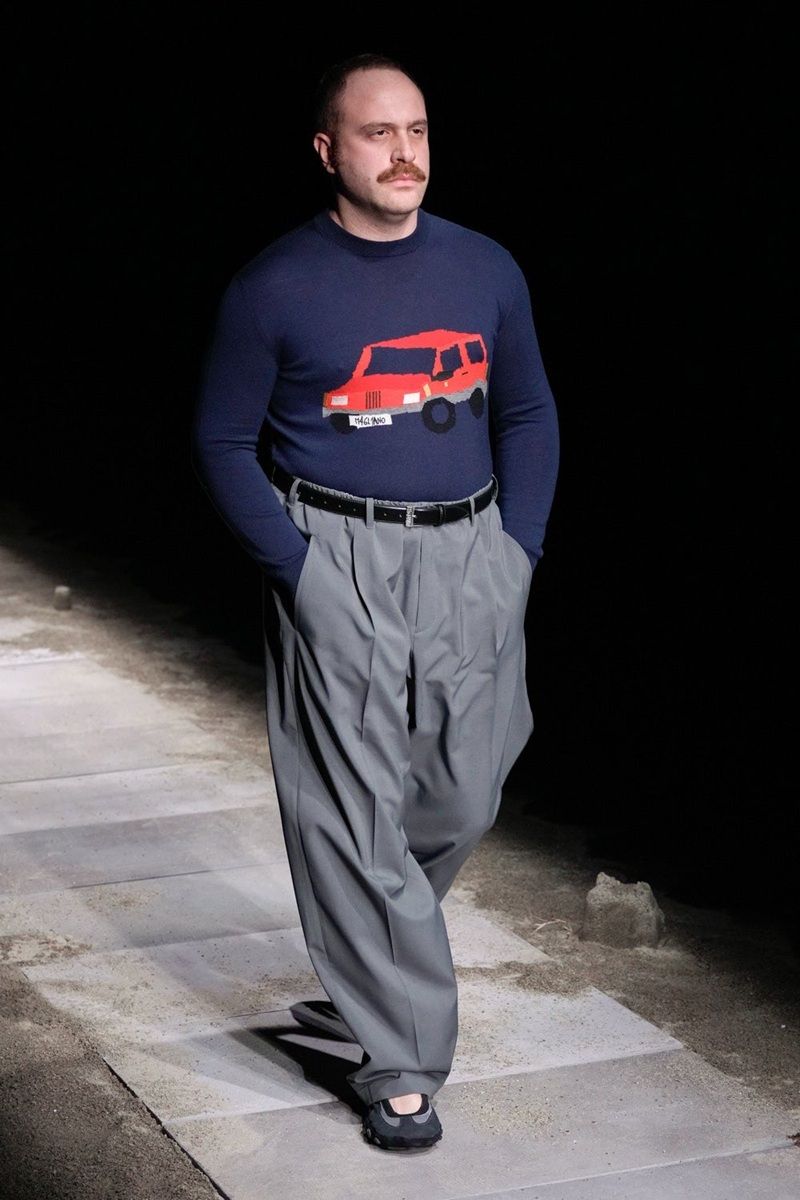
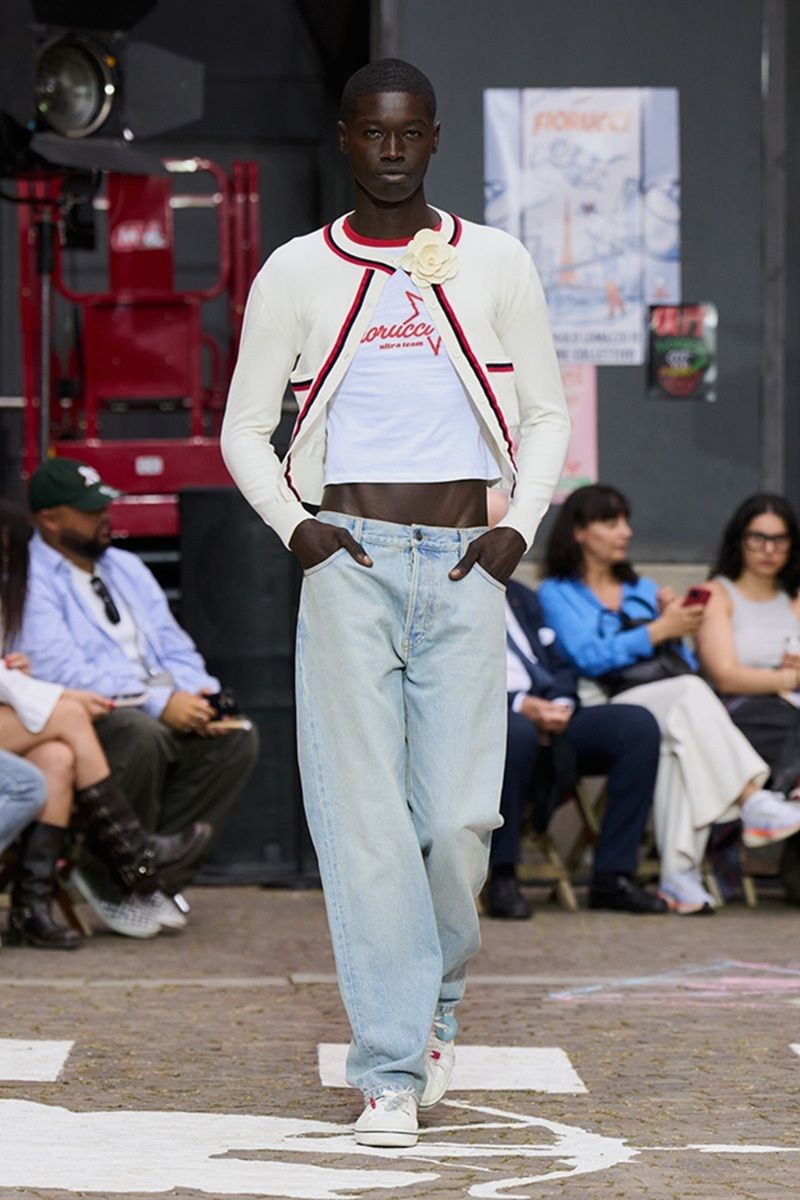
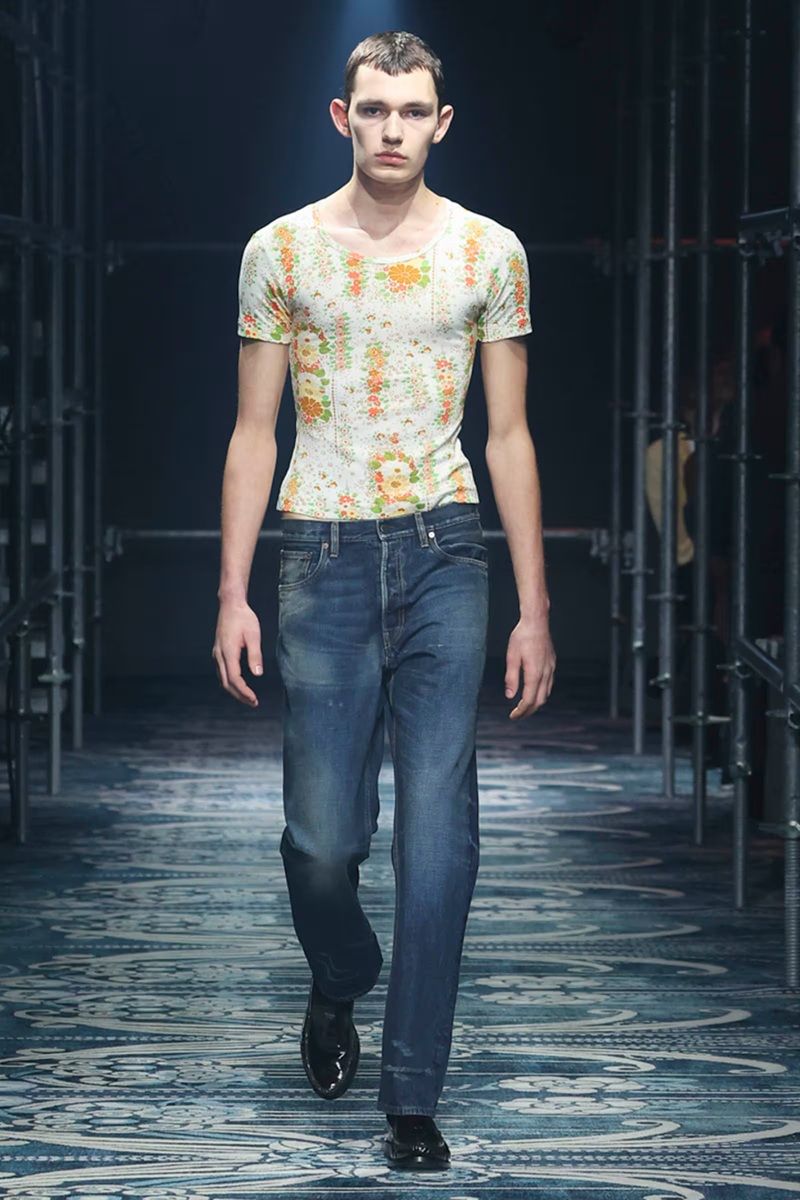
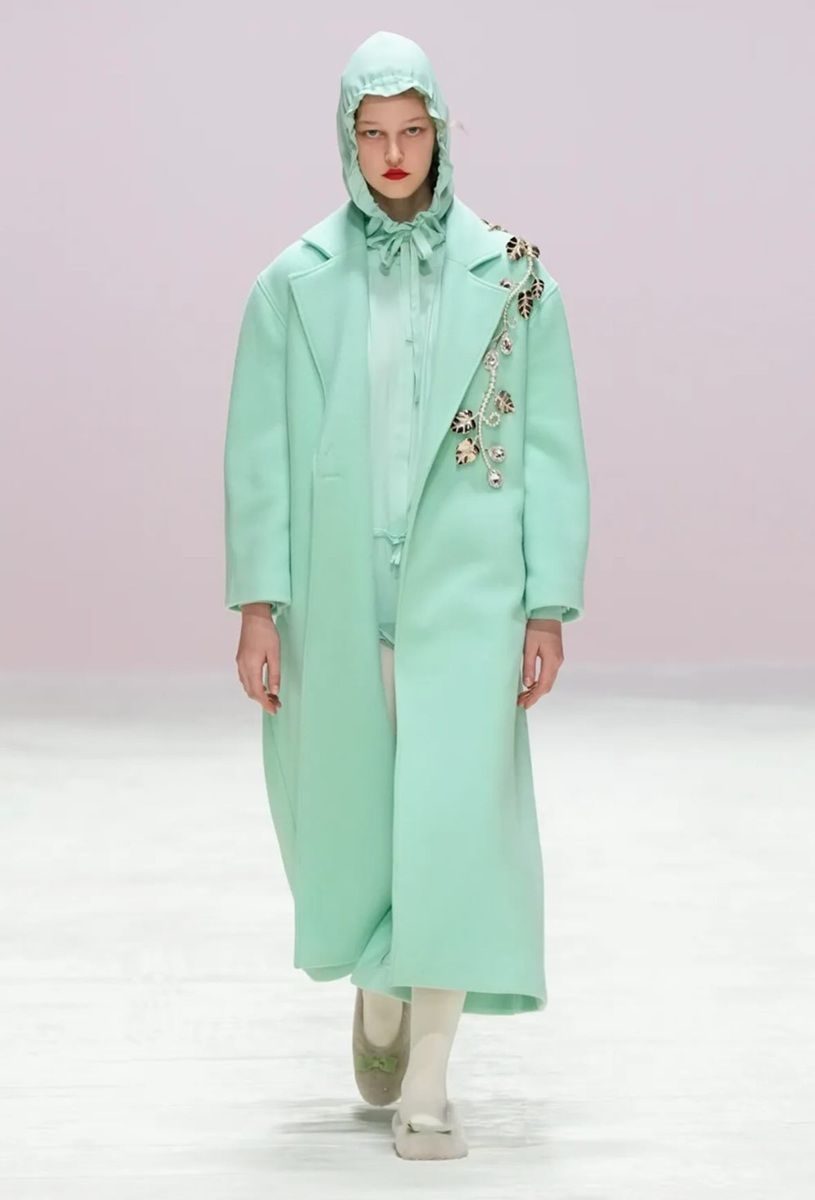
Another face of whimsical fashion emerges in the use of childlike and playful clothing that seems to come from a child’s wardrobe rather than an adult’s. For instance, Magliano’s latest winter collection featured a sweater with a red toy car sewn on the chest; Auralee and Fiorucci played with proportions by creating “mini” cardigans; Prada added a tight floral t-shirt to menswear with an almost naïve irony, while Vivetta presented a bonnet-style hat with a bow, reminiscent of newborn accessories. Brands like Kidsuper and Moschino also operate in this playful register. In the first case, Colm Dillane turned his SS26 presentation into a real cartoon show, inspired by his illustrated book The Boy Who Jumped the Moon. In the second, Moschino has long built an entire imagery linked to childhood: from its iconic teddy bears to toy prints and trompe-l’œil, a technique that best embodies the whimsical spirit. Similarly, Bode embraced this angle of the trend in SS26 by using voodoo dolls in place of models.
The dark variation: whimsigoth
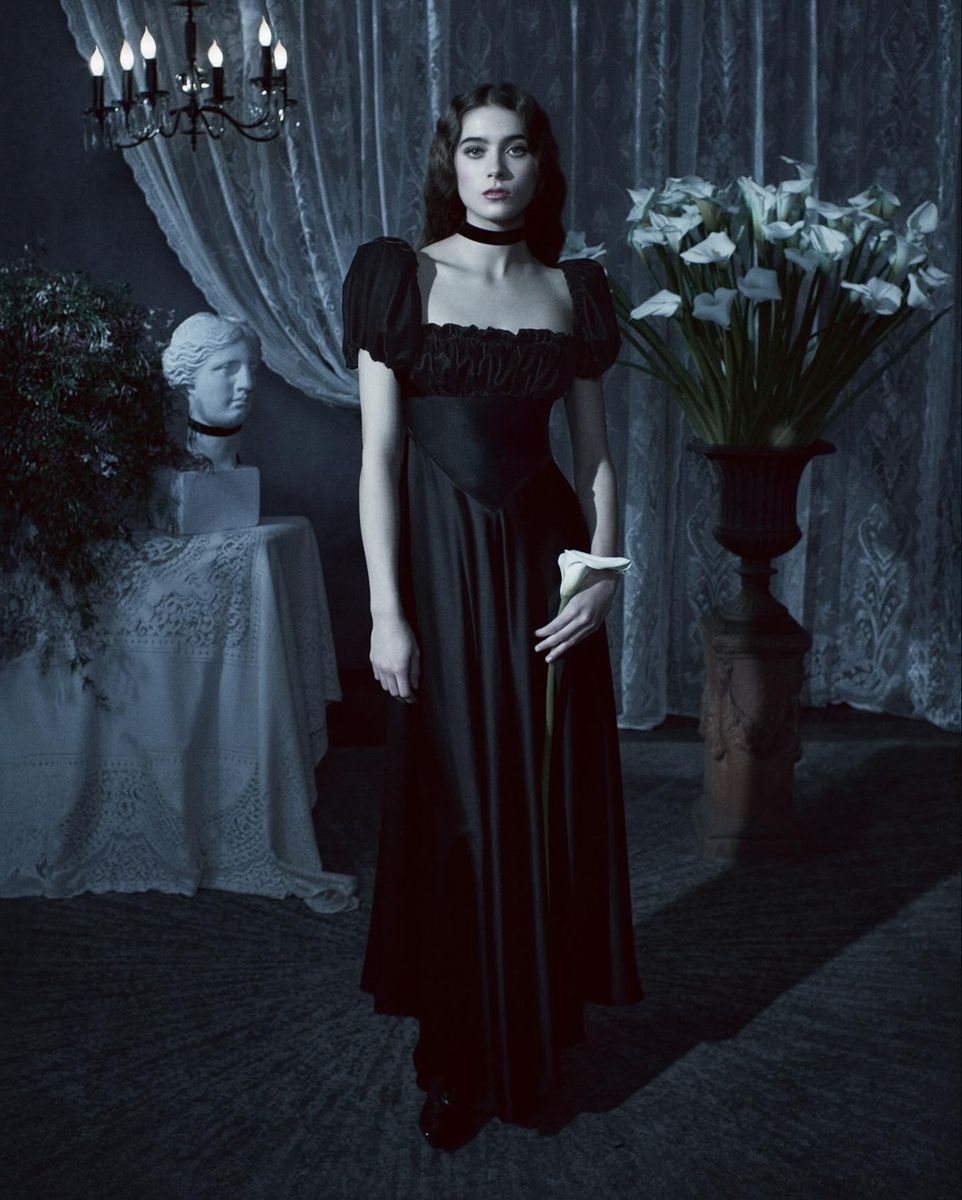
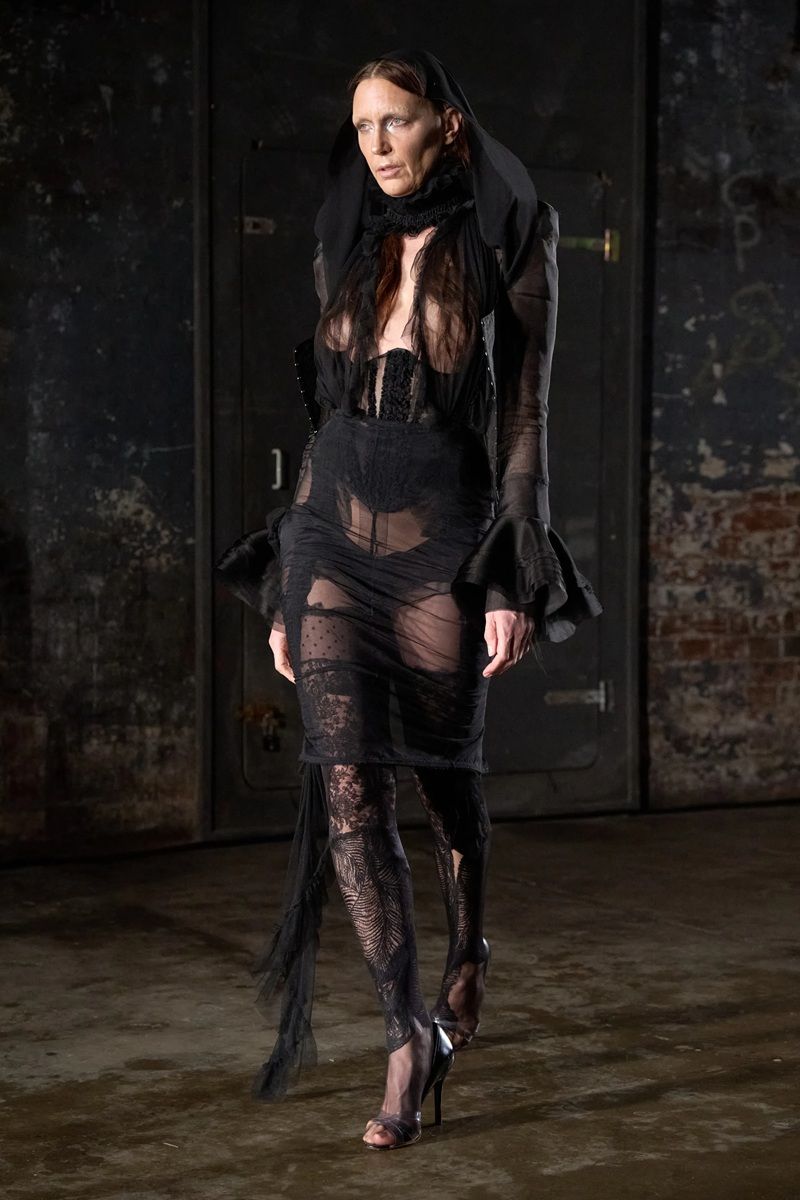
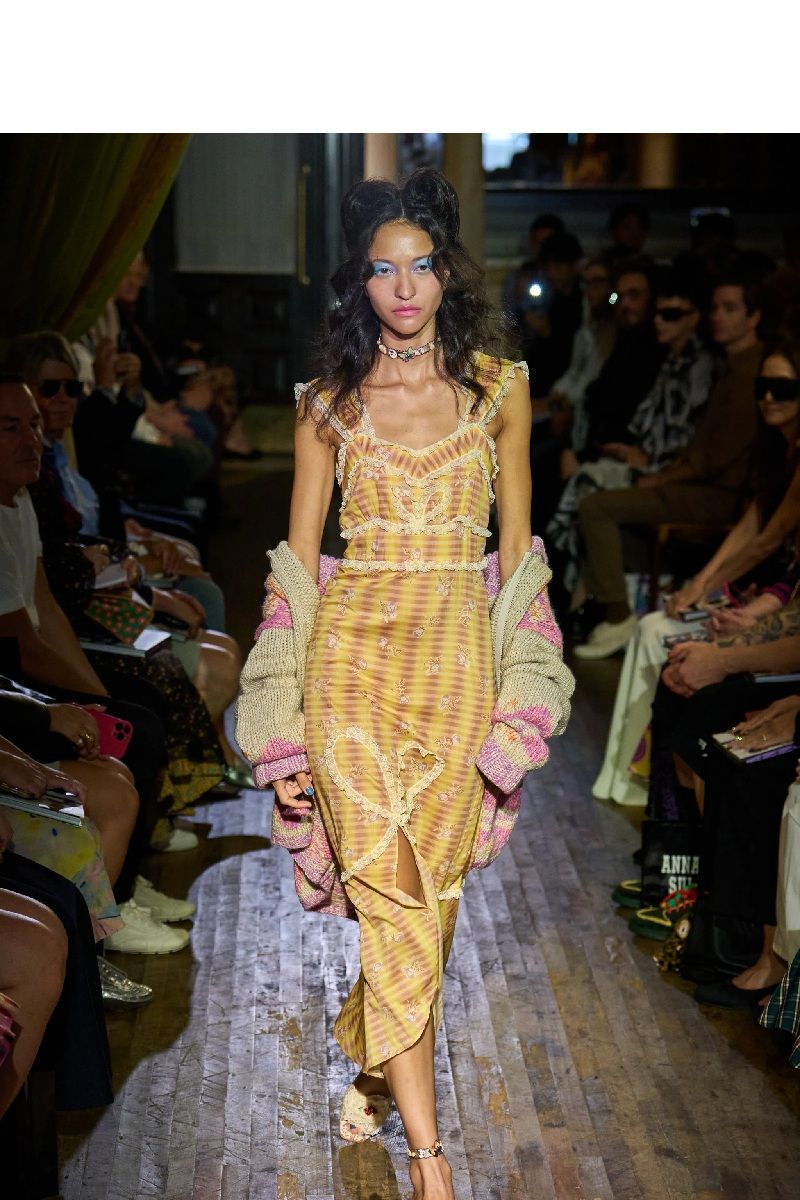
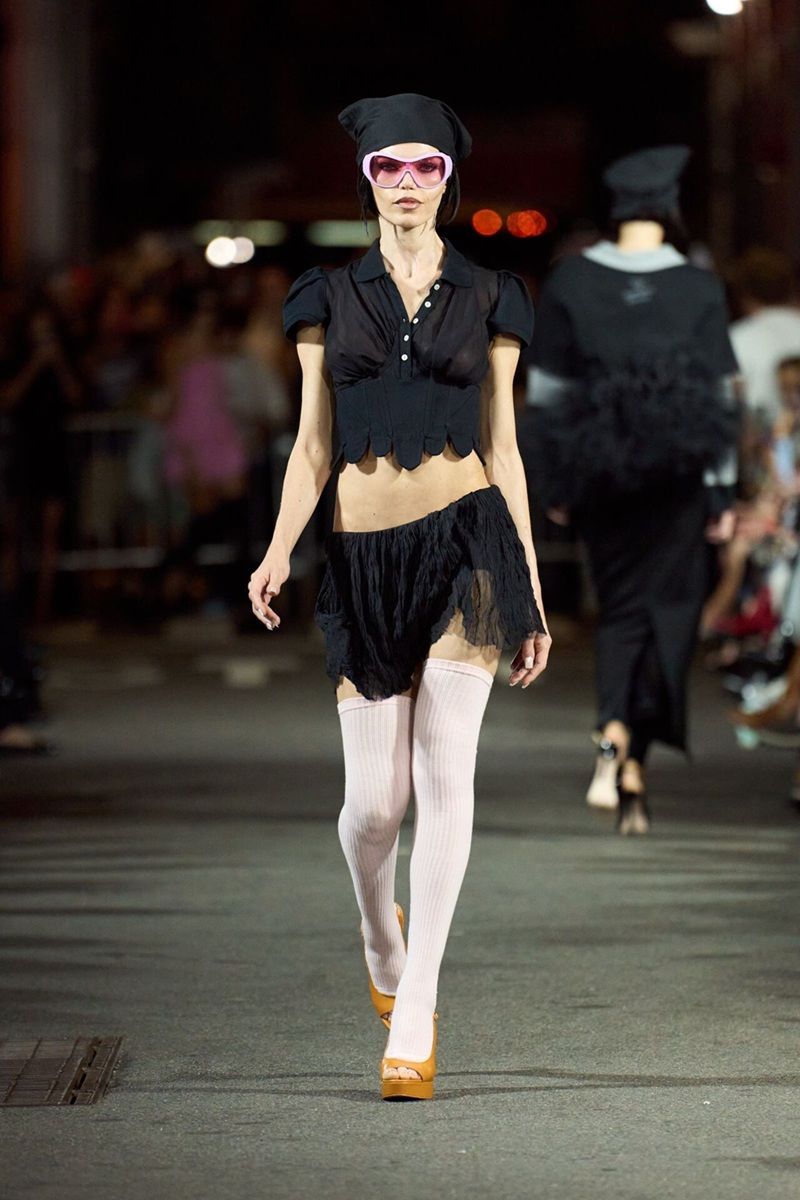
Speaking of dark magic, whimsical fashion has a specific declination in womenswear: whimsigoth. This trend, which fuses witchy and gothic vibes with boho and playful pieces, has returned not only to runways and Gen Z’s TikTok For You Pages but also to the big screen, with the sequel to Practical Magic starring Nicole Kidman and Sandra Bullock, and in music, with Florence and The Machine’s announcement of a Halloween-inspired new album. In New York, Anna Sui - often dubbed “the witch of American fashion” - revived 1990s silhouettes and prints from her archives for SS26: a mix of grunge and goth illuminated with mystical symbols like amulets, crystal and shell necklaces, and knotted headscarves, also seen in Christian Cowan’s New York show, evoking the image of medieval witches hiding in the countryside. In the realm of contemporary witchcraft, we also find Dilara Findikoglu, whose latest fall show fused mermaidcore with a dark, perverse twist, while Rodarte’s winter collection looked to Tim Burton’s universe, with direct references to female characters like Corpse Bride and Wednesday Addams.
Whimsical fashion between niche and mainstream
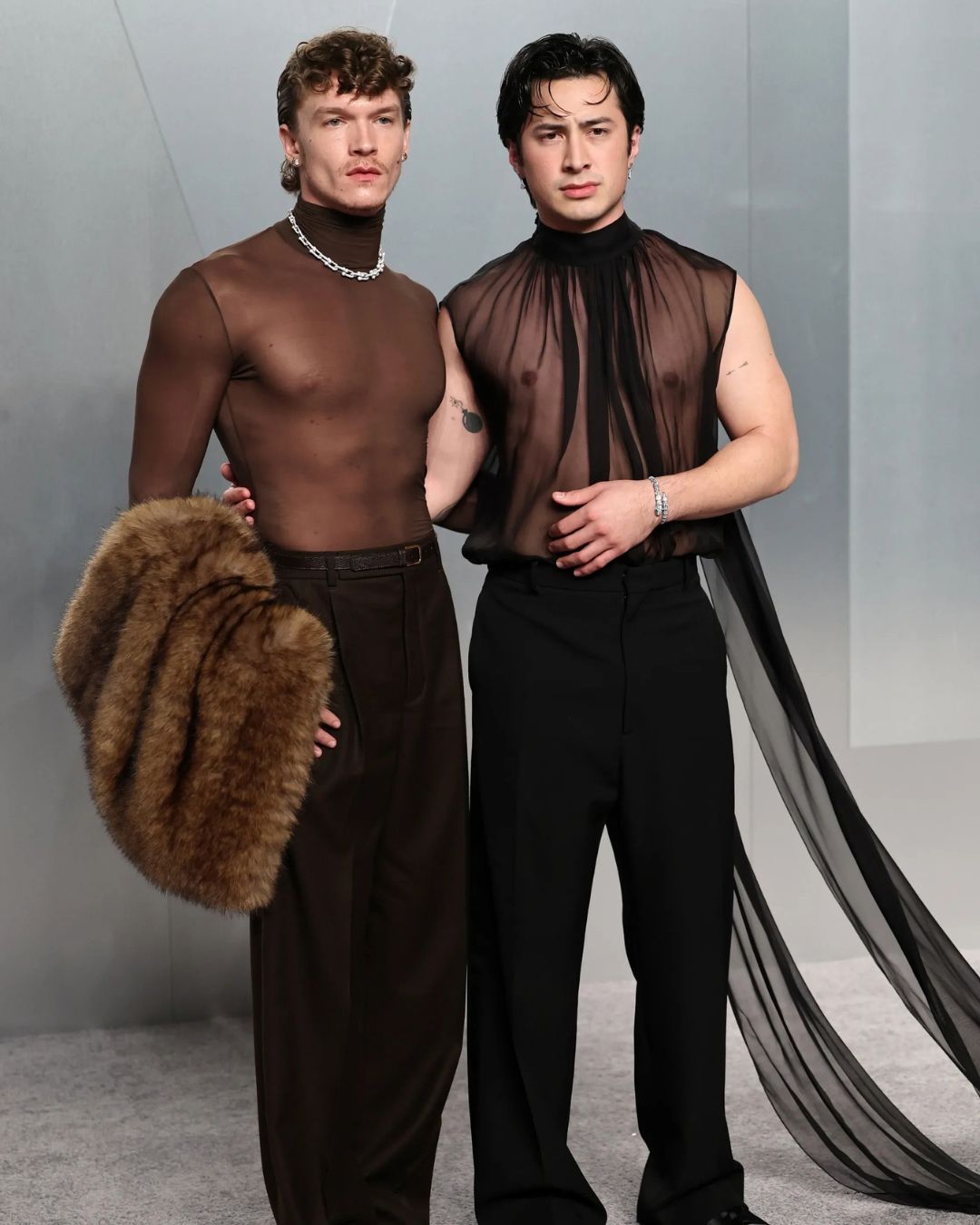
For a long time, and still today, whimsical fashion has often been relegated to a niche aesthetic or dismissed as impractical, suitable only for special occasions like costume parties, haute couture shows, or for a select few at the Met Gala. Interestingly, however, even brands that had embraced, and to some extent still embrace, normcore are finding new dialogue with whimsical fashion. Coach, for example, pairs preppy cardigans with toy crowns and swords; Louis Vuitton turns accessories into “ironic” objects with frog, and dolphin-shaped bags; Hermès offers a men’s bag printed with monkeys; and Ferrari signs off its new it bag with an unexpected leather bowling-pin holder.
Whimsical fashion in 2025
The return of whimsical fashion is not just an aesthetic whim but a response to the economic crisis facing the fashion system, an indicator of recession that helps people imagine themselves in alternative worlds. Fashion has already gone through a whimsical phase: in the 1990s, McQueen and Galliano challenged Klein and Sander’s practical minimalism with disturbing, theatrical shows that left a lasting imprint on the industry. Today’s new wave of whimsical fashion, however attractive, doesn’t seem to carry the same impact as those shows: it remains a “spectacular” trend, but less radical, less transformative of fashion language and consumer taste. In the luxury market, at least for now, formal pieces and conservative silhouettes continue to dominate, with the very real risk that whimsical fashion will remain confined to red carpets or the wardrobes of celebrities.