








































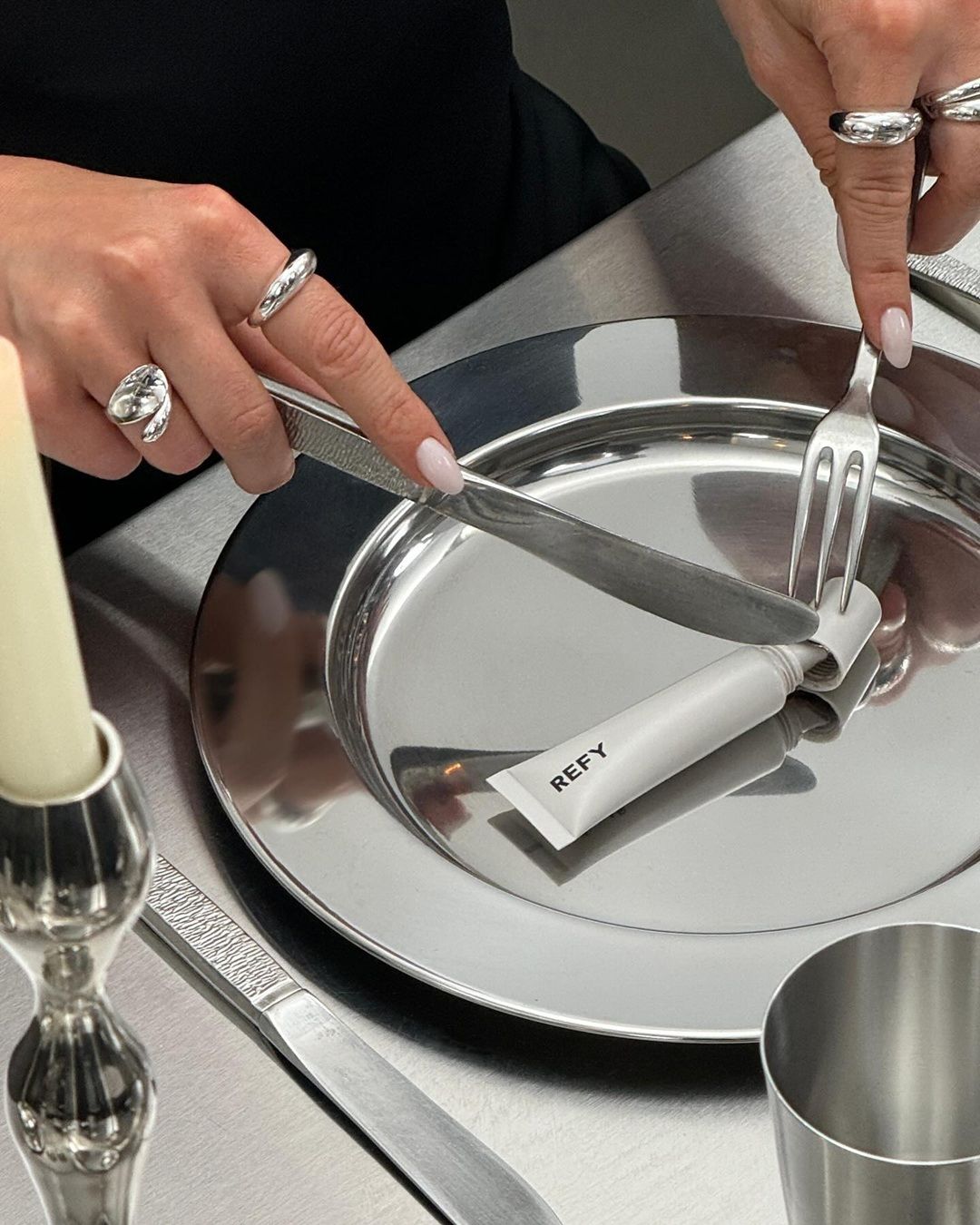
Skincare Dinner: can we really eat our beauty routine? Avocados and serums are not rivals, but allies
They call it skincare dinner, others have renamed it Eat Your Skincare, and no: it doesn’t mean chewing on your vitamin C serum (thankfully). Rather, it evokes the idea that all you need to do is sit down at the table, choose the right ingredients, and let the body do the rest. It’s the latest obsession born on TikTok, where green smoothies, carrot salads, and avocado toast are presented as if they were high-tech treatments straight off a beauty shelf. But beneath the social-media gloss lies a real question: can eating certain foods actually improve your skin? Or are we looking at yet another slightly bogus beauty tip? Or worse, are we witnessing yet another cosmetic translation of a desire for control? Spoiler: the truth, as often happens, lies somewhere in the middle. And, unusually, experts are fairly aligned on this.
Eating skincare: from beauty ritual to viral trend
The trend began with a carrot salad posted by @lainiecooks on TikTok. The ingredients? Sliced carrots, rich in beta-carotene, a precursor of vitamin A that supports skin health; garlic and scallions, prebiotics that benefit gut health, which in turn affects the skin; sesame seeds for vitamin E and fiber; lime juice for vitamin C. Everything dressed with sesame oil to aid fat absorption. From there, fueled (quite literally) by a digital ecosystem where the boundary between health, aesthetics, and entertainment is increasingly blurred, videos began to multiply of people filming themselves while eating, explaining bite by bite the benefits of each food for the skin. Avocado for radiance, blueberries for antioxidants, salmon for collagen, carrots for “natural retinol.” All narrated as if it were a skincare routine, with a didactic yet relaxed tone, a fork instead of a dropper, and natural light calibrated to perfection. Impeccable smoothie bowls, #EatYourRetinol salads, glow breakfasts made of skyr, chia seeds, and warm lemon water… every dish becomes a promise, every ingredient a cosmetic function, every meal a kind of facial treatment from the inside. It’s a language that clearly speaks to a generation raised on ten-step skincare routines, accustomed to thinking of beauty as something to optimize, monitor, and constantly improve. Eating is no longer enough, you have to prove it serves a purpose. Preferably for the skin. Preferably for the glow. Preferably filmable.
So, does food really help the skin?
This is where dermatologists and nutritionists, the real ones, step in, tasked with bringing the conversation back to a less algorithm-driven level. And the message is clear: yes, diet affects skin health, but no, there are no miracle foods. According to Canadian dermatologist Jason Rivers, a balanced diet rich in fruits, vegetables, quality proteins, healthy fats, and micronutrients contributes to skin that is brighter, more elastic, and more resilient over time. Conversely, nutritional deficiencies and excesses of refined sugars, alcohol, and saturated fats can promote inflammation, dull skin, and premature skin aging. British nutritionist Rhiannon Lambert insists on a point often forgotten in social media storytelling: the skin is an organ in every sense, complex, living, and it responds to what we eat, but not immediately or spectacularly. As such, it needs water, amino acids, vitamins, minerals, and essential fatty acids to function properly, regenerate, and defend itself against environmental stressors. Proteins provide the building blocks for collagen and keratin; vitamin C supports collagen synthesis; vitamin E helps protect against oxidative stress; zinc is involved in skin repair processes; and omega-3s help maintain a more elastic, hydrated skin barrier. All true. All useful. But not enough to turn a healthy diet into a cosmetic routine.
Nutrients yes, miracles no
The sore point, the one the trend tends to glide over with elegant nonchalance, is that eating a nutrient is not the same as applying it to the skin. Proteins, vitamins, minerals, and healthy fats are not magic words; they are structural elements. They are essential for skin function, but they do not work like cosmetic actives. Eating carrots is not the same as using a retinoid. The beta-carotene found in foods is a precursor of vitamin A, not a ready-to-use cosmetic retinol. Ingested collagen does not selectively settle into wrinkles, vitamin C consumed through food does not act in a targeted way like a serum formulated to penetrate the skin, and no food can replace sunscreen, retinoids, niacinamide, or hyaluronic acid. Once ingested, nutrients are digested, metabolized, and distributed according to the body’s priorities, which rarely coincide with the desire for smoother or more radiant skin. The skin gets what’s left, not what TikTok promises.
Synergy, not substitution
Food works systemically. It works deeply and over the long term, supporting the biological processes that allow the skin to function better. Topical skincare, on the other hand, act locally, with precise concentrations, on specific layers of the skin, and with formulas designed to interact with the skin barrier, addressing pigmentation, texture, inflammation, and signs of aging. They are two different languages, but complementary ones, meant to talk to each other, not to compete. It’s a relationship of synergy, not competition. On this point, consensus is almost total. Diet and skincare work best together, not one in place of the other. Skin that is well nourished from within responds better to treatments applied from the outside, but a perfect diet does not exempt you from using moisturizer, and above all, SPF. Conversely, a good cosmetic routine can enhance skin supported by a balanced lifestyle. Translated: if you eat only avocado but never remove your makeup, your skin won’t thank you. If you use extremely expensive serums but live on junk food and zero water, neither will it.
Skincare yes, but with your brain switched on
The Eat Your Skincare trend doesn’t need to be demonized. It can be a positive incentive to eat better, diversify more, introduce healthy fats, antioxidants, fiber, and vitamins, and to think about self-care in a more holistic way. The risks, if anything, are turning a potentially healthy idea into yet another performative obsession in which every ingredient must have a declarable benefit, or making it into a beauty religion or shortcut loaded with unrealistic expectations. No salad will give you glass skin in three days, and no smoothie can replace a dermatologist. When in doubt, with skin issues or specific needs, the rule remains unchanged: consult a doctor, nutritionist, or dermatologist. TikTok can inspire, but it doesn’t prescribe. In conclusion, healthy, and therefore more beautiful, skin comes from an intelligent synergy between balanced nutrition, targeted skincare, sun protection, adequate sleep, hydration, and stress management (without underestimating genetics). No avocado will do the job of a retinoid, and no serum can make up for years of bad habits, but together they can build something that lasts. True glow is neither eaten nor simply applied. It’s built, slowly, inside and out, far from easy promises and much closer to reality.
What to read next
Skincare and the menstrual cycle: do we really need to change routines every week?
Is there anything scientific behind this new obsession with the menstrual calendar?