





















Interview with Ambra Zega, transfeminist activist for disability justice “I think we talk about disability only for a few weeks a year and then we go back to ignoring the concrete problems that people face every day.”
July is Disability Pride Month and we wanted to talk to those who experience this discrimination on their own skin, but above all fight it every day. We interviewed Ambra Zega, a young deaf activist working on issues of accessibility, independent living and social justice, to talk about rights, inclusion and the future of struggles for people with disabilities.
The interview with Ambra Zega
Can you tell us a bit about yourself? When did you get into activism? And do you think that activism is really accessible today?
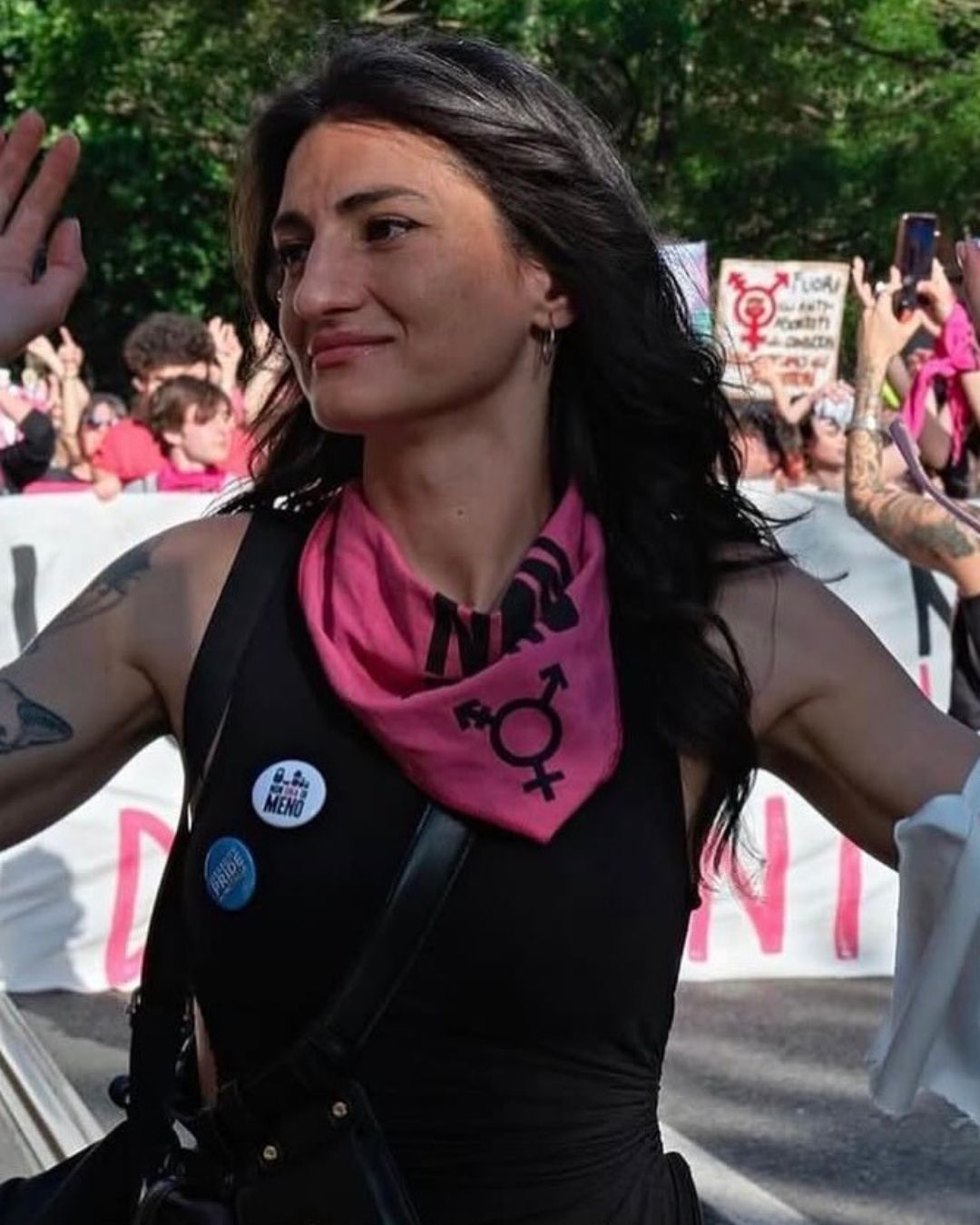
I am a young deaf woman from the Roman province who deeply believes in intersectional struggle (are you young at thirty-three? Yes, I believe it!). I gained this awareness working in an employment center for disabled people in Spain and then in the civil service for the Italian Blind Union. In those experiences I saw how disabled people socialized as women and/or queer experienced double or even triple discrimination. I started practicing activism, making my resources and skills available to promote accessibility, independence and participation. Before 2022, I wanted to contribute to transfeminist organizations in Italy, but I was not sure how. When I read the call of some disabled activists to make feminist movements and demonstrations more accessible, I came forward with a transfeminist reality to offer my support on the organization of accessibility and I found listening and collaboration. Thanks to Non Una Di Meno Roma. At the same time, I collaborated with the collective Disability Pride Network on raising awareness of the right to independent life of disabled people. In general, I am interested in all those battles that make society more just and less built around the idea of a 'standard' human being, which I continue to suspect does not exist. I believe that today activism is more accessible in some ways: social media allows many people to get informed, organize and find community. At the same time, however, there are still many physical, economic, communication and cultural barriers. Too often it is taken for granted that everyone has the same energy, the same opportunities to travel, to attend an evening meeting or to sustain very intense rhythms. A truly accessible activism should ask itself not only who is present, but above all who is missing and why it is missing. Accessibility doesn't mean inviting everyone: it means putting all people in a position to be able to truly participate. Those are two very different things.
@thalidomide.voice In less than 20 years, there’ll be nobody left to tell this story. Please help us be heard while we’re still alive. Like, repost and share. #Thalidomide #Justice #SocialJustice #DisabilityRights #Accessibility original sound - Thalidomide Voice
Changing the approach to Disability Justice
What would you change about the current approach to accessibility?
I would change the fact that all too often accessibility is addressed as a technical issue instead of a political one. It is not enough to build a ramp or put subtitles if disabled people continue to be excluded from decision-making processes. Accessibility isn't just about entering a building: it's about being able to participate fully in social, cultural and political life. I would like to see more disabled and neurodivergent people in the places where decisions are made. I would like a design that provides accessibility and participation for all people from the start to become the norm, not something to add at the last moment.
The story of disability in Italy
July is Disability Pride Month. How do you think the issue of disability is treated in Italy?
I believe that we talk about disability only for a few weeks a year and then we return to ignoring the concrete problems that people face every day: the accessibility of spaces, the right to study, work, mobility, independent living. When we talk about this topic, we often do it with pietistic, spectacular tones or through what is called inspiration porn: stories that transform disabled people into examples of individual courage instead of questioning themselves about social barriers. In Italy, people still talk too much about disability as a personal story to applaud. We love to tell the story of 'the hero or heroine who made it in spite of everything', but we don't wonder why that 'in spite of everything' still exists. Accessibility is often spoken of as if it were a concession and not a right.
@amineforchange JUSTICE FOR DISABLED COMMUNITY #disabilitytiktok original sound - Amine For Change
Abilism, Productivity and Cultural Barriers
In your opinion, what is the most deep-seated prejudice that prevents real cultural change?
What hinders real cultural and social change is the capitalist tendency to evaluate people based on their productivity and performativity. Those who break out of this model are often perceived as less worthy. If the idea that a person is worth what they produce is ingrained, then there is something that doesn't work long before we even talk about disability. Society continues to measure human value through productivity, but the value of people should not depend on how much they produce.
The future of intersectional struggles
If in ten years we were to do this interview again, what would you like to be able to say that has finally changed? And what do you fear instead that it has remained the same?
I hope that in ten years this question will make us smile because we will have finally understood one thing: disability is not a bubble separated from the rest of the world. If public health is dismantled, the first people to pay the price are often those with the greatest need for care and assistance. If prostheses and aids become increasingly expensive or difficult to obtain, we are not talking about a niche issue: we are deciding who has the right to a decent life and who does not. If we continue to destroy the environment and fuel the climate crisis, fragility and inequalities will increase. If we invest billions in weapons while cutting welfare, school and healthcare, someone makes money, but certainly not people. It is paradoxical: on the one hand, resources are being reduced to guarantee rights and autonomy to disabled people, and on the other, policies are being financed that will continue to produce new disabilities and social fragilities through wars and lack of access to healthcare. I imagine that the struggle will be increasingly intersectional: the battles for peace, for climate justice, for universal public health, against patriarchy, against homolesbobitransphobia, colonialism, racism, abilism and against an economic model that concentrates wealth and power in the hands of a few are not separate battles. If we continue to divide them, those who profit from our divisions will win. If, on the other hand, we can recognize that discrimination has common roots and that rights are defended together, we can build a more aware, feminist and queer community, capable of focusing on care instead of competition, life instead of violence, people instead of profits.
