

































When secretly photographing women is so normalized that it becomes 'art' Beyond the Ray Banhoff case
I was living my weekend within the limits of the possibilities of experiencing a weekend in a city with maximum temperatures of 36 degrees. So I was having lunch at the most air-conditioned (and good) sushi in the area. Between one order placed from the table through qrcode and another, I got distracted and accessed Instagram. Habit, unfortunately. Here, I was bombarded with content that several people I follow had shared in stories. A video of aesteticasovietica, specifically, in which a man (adult, a millennial elder I would go so far as to say, even if I'm not sure) explained with great support his 'artistic project' dating back to 2015 in which he stalked (he uses the word 'stalking' himself) and photographed them without their knowledge. This act, again according to him, triggered a certain 'explosion of sensuality'.
I was, therefore, surprised by the story of a violation, sold by a man as “love for women” (at most it is fetishism and voyeurism) and contextualized by the complaint page as, in fact, abuse. Surprise, probably, just like the same women who were the subject of these photographs who, to make an already serious situation worse, were then sent to a Whatsapp group with friends, to - again, I quote text - do a 'goliardic experiment' when 'depressed' in the morning they went to work.
Street photography or sexist voyeurism?
Here the situation gets complicated. In fact, there are those who say that this behavior occurs - since the subject is Ray Banhoof, photographer and (ex?) editor of L'Espresso - within the limits of street photography, a photographic genre that wants to shoot subjects in real and spontaneous situations in public places in order to highlight aspects of society in everyday life. There are those who say, on the other hand, that since they are deliberately sexual images (under the skirt, to be clear) and then, on top of that, shared with friends, they are something else. Where is the law and where is the custom?
Is it illegal to photograph people in a public place?
Photographing people in a public place isn't automatically illegal. It becomes so, in some cases, when it comes to the publication and dissemination of images. In this case, in fact, the right to the image comes into play (art. 10 of the Italian Civil Code and articles 96-97 of the copyright law). To disseminate the photos, a release is needed. There are exceptions, such as artistic, journalistic and cultural purposes. Who decides when exceptions come into effect? Each case must be evaluated individually, in concrete terms. When we talk about photos of private parts (in the examples we also find buttocks) taken without consent and normally not visible, again, the discourse changes further. There is no specific crime of upskirting or voyeurism in Italy (as it exists, on the other hand, for example in England and Japan), there are those of sexual violence, violation of privacy, illegal processing of personal data, harassment, illegal dissemination of images, which, however, can only be applied in certain cases, which must be evaluated individually.
Beyond the law: sexism and the feeling of insecurity
Timing is everything. This video interview, in fact, comes just after the scandal of the ATM employee who had been caught photographing women and sharing the “stolen shots” with colleagues. There are, mainly, two things that emerge. First of all, and unfortunately as usual, there is the patriarchal and sexist question. In fact, it is no coincidence that for both scandals under consideration (and we are not here talking about the Telegram and Facebook groups in which husbands, relatives, acquaintances, friends share photos of the women in their lives with a group of men and then launch into obscene comments) we are faced with men who photograph women. Would they have done it with other men? Probably not. Because the will to violate womencomes from a desire to dominate them physically and ideally, from a thirst for power that - when it cannot be expressed with force - is expressed on the level of the stolen image. Some photo under the skirt. Then, the trophy is shared. And here all the desire for overwhelm hidden in this gesture, a mirror of existing inequality, becomes clear. The frustration of a power that cannot be exercised in other places, but that was promised to man over woman. In the same way, that there is an imbalance is made even clearer by the fact that this person tells this thing with serenity, citing authors and placing himself in a position of cultural superiority. As if this would legitimate or justify it.
@jillian.lawler I hate it here… #justagirl #creep #subway original sound -
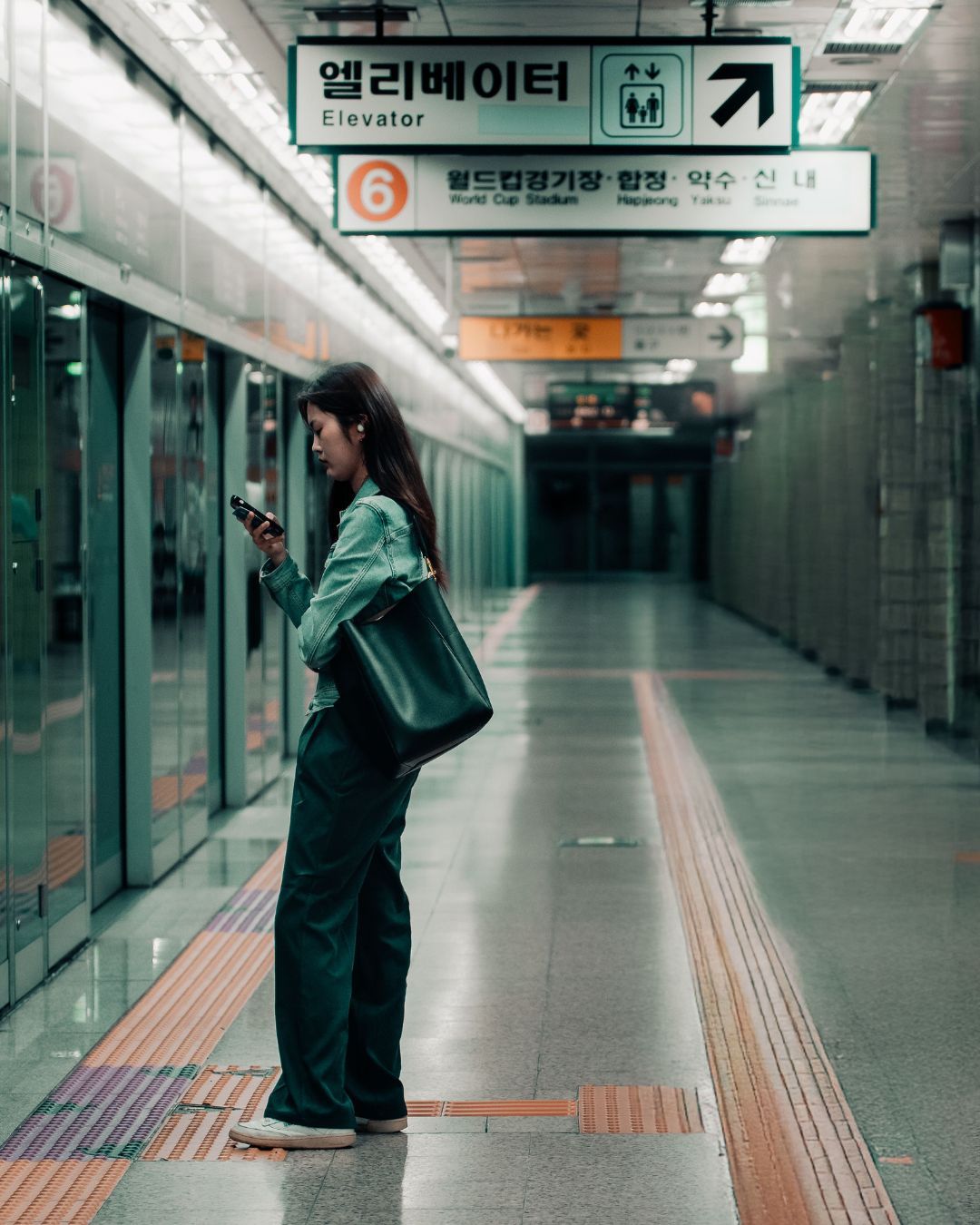
And from here another reflection starts, the second, broader and more nuanced. How much have we, even at our own disadvantage, normalized the act of photographing someone around the world and publishing them on our social profiles? Scrolling through the stories, in fact, I often find shots stolen on the subway and published by my contacts. Some are very cute, they are the hands of lovers, books, little dogs (there is also a dedicated page, dogs on the media) others are a little less so. Unfortunately, in fact, sometimes these images are shared out of derision and out of curiosity, out of gossip. And here we find people who are overweight, “badly” dressed, who have funny shoes, who are behaving in an extravagant way. And it's not right, not even in these cases even if they are different, even if they arise from different, less systemic pressures. Also because we do not know and cannot know the state (mental, social) of the person we are going to immortalize for much less than noble reasons. The question is: can we act with common sense and limit these behaviors? How much does this attitude, unfortunately very widespread, if combined with pre-existing sexism, contribute to making normal behavior that is not normal, on the contrary, at best it is in very bad taste?
