



































What is in the future of tights? We asked Chiara Ferraris from Pierre Mantoux
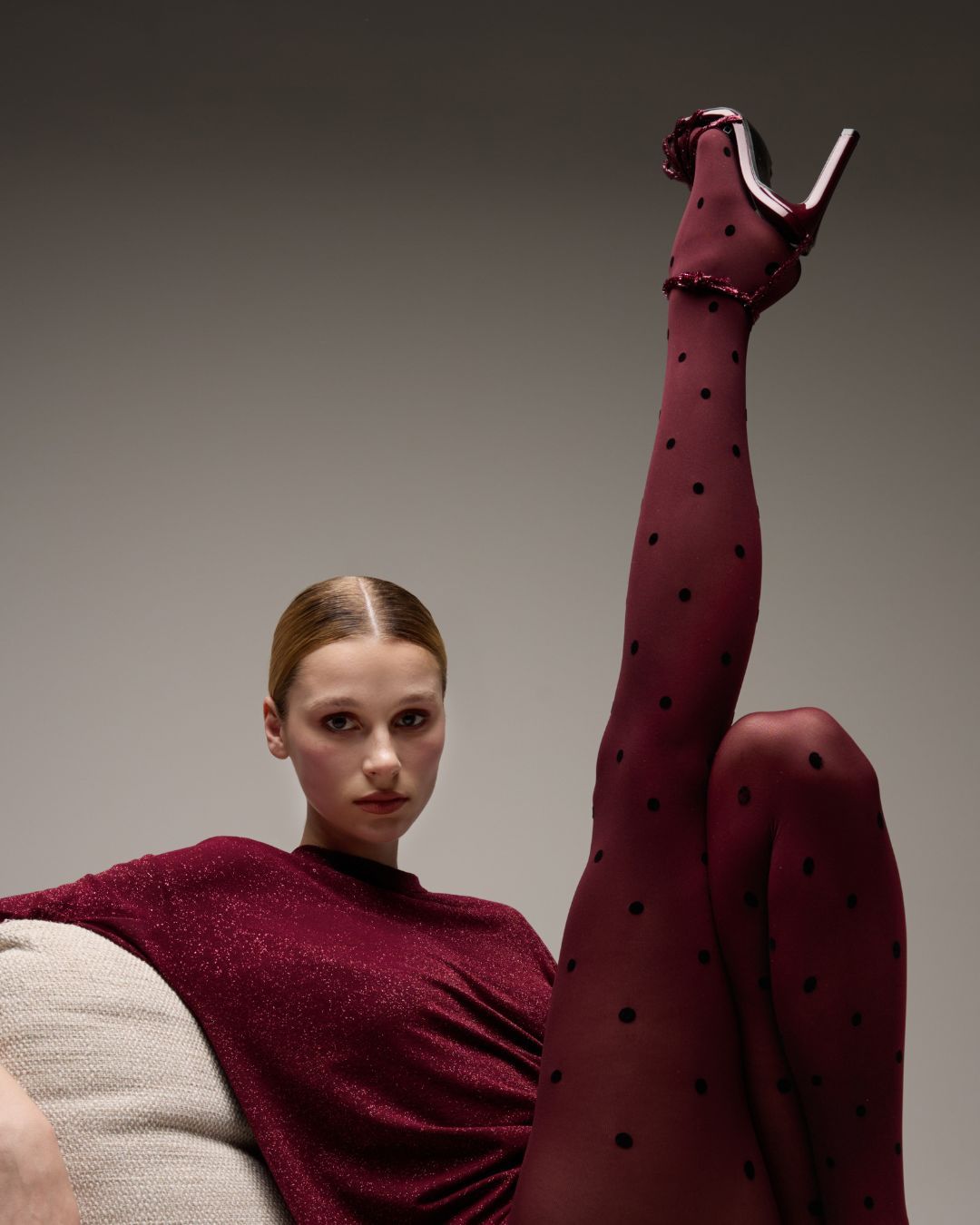
What does the future hold for an item like tights? A staple in every woman’s wardrobe (and in many others in general), tights have a relatively recent history and a significant sustainability issue (they are made from synthetic fabrics, after all). Always the same yet always evolving, younger generations now wear them creatively and without rules, unlike older ones, who follow a much stricter dress code. We asked some of these questions to Chiara Ferraris, who runs Pierre Mantoux together with her sister Costanza and their mother Patrizia Giangrossi. The historic Milan-based manufacturing company was founded in 1932 by Ottorino Giangrossi and is now led by the family’s fourth generation. Here’s what she told us.
Interview with Chiara Ferraris on the future of tights and Pierre Mantoux
Have young women’s attitudes toward tights changed? Is there a difference between younger and older generations?
Thankfully, yes. There was a time when young girls wore tights very rarely, and even today, they don’t wear them much. But then a trend came from California: very young girls started wearing sheer tights under denim shorts. Totally anachronistic, but great. At that point, tights were "freed", they became a statement of boldness. As for socks, that trend has always existed. Now there’s even a comeback of the masculine ribbed sock, structured in a specific way. Lastly, fully opaque tights remain very popular across all generations, especially when paired with shorter outfits.
How do you innovate something like tights?
That’s where fashion and trends come in. For example, lace is very popular right now. With jacquard lace you can do so much: opaque, sheer, monochrome, two-tone, or tattoo effect. It’s incredibly versatile. Of course, the classic tights are always there.
Is it difficult to stay Made in Italy?
It is, but for us, it’s a non-negotiable value. "Made in Italy" is important, it makes the difference, and we truly believe in it. Surely, there are countries where labor costs are lower, but the good news is that the most advanced technology for producing tights is still based in Italy. The best machines are here, so we can continue making products that stand out.
What does the future of tights look like?
I believe the key will be innovation. Tights are one of those garments that stay in close contact with the skin, and since there’s growing attention on skin issues and infections, all products that touch the skin must evolve, maybe to become completely hypoallergenic one day. It would be great to explore natural fibers too, but tights must be elastic, so they’ll always be at least partly synthetic.
Speaking of which — what about sustainability?
Great question. Synthetic fibers are, of course, petroleum-based. However, Lycra’s U.S. factories are currently converting their systems to produce synthetic fiber from corn. Although that brings new challenges, energy and water consumption for growing and processing corn. It’s progress. It’s a bit of a vicious cycle, complicated, but steps are being taken in that direction and tests are underway. The goal is to achieve a synthetic yet natural fiber, but it will take some time.
Pierre Mantoux: today and tomorrow
In an ever-evolving and competitive market, Pierre Mantoux is following a clear strategy focused on brand premiumization, the enhancement of its heritage and artisanal know-how, and the adoption of innovative solutions. The brand is investing in high-performance, innovative fabrics such as the microfiber used for the Veloutine line and Lycra Adaptiv, with the goal of meeting new market demands for durability, elasticity, and comfort without compromising on style. In the medium to long term, Pierre Mantoux aims to strengthen its leadership in the luxury hosiery and bodywear segment across Europe, continuing to invest in omnichannel strategies and international expansion. Future goals include geographical growth in North America and Asia, the introduction of eco-friendly and recycled materials, and collaborations with emerging designers, along with digital innovation like virtual fitting and product customization within the next two to three years.
What to read next
Liu Jo presents “The Gigi Hadid Edit”
The project that transforms selection into an identity gesture

Real baddies have found their favorite activewear brand
It's called SWT, it comes from Australia and it has just launched a new capsule collection