








































What's going on with Estetista Cinica? Is K-beauty really to blame for the slowdown?
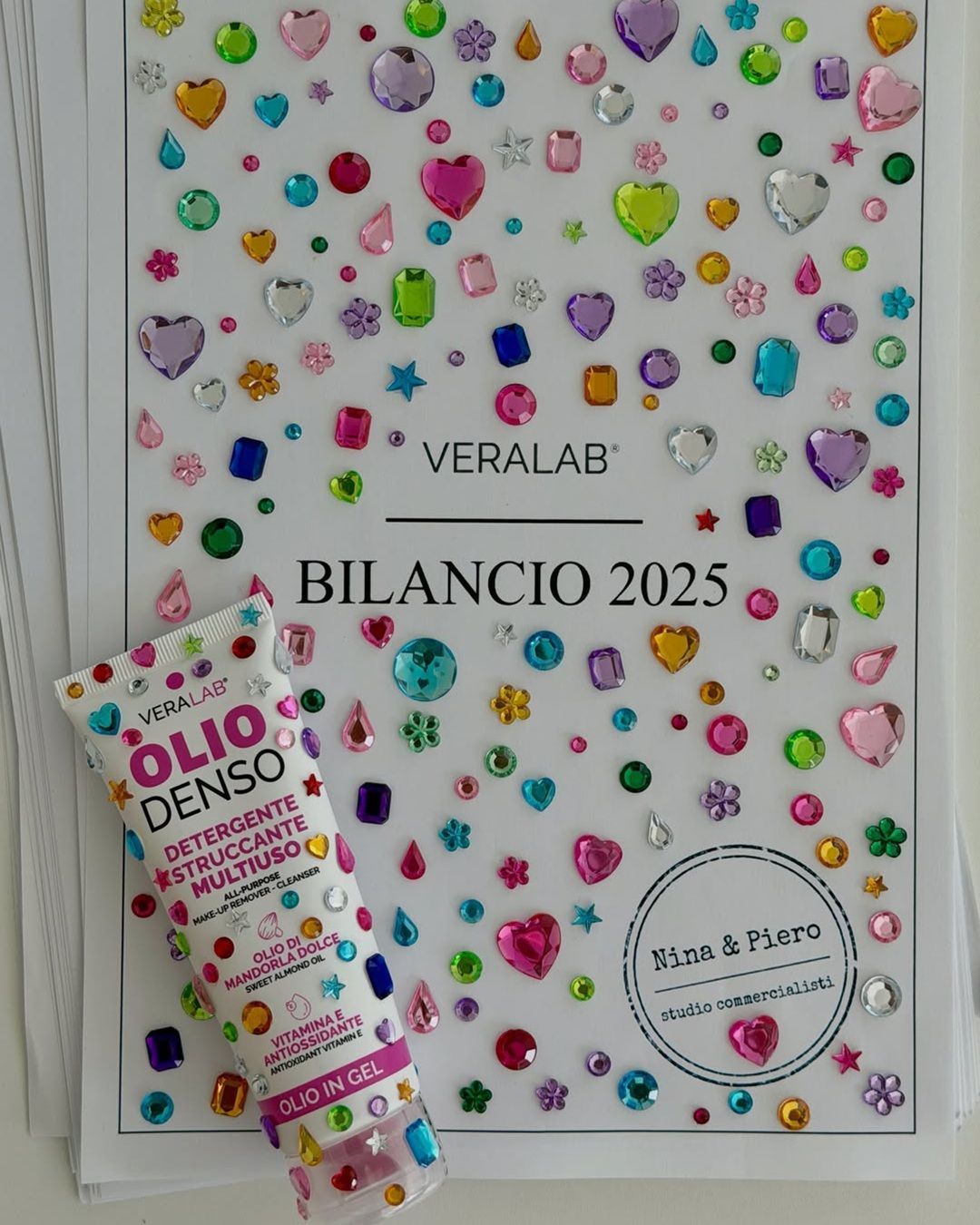
For years, Cristina Fogazzi, aka Estetista Cinica, seemed to have found an almost perfect formula. A recognizable personality, a fiercely loyal community, a language far removed from the glossy world of beauty, and a brand built around all of it. Veralab was growing, beauty e-commerce was booming, and the Estetista Cinica was turning followers into customers with the kind of ease usually reserved for a skincare staple like Spumone or Luce Liquida. Then came 2025. Re-Forme, the company that controls Veralab and Overskin, closed the year with €64.44 million in revenue, down from €74.1 million in 2024. It recorded a €3.07 million loss, compared with a €6.5 million profit the previous year. The most significant figure, however, concerns digital sales, with e-commerce down 22%. Before turning those three million euros into a funeral, it is worth looking at the rest of the balance sheet. In 2025, Veralab opened ten new stores, incurring €7.57 million in start-up costs related to its retail expansion. Headcount increased, as did production costs. According to the financial statements, excluding these non-recurring costs, normalized EBITDA would have been positive at around €7.1 million. This is not, then, a beauty brand that has suddenly stopped working. It is a company going through an expensive transformation while its old growth engine, e-commerce, is slowing down. Meanwhile, the Italian beauty market is not in crisis at all. In 2025, domestic consumption grew by 3.2%, while beauty e-commerce grew by 9.8%. The Italian cosmetics industry reached around €18 billion in turnover. If people are still buying creams, serums, fragrances and make-up, why is Veralab no longer growing at the same speed?
K-beauty is not enough to explain it
In an Instagram video, Fogazzi identified K-beauty as one of the main reasons behind the slowdown. Korean competition has indeed become huge, especially online, where sophisticated formulas, recognizable packaging and competitive prices fit perfectly with the language of TikTok. The entrepreneur herself estimated the value of Korean skincare in Italy at between €100 and €120 million and explained how difficult it is for an Italian supply chain to compete on price. But the explanation cannot stop there. The Italian beauty market continues to grow, and beauty e-commerce is not standing still either. If people are still buying skincare, the issue is more about how they decide where to spend an increasingly limited budget, squeezed by the gap between salaries and the rising cost of living. For years, the journey was fairly straightforward. You followed the Estetista Cinica, trusted her and bought Veralab. Today, consumers can discover dozens of beauty brands in a single afternoon. They move from TikTok to Instagram, from marketplaces to reviews, compare ingredients and prices, and may even ask artificial intelligence what they should buy. K-beauty has accelerated this transformation, but it did not create it. The Re-Forme financial statements point to market saturation online, greater competition on marketplaces and increasingly selective consumers. In the skincare market, being recognizable is no longer enough. A product needs to be desirable, competitive and easy to find. Brand loyalty can no longer be taken for granted.
A brand beyond its founder
The Estetista Cinica was one of the Italian figures who showed how community, creator economy and personal branding could be turned into a beauty business. She built a powerful personal brand precisely because she seemed to speak from inside her customers’ world. Skincare, cellulite, blemishes and body care were discussed in the language of a knowledgeable friend rather than someone trying to sell a product. Today, what once felt like a special relationship has become a shared advertising grammar. The creator launches the brand, the brand looks for a face, the founder becomes a creator. Influencer marketing has become so pervasive that it can generate fatigue. When everyone tries to build a personal relationship with their audience, that relationship inevitably loses some of its value. The audience has changed, too. A follower is not necessarily a customer, and a customer is not necessarily loyal. People follow multiple creators, try multiple products and switch platforms with remarkable ease. The community still matters, but it no longer guarantees conversion on its own. Even the Ozempic hypothesis, which has circulated in discussions around draining and bodycare products, deserves attention, but not as a cause that the available data actually prove. We do not know whether the spread of GLP-1 drugs has affected sales of Veralab’s draining or bodycare products. What we can observe is that the relationship between beauty, wellness and the body is changing rapidly. Consumers spend on skin, weight, aesthetic treatments, supplements and wellbeing within the same ecosystem. The beauty budget has fragmented, and competition no longer comes only from another cosmetics brand. And then there are the stores. In 2025, Veralab opened ten new locations, bringing its total to fifteen. It almost looks like a reversal of its history, which was built primarily online. But Fogazzi has explained the importance of direct interaction with trained staff, which, in an increasingly confusing and crowded market, can restore a physical and more direct relationship with the customer. The problem is that beauty retail is expensive. And Veralab began this transformation precisely as its original channel, the one that had taken Re-Forme from around €22 million in revenue in 2019 to more than €70 million in 2023–24, was slowing down.
Veralab’s second act
The first red year for Veralab therefore says something bigger than a simple sales decline or the story of a beauty brand that suddenly stopped being liked. It is the story of a beauty market that has become more crowded and a business model that, after years of spectacular growth, now has to find a second shape. It is also the story of a company that has become much bigger than the person who created it. A founder can generate attention, a community can accelerate a launch and a recognizable voice can make a cream memorable. But once a company reaches tens of millions in revenue and involves hundreds of people, likeability is no longer enough. It needs product, distribution, innovation, margins, retail, internationalization and the ability to adapt to consumers who, in the meantime, have learned to look elsewhere. The question now is about 2026 and the future of Veralab.
Paolo Deponti, CEO and Head of Strategy at Veralab, addresses the issue at the end of a long post, analysing what happened during what Cristina Fogazzi called the company’s “most difficult year”. Deponti acknowledges that e-commerce performance was weaker than expected, but defends the decision to focus on retail, which will remain central to the strategy. Seen as much more than just a sales channel, the stores also help introduce Veralab to new consumers and keep its relationship with the community alive. In 2025, direct-store sell-out grew from €3.8 million to €9.4 million, while more than 100,000 new consumers came into contact with the brand through its physical stores. These figures help explain why the expansion, despite its impact on the balance sheet, does not appear likely to stop. So, what comes next? The company has changed its leadership team and is working on a more efficient structure, with the aim of making growth more sustainable and addressing the areas that showed the biggest weaknesses in 2025. Priorities include controlling costs, managing inventory, improving margins and becoming more selective about investments. Marketing is also changing direction, with more efficient media spending and greater focus on digital channels and the brand’s iconic products. The goal is not to abandon the model that made Veralab successful, but to make it less dependent on e-commerce and the strength of its founder. 2026, and perhaps 2027 too, will therefore be the real test. Veralab will have to show that this slowdown can become the beginning of a second phase, one that is stronger and less tied to a single person or channel. Without losing what made the brand recognisable in the first place: the relationship between product, person and community.
What to read next
Skincare and the menstrual cycle: do we really need to change routines every week?
Is there anything scientific behind this new obsession with the menstrual calendar?