

















"My point of view is universal, not feminine" Interview with debut writer Alessandra Castellazzi, author of "La Radura"
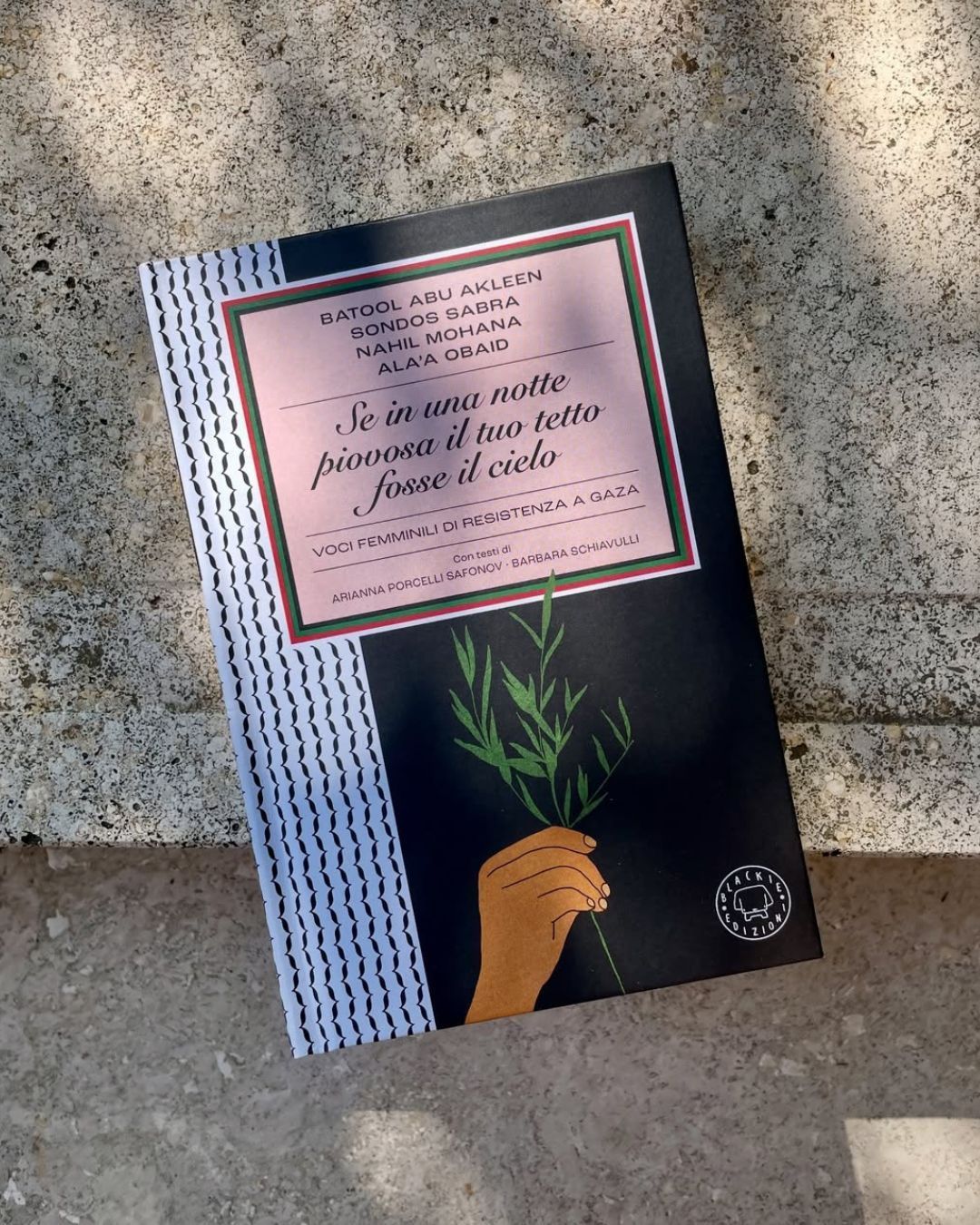
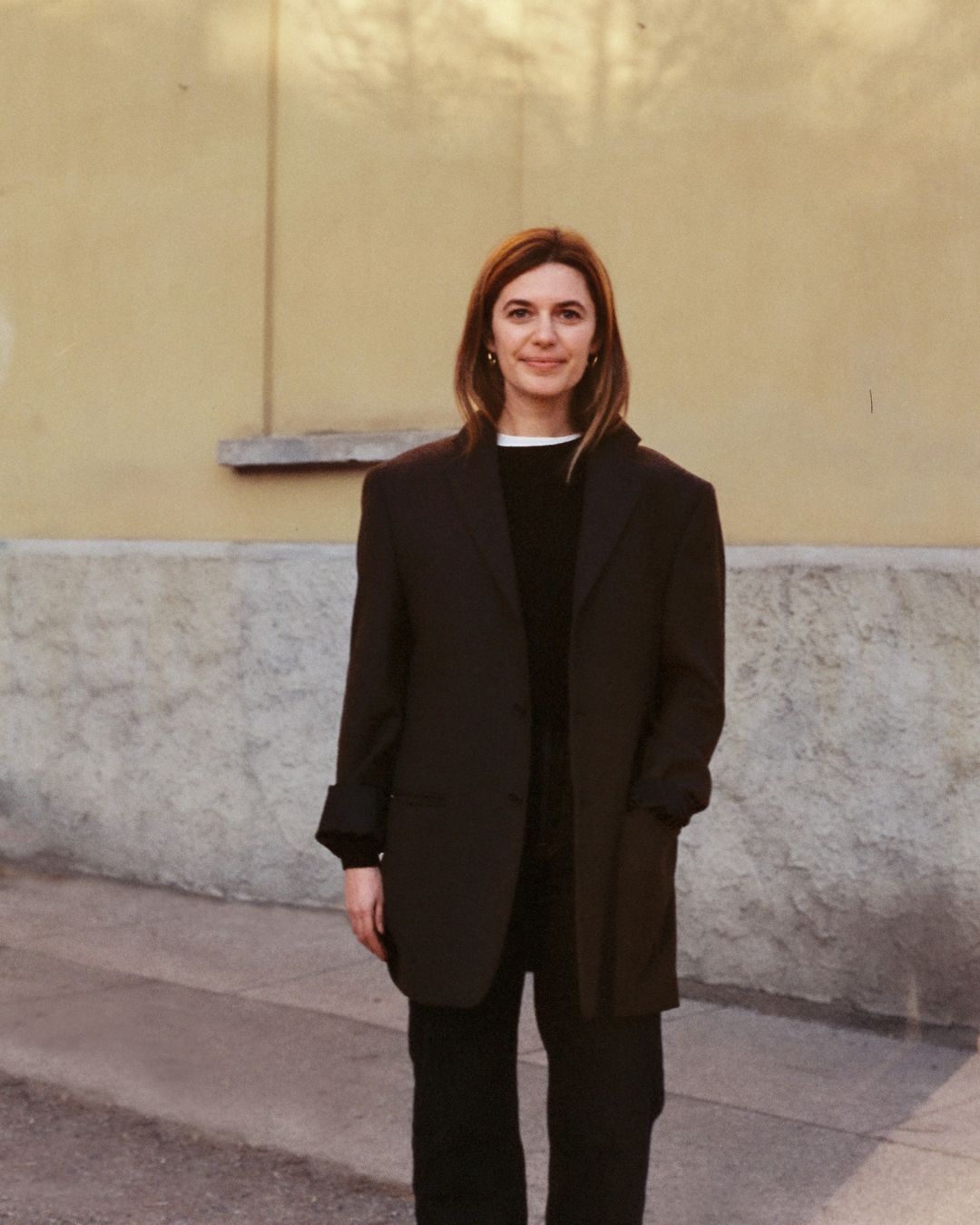
There is a suspended summer, still and heavy with omens, at the heart of the debut by Alessandra Castellazzi: a flatland crossed by the Adda river, a community marked by loss, and a young girl learning to read signs invisible to others. In her first novel, titled La radura, the author weaves together grief, coming of age, and environmental unease in a story that moves between new weird and climate fiction, following Viola as she searches for her missing sister in a landscape that seems to transform before her eyes. A translator and editor with extensive experience, from Maggie Nelson to Olivia Laing, Castellazzi brings to fiction a precise and sensitive gaze, capable of holding together intimacy and the uncanny. In this interview, she tells us about the origins of the book, the relationship between provincial life and unease, and what it means to debut today with such a delicate and mysterious story.
Interview with Alessandra Castellazzi on her debut novel, La radura
The Clearing tells the story of Viola and the disappearance of her sister. When and why did this story come to life?
I started from the flatlands. I have always perceived the plains as a mysterious environment, one that hides more than it reveals. It may seem counterintuitive, given that the horizon is flat and open, but precisely the lack of an elevated vantage point, which would allow you to observe from above and gain an overall view, removes any sense of orientation. Then it was the summer of 2022, one of the driest in recent years, with the Po River at historic lows, retreating and exposing what had long been hidden on its riverbed. The disappearance of Viola’s sister, the driving force of the novel, began to merge in my writing with other, natural disappearances in the landscape.
How much did your personal experience and the places you know influence the choice of a small town on the Adda River as the setting?
A lot. I grew up in a town on the Adda, and for me the river has always been a constant presence; a measure of the seasons and the passage of time. It swells, it shrinks, it can be calm or threatening. Even in a highly urbanized and human-shaped environment like the Po Valley, the river can never truly be tamed. No matter how many embankments and dams you build, when there’s too much water, there’s too much, it overflows. The river is also a distinct ecosystem socially: it’s close to the town but not within it. It’s a place of summer, of youth, but precisely because it is separate from the inhabited space, it retains something elusive. Beneath the surface, there are whirlpools and currents. Viola is a young female protagonist who observes and interprets the world around her.
How important was it for you to give voice to such a central female perspective?
I was interested in that age when you are neither one thing nor the other, neither a child nor a teenager. A time when the absolute certainties of childhood have started to unravel and the relationship with the world has taken on more conventional, rational paths, but there is still a back-and-forth between the two states: one moment you fully believe in your imagined worlds, relying entirely on magical thinking, the next you don’t. This oscillation between different modes of understanding was central to the relationship with the clearing.
Would you define it as a female novel with a distinctly female perspective? Why?
No. What I tried to do was actually move away from a purely "human" point of view, making the clearing itself the center of the narrative, of the mystery the protagonist interacts with. Of course, if I think about my influences, there are many female writers, novels and films centered on women, even the experience of mystics. But I would like to move beyond this gender logic. Just because the person writing the novel is a woman and the protagonist is a woman, a girl, or a child, it doesn’t necessarily mean the perspective is female. When all those roles are filled by a man, it is taken for granted that the perspective is universal, not male. Why should it be different for a woman? In every novel you expect to encounter a point of view; and naturally that point of view is shaped by the writer’s experience of the world, but it is not limited to it.
Do you think contemporary Italian literature gives enough space today to female voices and stories?
I think it’s a great moment, with many diverse books being published, both novels and essays. With different tones: serious, playful, committed, irreverent. I think of Don’t Write About Me by Veronica Raimo, Missitalia by Claudia Durastanti, Dirty Water by Nadeesha Uyangoda, Tangerinn by Emanuela Anechoum, The Last Water by Chiara Barzini about the aqueduct built by Mulholland that brought water to Los Angeles; Giulia Scomazzon with her Venetian-set novel; the porno-weird stories by Alice Scornajenghi; the essays by Sofia Torre, Sandra Cane, Sara Marzullo; the science fiction of Nicoletta Vallorani and the literary criticism of Sara De Simone. I’m forgetting many, but it feels like there is a rich variety of voices and freedom to explore. I’m curious about what will come next.
How do you see contemporary Italian literature today, especially regarding younger readers and more experimental genres?
It’s a debate that resurfaces periodically, about the contemporary novel and what it should do. I don’t think a novel has to mirror reality one-to-one to speak about the present. For me, a novel speaks to the present when it captures certain anxieties, unease, dilemmas or desires or presences that permeate our daily lives. When it acts as an antenna, in a way. And then it tries to channel what it picks up. Even by transforming it, translating it, disguising it… Do you think there is space for weird, mystery, and climate fiction in Italian literature, or are they still underexplored territories? There is a strong weird vein in Italian literature that contaminates more traditional genres, even where you wouldn’t expect it. Take Michele Mari. In Legend (Leggenda privata), one of his more “conventional” books, the autobiography about his father Enzo, the designer, the narrative is interwoven with Mari’s struggle against his own demons—and not metaphorical ones, but actual beings that appear in his room at night and torment him. There is a long tradition of this kind of storytelling in Italy: Anna Maria Ortese, Wilcock, Buzzati… If you think about it, even Orlando Furioso was a wild journey. And now new influences of strangeness are arriving from international fiction, not only Anglo-Saxon. Japanese authors like Sayaka Murata; the Asia series by Add publishes beautiful titles; and Zona 42, a small publishing house specializing in science fiction.
The province, with its rhythms and small communities, almost becomes a character in the book. What fascinates you about this microcosm?
I liked the idea of portraying a canonically closed world, with precise rhythms and unshakable certainties. Partly because, on a narrative level, I preferred having a limited set of elements that would recur in a persistent, almost obsessive way, and partly because in such a contained universe, the intrusion of something external, powerful, and inexplicable is more explosive. It can open breaches, sow destruction, but also open up possibilities. Or be quickly suffocated and normalized for the sake of social order.
Do you perceive a renewed attention to the theme of the Italian province in general? I’m thinking of Le città di pianura or Crocevia di Punti Morti by Matteo Grilli
It seems to me that there is a new attention to the province beyond postcard imagery, slow living, picturesque villages, and small-town crime stories that have never gone out of fashion. Le città di pianura I watched twice because I loved it, it has a sweetness and ruthlessness that constantly blend into each other, like the constant hum of traffic in the background. Matteo Grilli is a friend; his Pagliare is a mythical place, an even more decayed version of King’s Derry, we’re both fans of Stephen King. But like him, I didn’t want to create a fully realistic portrait of the province, but rather to emphasize certain aspects. He works through exaggeration, especially in language. I was interested in amplifying certain atmospheres, transposing American Gothic onto the Po Valley: endless wheat fields, isolation, impermeability. Somewhere between Ti West’s horror films and a painting by Grant Wood.
Which books or authors inspired you while writing La radura?
The inspirations layered over time. Mariana Enriquez, an Argentinian writer who took classic, cold, winter horror and created her own warm, urban version of it, was a model. Shirley Jackson is one of my favorite writers. Then Picnic at Hanging Rock by Peter Weir, a film where disappearance and landscape are central. Staying with films, Alice Rohrwacher. And visual artists, especially Ana Mendieta with her Siluetas series.
What advice would you give to someone who wants to write young adult fiction, especially with mysterious and experimental tones?
Follow your own unease and see where it leads.
