




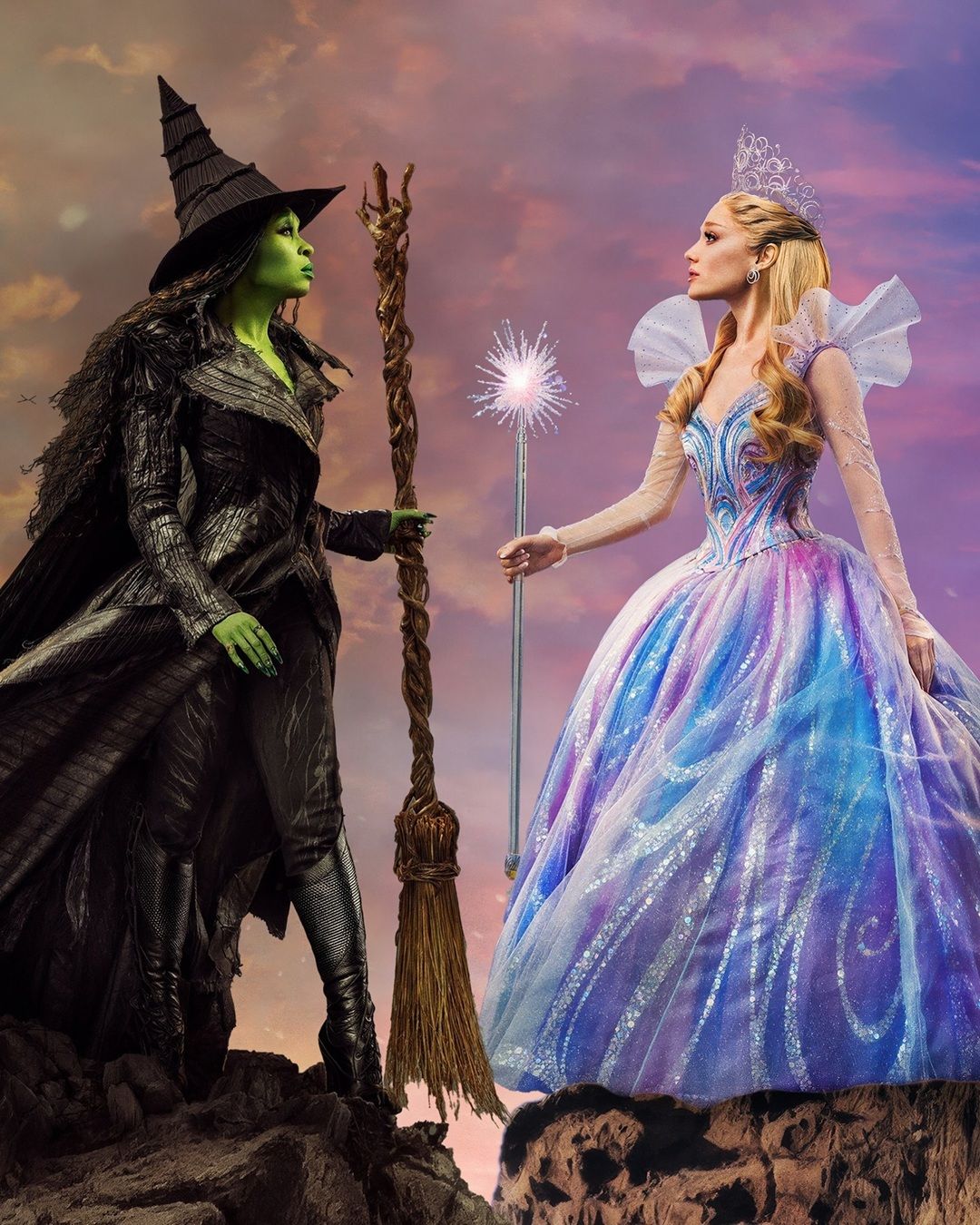
Has "Wicked – Part 2" lost some of its magic? Only one year after the first movie, things seem to have changed for the musical starring Ariana Grande and Cynthia Erivo
We have a problem with Wicked 2. Not exactly a problem, more a feeling. In 2024, it was all anyone talked about. With the world’s attention fixed on the adaptation of the 2003 musical by Winnie Holzman and Stephen Schwartz, itself based on Gregory Maguire’s novel Wicked: The Life and Times of the Wicked Witch of the West, Part One was a thrilling cinematic moment regardless of the final outcome, which was very good. But it was everything surrounding it that contributed to the magic. A global press tour followed everywhere, interviews going viral, and even the possibility that the leads Ariana Grande and Cynthia Erivo could win an Oscar, a possibility that ended with nominations only, with the statuette instead going to Paul Tazewell for Best Costume Design and to Nathan Crowley and Lee Sandales for Best Production Design.
Waiting for Wicked 2 and a Less Potent Spell
In 2025, everything feels different. Even as the clock moved closer to the release of Part Two, the spell that had enchanted the previous film seemed to have dissolved, and so had the world’s interest in the project directed, once again, by Jon M. Chu. Meanwhile, the red carpets arrived. Erivo and Grande promoted the musical while continuing to hold hands, sharing joy, tears, and even moments of panic, like when an overly excited fan managed to run onto the Singapore premiere’s red carpet and hug the actress playing Glinda, who was swiftly shielded by her Elphaba. The truth is, the atmosphere leading up to the release of Wicked 2 simply wasn’t as electrifying as it had been the year before, and that feeling carries onto the screen.
Narrative Problems and a Stretched Story: The Wicked Sequel Falls Short
Despite maintaining both narrative and visual consistency with the 2024 film, Part Two suffers from the stretching required to split the Broadway musical into two movies. New original songs are added, and the story is pulled too thin, weakening its impact until it inevitably deflates. It’s incredible how everything remains the same, yet everything feels different. The award-winning sets and costumes from just months earlier, the dazzling visions of the Land of Oz, the wizard’s lies waiting to be exposed. Even the performances of the entire cast seem to have shifted, full of the pathos demanded by a final chapter, yet unable to withstand the rewrites and additions that weigh down the film and at times render its scenes repetitive.
A reflection on the villain’s role (that fails to emerge)
The power of the narrative also fades in this second installment. Exploring the deconstruction of the villain archetype, Wicked was a pioneering work that anticipated cinema’s and literature’s later interest in showing how so-called bad guys are shaped and what ultimately defines them. The story from the novel, later brought to the stage and then to the screen, shows how prejudice can be weaponized into discriminatory campaigns that banish anyone who is different, to the point of branding them as evil. Those who do not conform to expectations must pay the price. Yet even the political and human depth of Wicked fails to emerge in Part Two, choosing instead to focus on the back-and-forth between Elphaba and Glinda rather than articulating a serious discourse on the malleability of media and communication (as depicted in the film) and on how easily people can be swayed when their fears and instincts are targeted.
Emotion guaranteed, but no Oscar ambitions
Despite all this, Wicked 2 remains a viewing experience that leaves room for emotion, perhaps because it tries too hard to seek it and sometimes ends up losing it. Still, it’s hard not to shed a tear during For Good (which, fittingly, gives the international title Wicked: For Good). As for its leads, the possibility for Grande and Erivo to aim for the statuette seems to have vanished. Their performances are heightened as required by Part 2, but awarding them an Oscar would be unfair to their fellow actresses (such as the exceptional performances by Jessie Buckley in Hamnet or Rose Byrne in If I Had Legs I'd Kick You). Nevertheless, Wicked proves that it is possible to give voice to beautiful friendship stories, not only on the big screen, but also off it, judging by the genuine bond formed between the two actresses.