























Hips baring dresses are the new frontier of fashion desire Between history, runways, and celebrity culture, the side-hip trend is emerging as the micro-trend of the moment
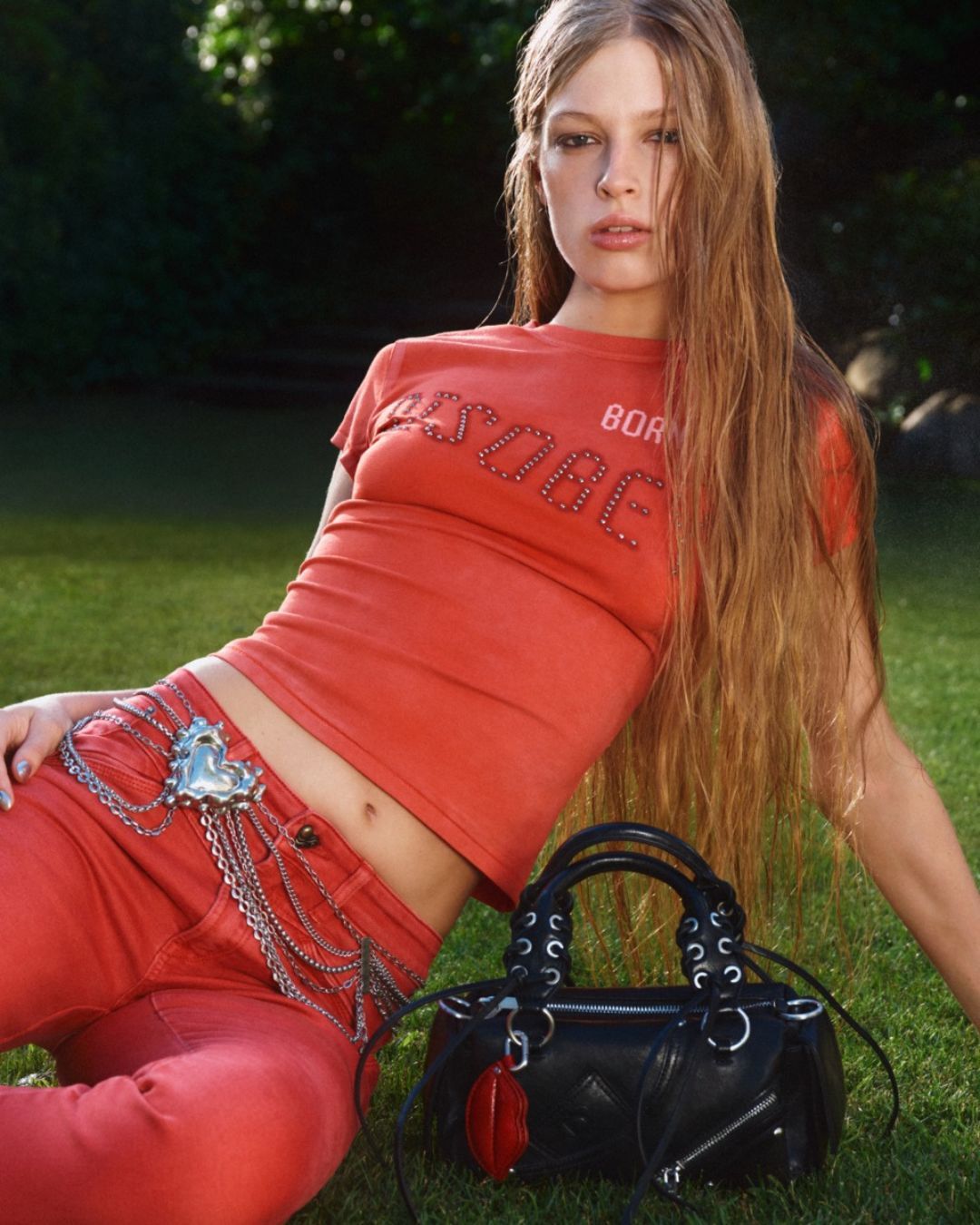
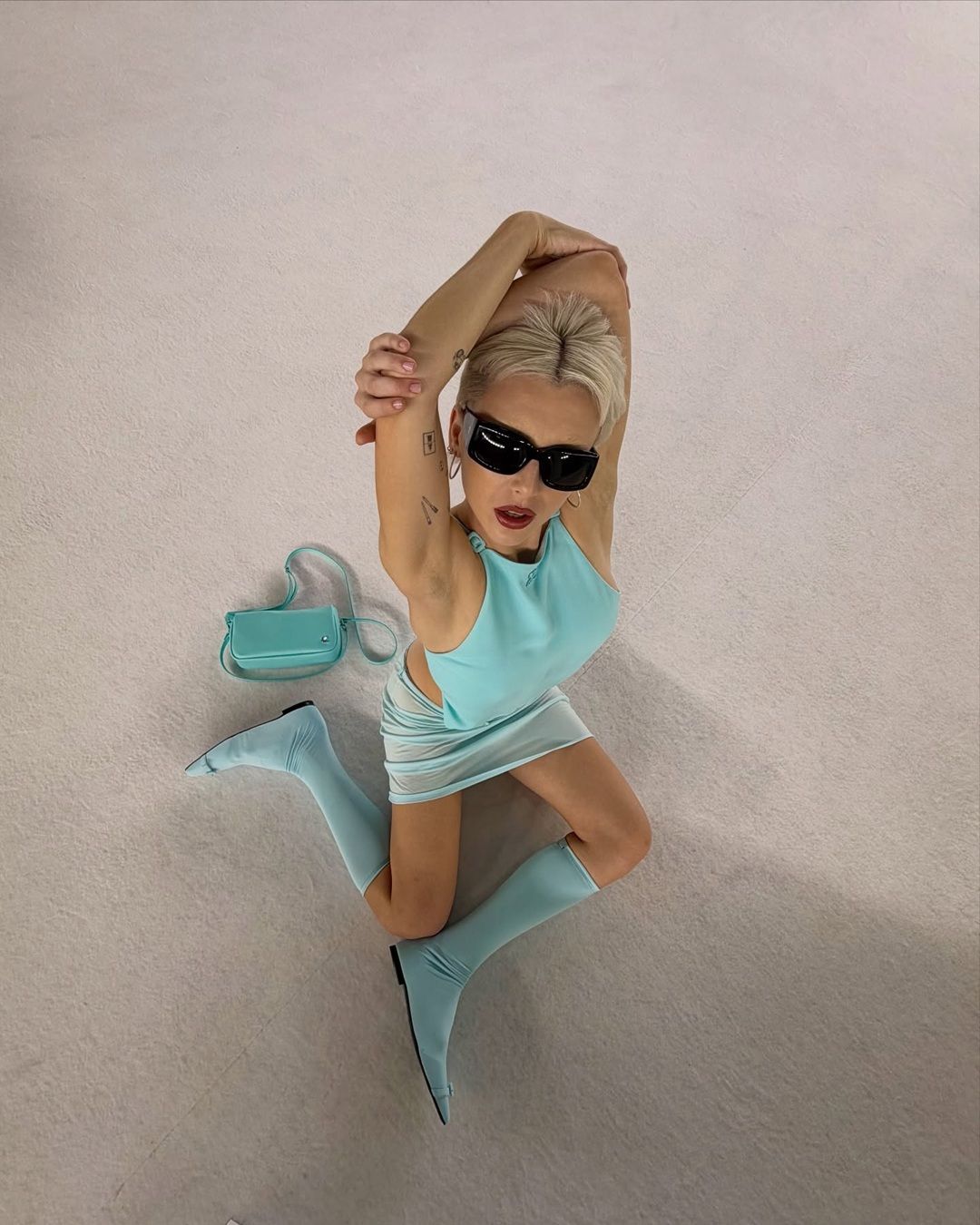
There is always a moment in fashion when the body changes its grammar. It doesn’t happen with an official announcement or an explicit diktat, but through a small semantic deviation: a line that breaks, a seam that disappears, an emptiness that replaces fullness, a subtraction of fabric that shifts attention elsewhere. This year, that paradigm shift has a precise and unexpected geography: the hips. Forget plunging necklines and sculpted backs (or at least set them aside for a moment); today attention slides laterally, to that mildly scandalous area that until yesterday lived somewhere between waistband and oblivion. Welcome to the era of dresses with hip cut-outs, where what is unsaid becomes styling and absence becomes narrative. Because yes, the side-hip trend lives exactly there, in that unstable balance between sartorial control and voyeuristic instinct. It is a precise, almost architectural gesture that redefines the silhouette without ever openly declaring it. A play of tension that, inevitably, divides. And sometimes pushes further.
Hip baring and side-hips on the SS26 and FW26 runways: anatomy of a micro-trend
If fashion is a system of weak signals that, at a certain point, become impossible to ignore, then the Spring/Summer 2026 and Fall/Winter 2026 collections mark the moment when the hip signal became a dominant frequency. On the SS26 runways, the approach was subtle, almost insinuating. Designers like Akris, Gabriela Hearst, Carolina Herrera, McQueen, and Tom Ford introduced the theme with near-surgical precision, inserting lateral openings into seemingly classic garments, interrupting the continuity of the silhouette with minimal yet decisive gestures. It was not yet provocation, but a form of visual suspension, as if the body were suddenly “cut” to reveal a new map. With the arrival of FW26 collections, however, the narrative shifts in tone and intensity. Here, hip cleavage becomes more explicit, but also more conceptual. From Balenciaga to Courrèges, and Gucci under Demna’s direction, the hip becomes a structural element of the design, no longer a decorative detail. Garments shorten at the waist, open at the sides, and are draped to create real architectural voids around the pelvis. It’s a sensuality that no longer seeks immediate approval, but works through subtraction and precision. And in this balance between eroticism and construction, between body and design, the side-hip finds its strongest legitimacy, evolving from a simple trend into a language.
A brief (but revealing) historical excursus
As often happens, what seems new is actually a variation on an old theme. Cut-out dresses belong to a long aesthetic genealogy that spans decades and different sensibilities, cyclically re-emerging whenever fashion feels the need to redefine the relationship between body and clothing. As early as 1930s and ’40s Hollywood, actresses like Lauren Bacall experimented with dresses that revealed glimpses of skin in a sophisticated way, playing on the boundary between elegance and suggestion. In the 1960s, the visual revolution of Pop Art transformed these cuts into graphic elements, circles, squares, geometric openings, that punctuated the designs of Pierre Cardin and Mary Quant, turning the body into an almost artistic surface. But it is in the 1990s that the discourse radicalizes. The body becomes a manifesto, and the pelvic cutout enters the fashion lexicon with explicit erotic charge Julia Roberts' mini dress in Pretty Woman marks a point of no return, while Tom Ford at Gucci builds an entire aesthetic on the seductive power of strategic cut-outs. At the same time, Alexander McQueen pushes the center of sensuality even lower with his “bumsters,” anticipating today’s fascination with the pelvis, now returning in the form of hip slits. What we see today is a synthesis of all these influences, less loud, more analytical, yet deeply aware of its own history.
Oscar 2026: the (controversial) triumph of hips
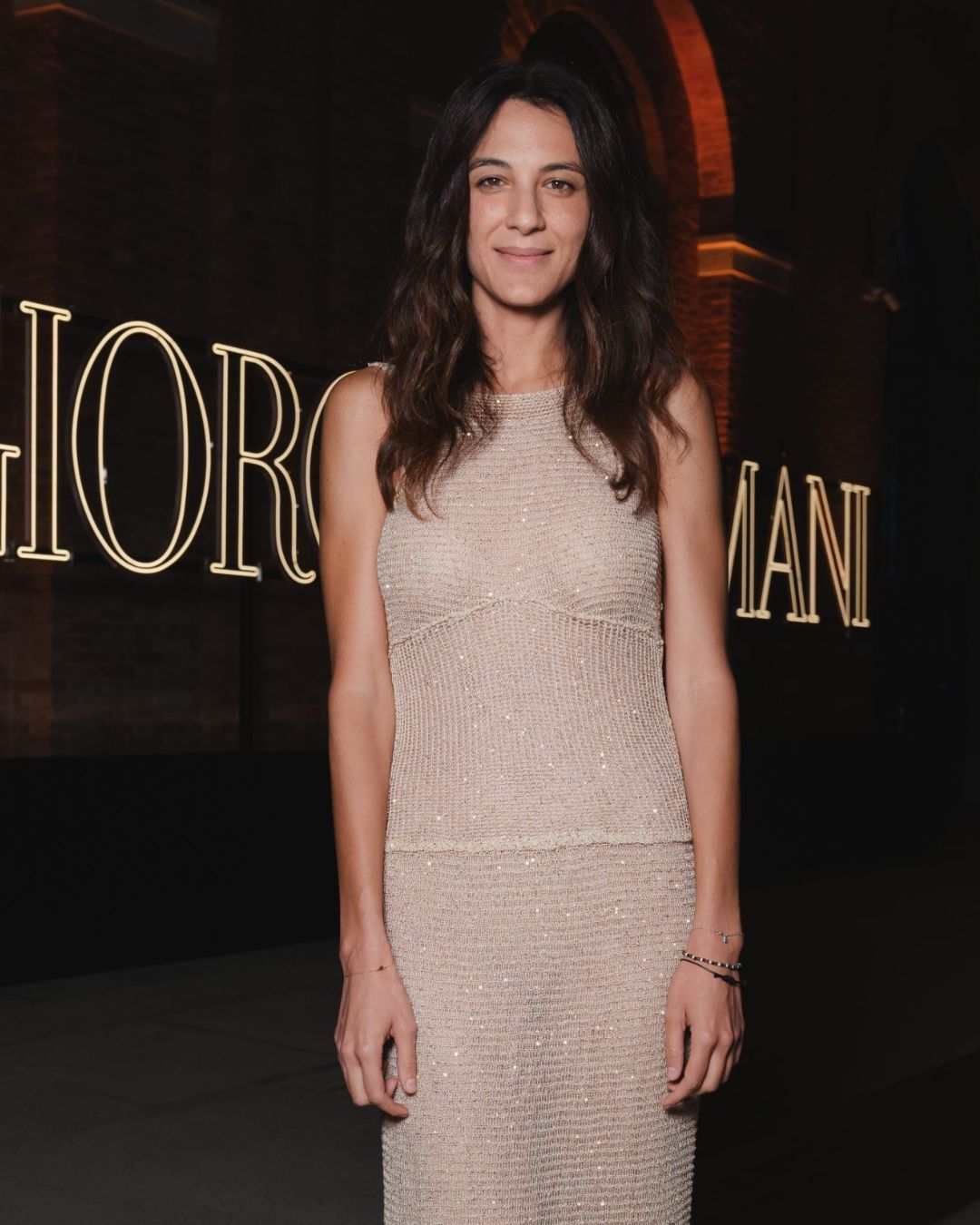
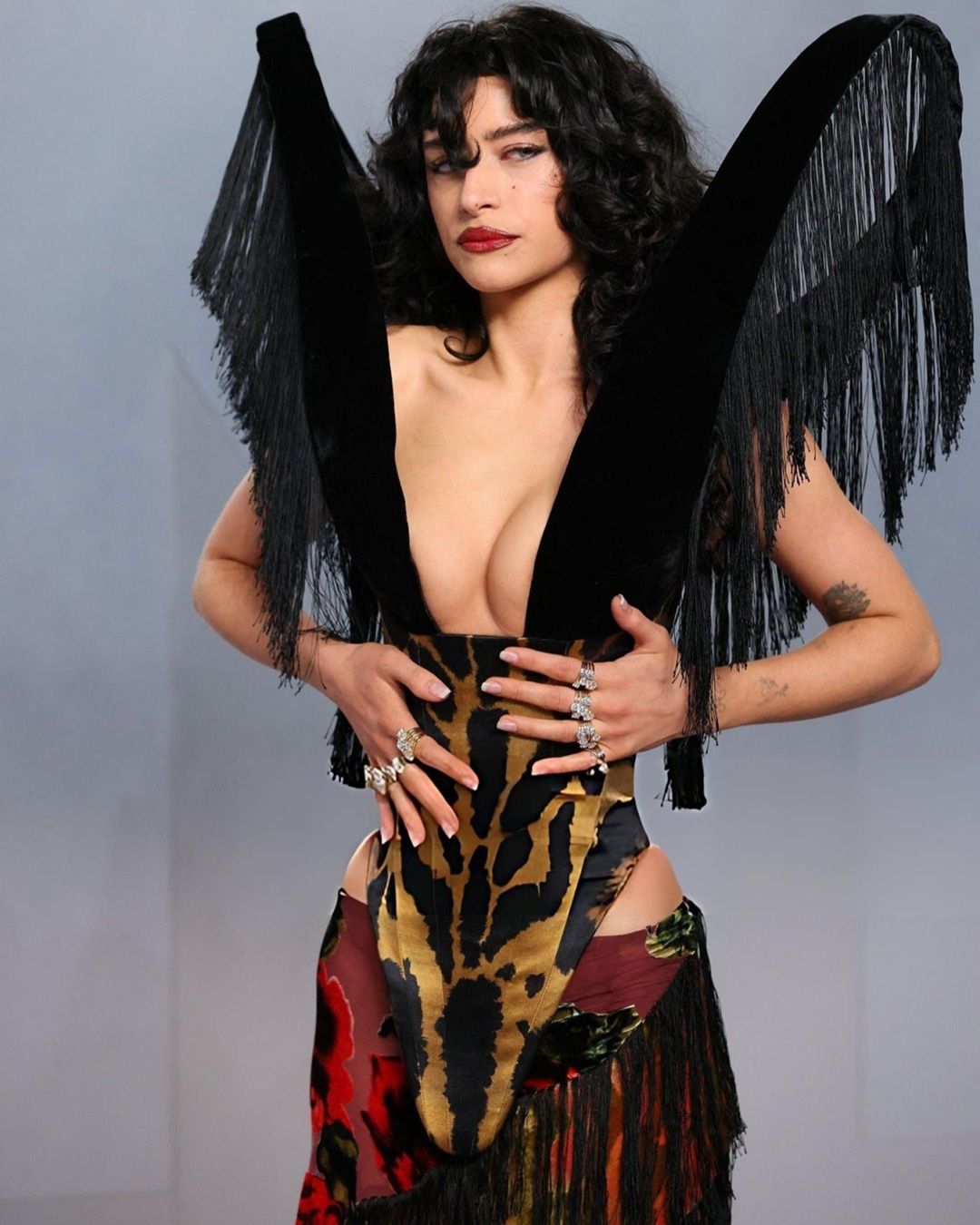
If runways are laboratories, the red carpet is the testing ground. And at the 2026 Oscars, side-hip cut-outs passed the test with almost disarming confidence. They weren’t the dominant trend, but they appeared exactly where they needed to, in details, in targeted choices, in looks that wanted to say something without raising their voice. Bella Hadid, in Prada, opted for a minimal version of the trend, a barely perceptible opening that was nonetheless enough to destabilize the entire outfit, proving how little it takes to change the perception of a silhouette. Kylie Jenner perfectly embodied the trend’s dual nature, choosing a more controlled version on the official red carpet and a much bolder one at the Vanity Fair after-party, where her McQueen ensemble turned the side-hip trend into a statement. Keke Palmer, in Gucci, used the hip cut-out as an identity element, revealing her tattoos in a play of disclosure that was both aesthetic and personal. Odessa A’Zion, in Harris Reed, pushed the concept into almost theatrical territory, with a corset that broke at the hips to make room for flowing volumes. We could also mention Alana Haim in Louis Vuitton and Naomi Watts, who brought to the red carpet a backless look with a lateral opening straight from the FW26 Balenciaga runway, proving that hip cleavage is not about age, but attitude. The same attitude shared by Renate Reinsve, in a tomato-red dress with a vertiginous slit by Louis Vuitton, and Gwyneth Paltrow who, in Armani, chose the path of sophisticated transparency, turning the cut-out dress into an exercise in controlled elegance. And then, as always, there are those who go further. Did you see the champagne-colored dress worn by Devon Lee Carlson? The asymmetrical slit was so deep that it revealed not only the leg and hip, but also part of the buttock, so much so that fashion insiders are already calling it “peek-a-butt.”
Hip baring, but with method
In the end, it all comes down to balance. The side-hip trend is not just an aesthetic provocation, but an exercise in restraint. How much to show? How much to hide? How much to suggest? Terms like hip baring, hipbones peek out, or even the irreverent “peek-a-butt” perfectly capture the ambivalent nature of this trend, suspended between irony and desire, awareness and play. It is not an easy trend, nor an immediately democratic one. It requires a certain ease, a negotiation with one’s own body, and, not least, a rather drastic reconsideration of lingerie. And yet, precisely for this reason, it works. Because in a landscape where fashion has already shown everything, focusing on such a specific detail reactivates the gaze, creating a new visual hierarchy. Dresses that leave the hips exposed are not destined to please everyone, and will probably never become an everyday uniform. But that’s not the point. What makes them interesting is their ability to shift the conversation, not “how much” to show, but “where” to do it. They function almost like a code for insiders, a subtle signal that distinguishes those who truly observe from those who merely look. In doing so, they transform a marginal part of the body into a new narrative center, proving that in fashion, even the most overlooked space can suddenly become essential.