













































"The map that leads me to you" and the theory of insistent music in films The original work of Prime Video reveals a technique for completing a story even when there are no ideas
The Map That Leads to You is the new Prime Video film based on the novel of the same name by J.P. Monninger and directed by Lasse Hallström, which has nothing to say. Absolutely nothing. It’s easy to see why: there’s a detail that sets an equation in motion and makes it clear how the movie, adapted for the screen by Leslie Bohem and Vera Herbert, is one of utter emptiness. The story follows protagonists Heather (Madelyn Cline) and Jack (KJ Apa), who meet on a train (just as the far more fascinating and moving Celine and Jesse did in the timeless Before Sunrise back in 1995), before embarking on an unexpected journey that leads them into the two most intense weeks of their lives.
"The Map That Leads to You" is an empty film
Leaving aside the fact that Heather’s group of friends’ irresponsibility is no longer believable in 2025—and that showing a group of young women trusting complete strangers without even hinting at possible terrible consequences (a throwaway line about one of them maybe being a serial killer isn’t enough) is hardly a great example—the film relies on the chemistry the two leads are meant to spark over the course of a single evening, but never bothers to develop it properly throughout the story. How to make up for this gap? With music, apparently. The constant, uninterrupted, never-ending presence of music.
The Prime Video film’s soundtrack tries to fill the void
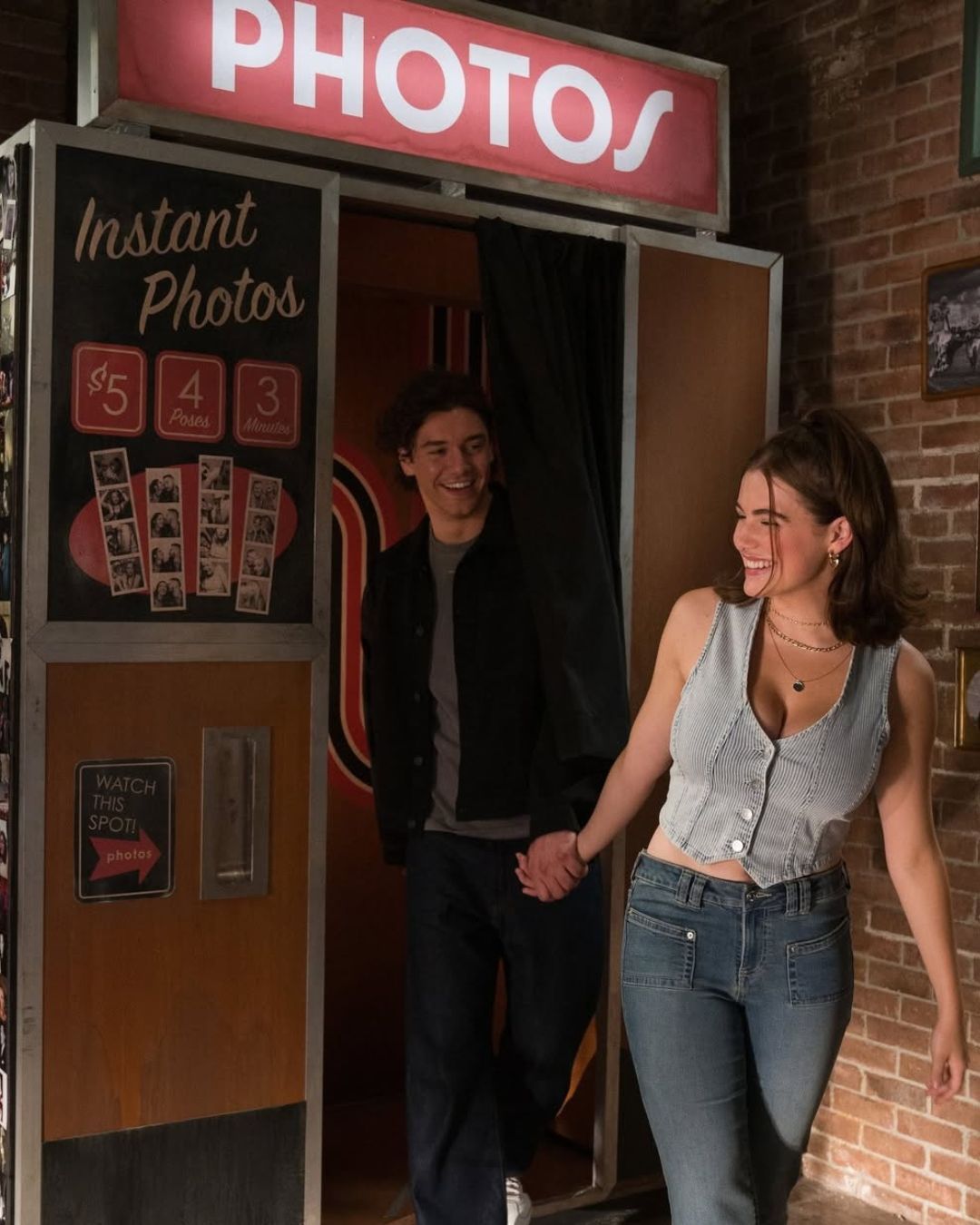
There are many, too many, we’d say, scenes in which absolutely nothing happens, where the movie stalls for two or three minutes longer than necessary just to let the protagonists twirl to the notes of the chosen soundtrack. By the end, you’re left with the impression of having heard more songs played than actual words spoken by the characters. An all-too-easy shortcut (and an expensive one, considering all the rights they must have paid) that many films resort to when it’s obvious they have nothing solid to hold on to. The goal is to reach the end of the story without knowing how, padding the narrative with suspended, unnecessary moments that, if cut, would cause no harm to the plot. If anything, they’d just reveal its fragile, flimsy skeleton even more.

A theory that The Map That Leads to You puts into practice perfectly, chasing after a sense of romance while trying to pass off the illusion that those musical interludes somehow express Heather and Jack’s feelings better than a thousand words could. In reality, it’s clear the screenplay doesn’t know what else to have the characters say beyond the few fixed points borrowed from the novel, leaving the audience to endure a string of tracks, giggles, and wistful gazes into the distance that are completely meaningless to the story, along with a few philosophical one-liners that add little value. It feels like watching one of those birthday slideshow videos with photos and songs, or worse, like being forced to sit through someone’s vacation home video. The kind you wish you could mute to avoid yet another song kicking in. And in fact, with or without sound, your understanding of the story through its images wouldn’t change one bit. So beware of romantic films with an endless list of tracks in the credits. Like The Map That Leads to You, a story as familiar as countless others, and just as forgettable.