The return of rebel teens in cinema says a lot about how we cope with reality Just in time for the new installment in the Hunger Games saga, Sunrise on the Reaping
For a few years, we had a very clear idea of who was going to save the world: teenagers. Specifically traumatized, heavily armed teenagers surrounded by completely untrustworthy adults. Katniss had to survive a lethal reality show before becoming the face of a revolution. Tris discovered that the meticulously organized society she grew up in was engineered around fear and control. Thomas woke up trapped in a giant maze with zero memories and ended up overthrowing the entire System.
The Hunger Games and beyond: the cinematic economy of rebel teens
The Hunger Games, Divergent, The Maze Runner, The 5th Wave, The Giver. Between the late 2000s and the mid-2010s, YA dystopia became a colossal publishing and box-office juggernaut. Rules, settings, and characters shifted, but the blueprint remained unmistakable: an apparently orderly society conceals a radically corrupt core, the protagonist stumbles upon the truth, and that personal awakening turns an individual struggle into a collective revolution. Eventually, though, franchise fatigue set in and the machine ground to a halt. Box office returns dwindled, Divergent's fourth film never even made it to theaters, and romantasy steadily took over the shelf space dystopia once commanded. The trope of sorting adolescents into factions and forcing them through lethal trials suddenly felt distinctly tethered to 2012, right alongside Tumblr and owl pendant necklaces. Yet here we are, all over again.
The return of YA dystopia
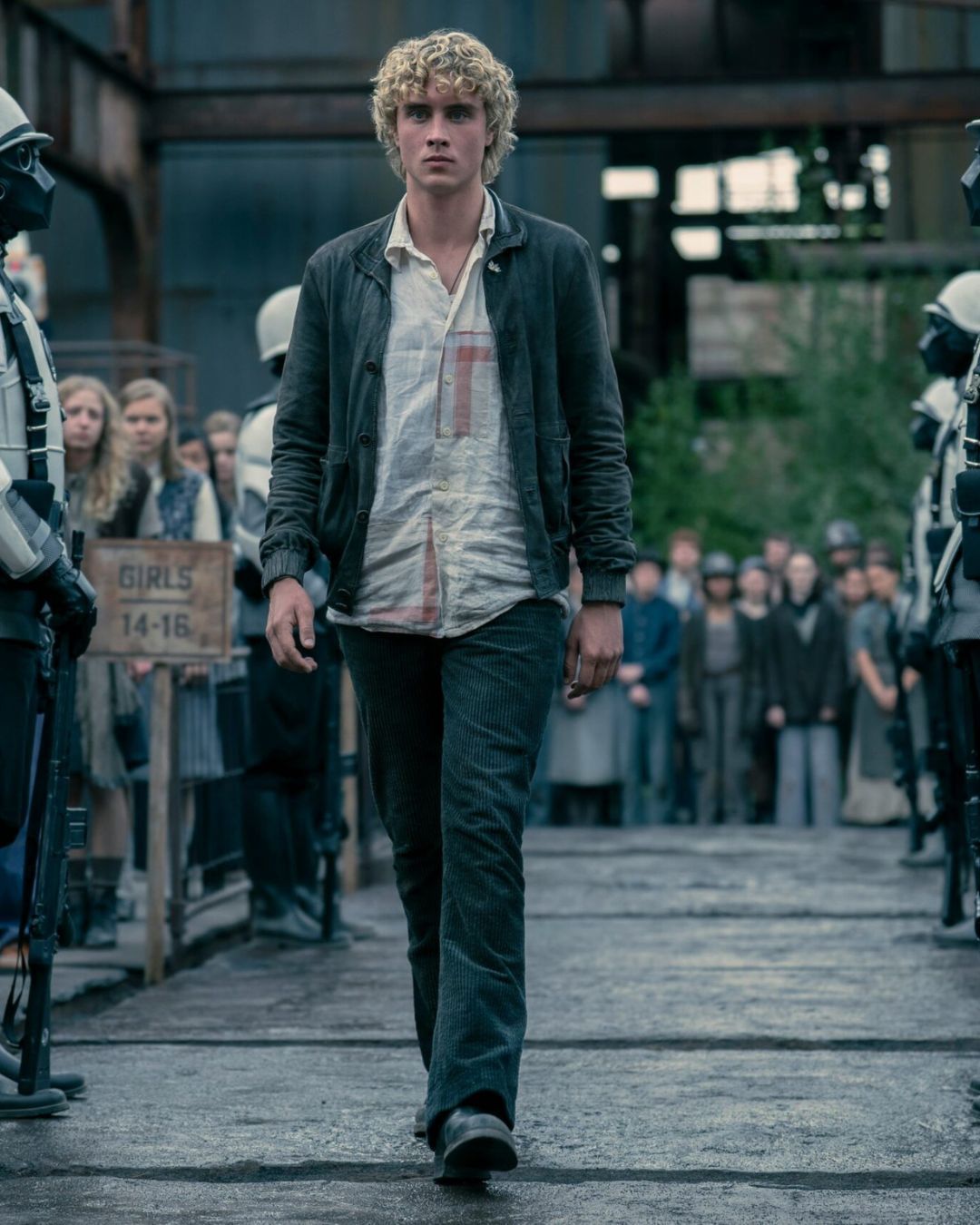
This past October, Veronica Roth revisited the Divergent universe with The Sixth Faction, a brand-new duology that reframes the original story. In November, The Hunger Games: Sunrise on the Reaping hits movie theaters, centering on Haymitch's own games after the prequel novel sold millions of copies. Meanwhile, Paramount recently acquired the rights to Red Rising, Pierce Brown's sci-fi epic tracking a society rigidly compartmentalized into castes, tapping Francis Lawrence - the director who brought Panem to life - to helm the adaptation. And it isn't merely legacy franchises being exhumed: Publishers Weekly explicitly pointed to the renaissance of YA dystopia, spotlighting a fresh wave of fiction centered on authoritarian regimes, state-sponsored propaganda, colonialism, and rewritten history. It’s safe to say nobody is particularly surprised, nor is it hard to grasp why younger audiences are gravitating back toward the genre. Early millennial optimism has largely evaporated, and the real world feels grim enough that we’re once again drawn to reading about far worse versions of it.
Why does dystopia feel comforting?
Dystopian fiction doesn’t work simply by letting us indulge in worst-case scenarios. Paradoxically, it feels comforting because it reduces seemingly impenetrable systems into something instantly legible. Brutal inequality gets distilled into a physical wall dividing the Capitol from the districts. Social control becomes an assigned faction. Class divides are color-coded. Gargantuan crises like mass surveillance, institutional violence, wealth concentration, and propaganda are repackaged into a mechanism transparent enough to be pinpointed and, above all, fought against.
In the words of The Hunger Games author Suzanne Collins
Suzanne Collins never conceived The Hunger Games purely as adolescent rebellion escapism. Reflecting on Sunrise on the Reaping, she shared that her starting point was David Hume’s concept of how easily "the many are governed by the few," alongside a drive to unpack propaganda and the weaponization of narrative. The lingering question running through the book is simple: what is real, and what isn't? Veronica Roth voiced a similar sentiment when explaining her decision to return to Divergent, observing that today's teenagers are watching the systems they presumed were permanent unravel in real time.
Why now? The answer is uncomfortably obvious
Classic dystopias inevitably tackled propaganda and authoritarianism. Yet today, those fictional devices hit far closer to home than they did 15 years ago. We navigate a landscape saturated with synthetic imagery, deepfakes, meme warfare, and opaque algorithms curating the reality delivered to our screens. In the Digital News Report 2026, 62% of respondents expressed deep concern over distinguishing credible reporting from misinformation. Modern dystopian releases, consequently, dial straight into information manipulation. The core appeal remains unchanged: counterintuitive as it sounds, these narratives offer reassurance. YA dystopias depict nightmarish landscapes that are almost never incomprehensible. At some point, the protagonist stumbles upon the restricted room, recovers the redacted files, and decodes why things happen the way they do. The apparatus has a blueprint, and once cracked, it can be dismantled. Good and evil remain distinct; once the illusion shatters, there are only two sides: with the people, or against them.
Dystopia vs. reality today
In real life, of course, the plot is messy and morally ambiguous. In that sense, we aren’t running back to dystopian stories out of a morbid desire to watch the world end and see modern life burn down. Instead, the resurgence of YA dystopian narratives reflects a naive, nostalgic impulse: the belief that our world, however broken, can still be understood and set right. That beneath the chaos lies a single lie waiting to be exposed, a throne to be toppled, and ideally, a revolution ignited well before the credits roll.
What to read next
Jennifer Lawrence, blepharoplasty and the obsession with an ever-wider gaze
Where did the hooded eyes go?
"Making Marie Antoinette" is a beautiful portrait, just not of Sofia Coppola
The documentary is directed by her mother, Eleanor Coppola, the real star of the film available on MUBI