Why do we think every famous couple is a PR stunt? Dakota Johnson and Machine Gun Kelly vs Harry Styles and Zoë Kravitz: who is the fakest
Two celebrities are spotted walking out of the very same restaurant. Before anyone even has time to figure out whether they're actually seeing each other, the internet has already pieced the whole narrative together: who tipped off the paparazzi, what movie is slated for release, which album needs promo, and which power agent orchestrated the meetup. Because, obviously, it’s all pure PR.
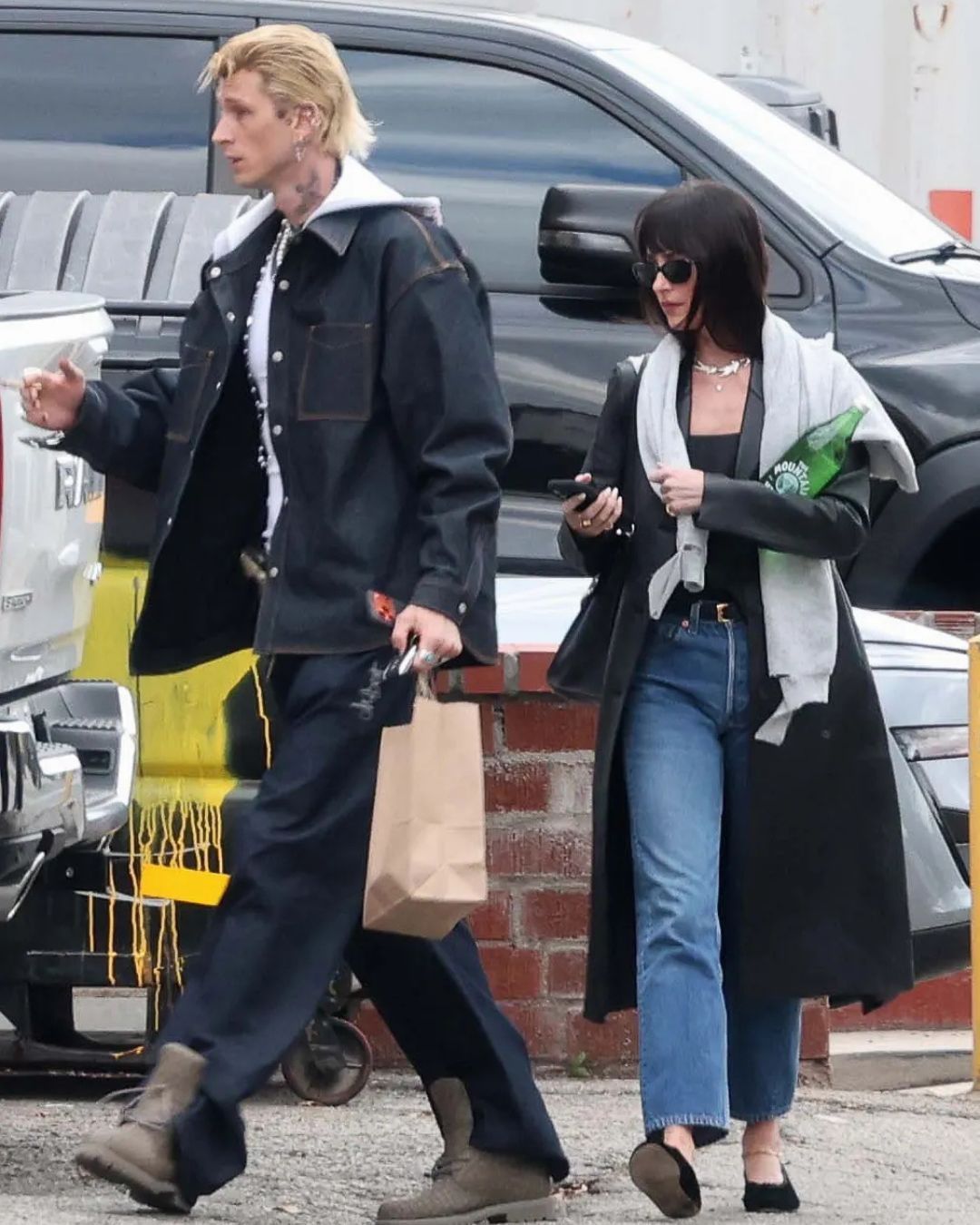
Dakota Johnson and Machine Gun Kelly: real couple or PR stunt?
Dakota Johnson and Machine Gun Kelly are just the latest suspects in this well-oiled routine. Romantic rumors began linking the two in September, and they reportedly continue to hang out without putting a label on the relationship. Johnson recently told Vogue that she has basically given up on correcting the wild narratives swirling around her personal life. After all, a casual dinner with her own manager can instantly morph into a date with a mystery man.
The Reception Reserved for Harry Styles and Zoë Kravitz
Harry Styles and Zoë Kravitz received a remarkably similar greeting. When they first started stepping out together in 2025, one prevalent online theory held that the fling was purely engineered to boost upcoming tours, films, and endorsement deals. More than a year has since slipped by and the pair are now officially engaged, yet even their wedding announcement managed to share airspace with claims that it’s all still part of a coordinated strategy. Let’s not even get started on that stubborn pocket of the internet steadfastly convinced Styles has been concealing a secret romance with former bandmate Louis Tomlinson for the past 16 years.
Hollywood’s Showmances: then vs. now
Of course, PR relationships are hardly a modern-day invention. Hollywood has treated the private lives of its stars as valuable brand collateral from day one. Back during the golden studio system era, production lots held tight reins over an actor's name, public appearance, and wardrobe, routinely orchestrating staged dates expressly designed to sculpt their persona. In the most extreme scenarios, studios meddled directly in matrimonial affairs, arranging so-called lavender marriages to conceal the sexual orientation of stars whose livelihoods were jeopardized by strict morality clauses. The union between Rock Hudson and Phyllis Gates remains one of the most prominent blueprints. The key difference today is that while classic promotional mechanics unfolded almost entirely behind closed doors, we are now far more media-savvy about how the machine works. We know the paparazzi can be tipped off on speed dial, that public outings can be strictly choreographed, and that even a genuine romance can be commercially leveraged by the parties involved.
In a 2025 piece published by Yahoo Entertainment, two PR insiders broke down this exact gray area. Sarah Schmidt, president of the agency Interdependence, argued that in the vast majority of cases, PR relationships aren't fabricated out of thin air; rather, they are real dynamics that teams strategically shine a spotlight on. And it’s this ambiguous middle ground that rubs modern audiences the wrong way, precisely because - as everyone keeps pointing out - we've largely lost our appetite for nuance between black and white.
Today’s social landscape and the quest for authenticity
The internet has trained us for years to act as pop culture’s own self-appointed Sherlock Holmeses. We've become experts at identifying product placement, sponsored tags, and image rehab campaigns. We follow creators who seamlessly turn their homes, children, and sometimes even their messy breakups into feed content. In this landscape, authenticity itself has transformed into the ultimate commodity within the creator economy. It’s what theorists call the authenticity paradox: the more authenticity is deployed as a curated performance, the more hypersensitive audiences become to any underlying commercial motive. Applied to celebrity relationships, this heightened media literacy spawns an interpretive game where virtually anything passes as forensic evidence. If two people are photographed together, they called the paps. If they keep a low profile, they’re fulfilling a contractual NDA to build mystique. If they post a selfie, it’s a calculated stunt to drive hype. If they stay silent, it’s an artful soft launch. If they split right around a tour wrap party, the expiration date was obviously hardcoded into the contract from day one. Eventually, the theory becomes impossible to falsify, because even a complete lack of evidence is twisted into proof.
Ego trip or truth-seeking? The anatomy of gossip deconstruction
It makes you wonder whether the thrill isn't rooted right here: maybe this constant sleuthing feeds our own ego far more than any earnest pursuit of Truth. Believing we’ve outsmarted the playbook shields us from feeling like the gullible audience Hollywood is trying to sell a fairytale to. Rather than consuming gossip at face value, we aggressively deconstruct it. We’ve spotted the backstage wires, we know how the illusion works, and we see the whole thing as an obvious puppet show. Our collective obsession with PR relationships feels like just another outlet to channel our frustration with the overwhelming uncertainty of our current cultural moment. If everything feels manufactured and even political agendas can trickle down through the most unsuspecting pop culture figures, identifying the con feels like self-defense. It makes us feel sharper, immune to being duped, calmer. In control. Perhaps it borders on slight paranoia, but our obsession with uncovering the "real Truth" has spilled far beyond conspiracy subreddits. It's really no surprise that, after spending all day looking for narrative landmines, we can't resist second-guessing even the most trivial pop ephemera—like whether two famous people are genuinely in love.
What to read next
We want to be glowy and beautiful like in that French show
The one with the good lighting, you know what we are talking about
Vampire fangs are not only for Halloween
What drives someone to alter their smile to look like a fictional creature?