

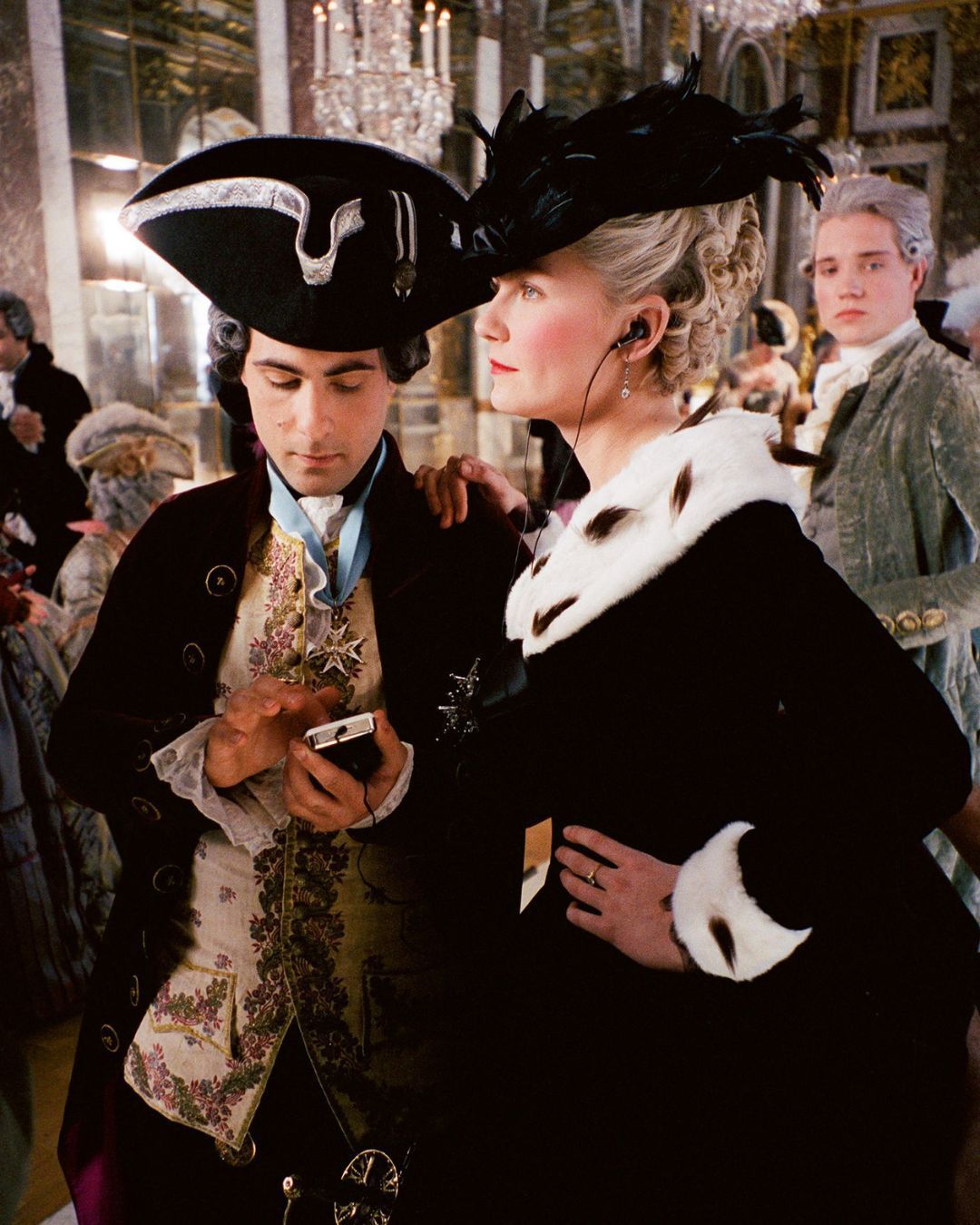
"Making Marie Antoinette" is a beautiful portrait, just not of Sofia Coppola The documentary is directed by her mother, Eleanor Coppola, the real star of the film available on MUBI
Twenty years ago, premiered in competition at the Cannes Film Festival, was Marie Antoinette, directed and written by Sofia Coppola fresh off her 2004 Oscar win for Lost in Translation. Expectations surrounding the film were exceptionally high: a lavish period piece centering on the Austrian-born noblewoman turned Queen of France, and an ambitious production granted unprecedented permission to shoot directly within some of the most prestigious wings of the Palace of Versailles. Yet, the title was far from well-received. It was greeted with boos during its screening on the Croisette, met with mixed reviews, and to cap it off, proved a box office disappointment, grossing around $60 million against a $40 million budget.
Marie Antoinette: a cult classic the critics didn't love
If all of this feels baffling today, one only needs to glance at its lingering score on Rotten Tomatoes, where critics still rate it as rotten at just 58%, only two points higher than its audience approval rating. And yet today, Marie Antoinette stands as a universally adored piece of cinema, widely ranked among Coppola's most admired and accomplished works. Over on Letterboxd, far younger and fresher than Rotten Tomatoes, the film comfortably holds a 3.7 out of 5 stars average. It is also why, starting November 6 on MUBI, the documentary Making Marie Antoinette is available: an edit woven from roughly 80 hours of archival behind-the-scenes footage that is captivating audiences and cinephiles alike.
Making Marie Antoinette: the behind-the-scenes documentary arrives on MUBI
Making Marie Antoinette is a cut-and-stitch project begun in 2020 during lockdown by Eleanor Coppola, the documentary filmmaker, mother to Sofia, and wife to Francis Ford Coppola, who passed away in 2024. Having directed eight documentaries across her storied career, Eleanor is the quiet observer who drifted through the gilded halls of Versailles throughout the entire period drama's shoot, capturing the creative moves of her then thirty-four-year-old daughter.
A portrait of Eleanor Coppola
Making Marie Antoinette reveals plenty about Sofia Coppola as an artist, yet she isn't the documentary's ultimate protagonist. Nor is it Marie Antoinette, or Kirsten Dunst. By interweaving fly-on-the-wall footage with intimate excerpts from Eleanor Coppola's personal journals, the film swiftly evolves into a self-portrait of someone hiding in plain sight—of someone who is always there but never seen, undeniably present yet expected to blend into the wallpaper. While we watch the genesis of Marie Antoinette with awe and emotion, what truly hits home is how profoundly the film speaks of its own maker, shining a light on universal themes for every woman who has sought her place within cinema and within a broader patriarchal world. Void of bitterness and imbued with a gentle, poetic grace, Eleanor Coppola lays bare her deep admiration for her daughter, softly reflecting on how, given different circumstances, she would have accomplished more in her own artistic life.
A mother's ambitions in a house of talent: women's unseen place in film
That wasn't her reality, and she harbors no resentment for it. Throughout the documentary, this truth unfolds as an open inquiry into what it truly meant for her to belong to a legendary cinematic family while standing in the shadows, partly by choice, partly by societal convention. It is a reflection woven straight into the fabric of the documentary, inspiring an added layer of intimacy and deep reverence for its creator. The interconnected stories of three women (Marie, Sofia, and Eleanor) come alive in Making Marie Antoinette, leaving viewers with eyes wide with wonder and hearts undeniably full.
What to read next

All's fair is back. Is that a good thing?
The first episodes of season two are now streaming on Disney+
Things to do/see/listen to in November 2026
Exhibitions, albums, concerts, movies, and TV shows to get you through the most melancholic month of the year without falling into hibernation