












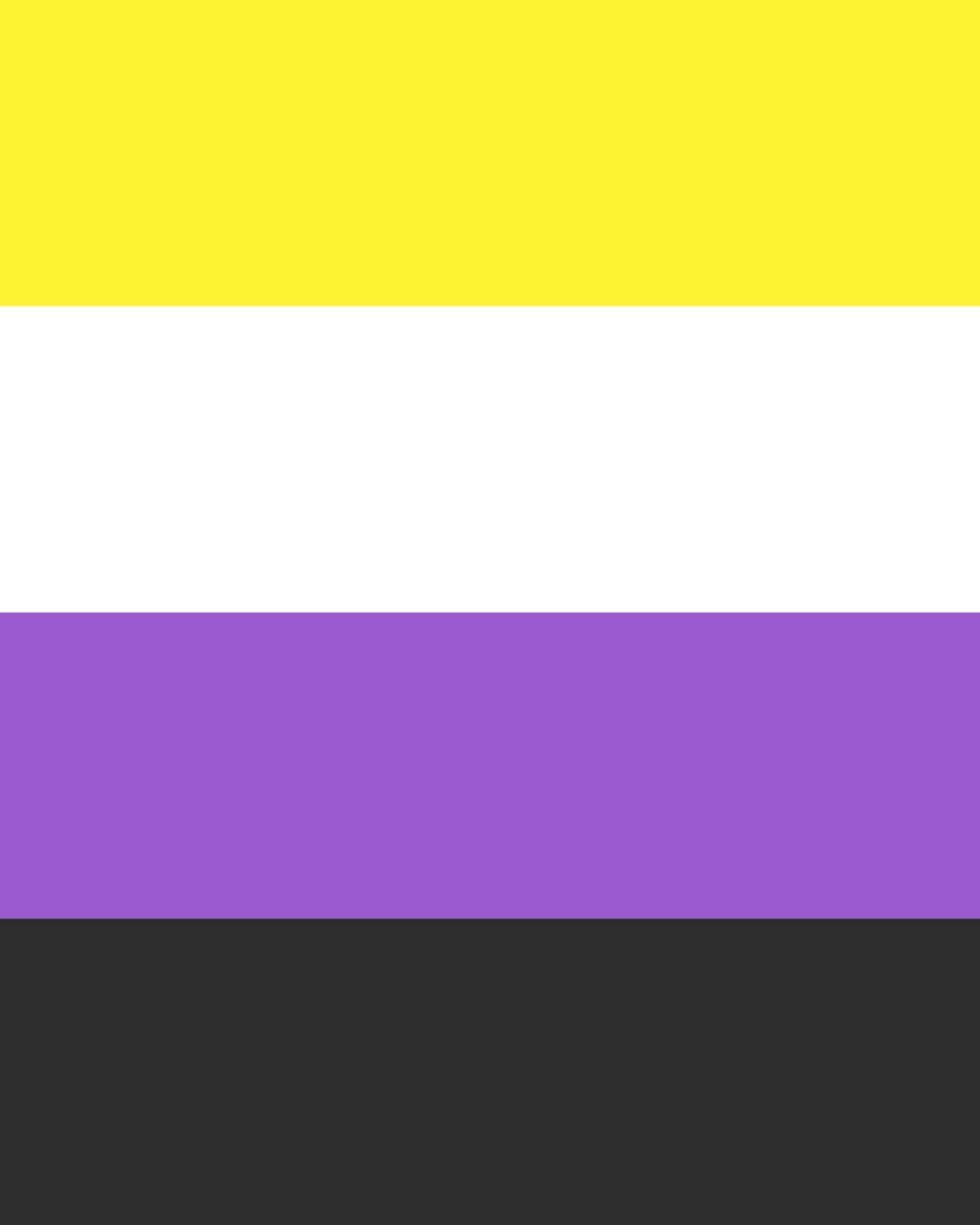
What does it mean to be non-binary? Ideas, reflections and a big invitation to listen
The term non-binary is an umbrella term that encompasses a wide range of gender identities that do not fully identify with either male or female. Some people feel partly male and partly female, others feel fluid across multiple genders, some do not identify with any gender at all, and some reject the very concept of gender. There is no single way to be non-binary. And precisely for this reason, any attempt to reduce this identity to a single definition will fail. It is a personal, intimate, and plural experience. Society often confuses gender identity with biological sex, gender expression, or sexual orientation. These are distinct concepts: being non-binary says nothing about who you love, how you dress, or how you present yourself. It is, rather, a matter of deep self-perception.
One day for non-binary people is not enough
July 14 marks the International Non-Binary People's Visibility Day. In a social, legal, and cultural system that still operates through strict dichotomies (man/woman, male/female), recognizing the existence and dignity of non-binary people remains a radical gesture. But more than radical, it would be right to call it necessary.
Non-binary people in history
Some think non-binarism is a recent trend or a Gen Z phenomenon. But non-binary identities have always existed throughout human history. They were simply erased, silenced, or pathologized. As activist Lou Ms.Femme reminds us in their book Rivoluzione non binaria (Le Plurali), non-binary people are not a modern fad or a Western invention, but an expression of human identity present across times and cultures. In many parts of the world, long before colonization, there were roles and identities that did not conform to binary gender. Think of the hijra in India, the fa'afafine in Samoa, sworn virgins in the Balkans, or two-spirit individuals in various Native American tribes. These identities, deeply rooted in their cultural and spiritual contexts, show that the gender binary is neither universal nor natural, but rather a social construct imposed largely by colonial and patriarchal thinking. Modern Western societies have violently imposed a binary gender model, turning plurality into deviance, complexity into anomaly. Today, identifying as non-binary isn't about inventing something new. It is, rather, reclaiming an ancient right: to be recognized for who you are, without having to choose between just two options.
Talking about gender as a spectrum
One major misunderstanding about non-binarism is the idea that gender is something fixed, biological, tied to sexual organs. But a body is just a body. Everything we build around it, masculinity, femininity, roles, expectations, is culture. It's tradition. It's performance. And it can and should be questioned. Imagining gender as a spectrum rather than as a binary means allowing everyone to place themselves where they feel best. And perhaps, to change over time. To not have to choose, not have to explain, not be forced to conform to a system that demands a definitive and consistent label just to be legible in the eyes of others.
A social necessity
Visibility for non-binary people is not a trendy identity claim. It is a political, social, and deeply human issue. Naming something means making it real. What remains unnamed often goes unrecognized, unprotected. From this enforced silence comes the urgency to break invisibility and state clearly that non-binary lives exist, persist, and deserve full citizenship.
What does it mean to be non-binary in Italy in 2025?
In Italy, those who live outside the gender binary are still excluded from norms, data, and public discourse. Official documents still only offer “M” and “F”; law 164/1982, which governs the legal transition for trans people, entirely ignores those who don’t identify strictly as male or female. This means that formal recognition for non-binary individuals depends on the discretion of individual judges or bureaucrats, in the absence of a comprehensive and inclusive legal framework. This lack of recognition results in countless micro and macro compromises: enrolling in school, booking a medical appointment, applying for a public job, or even filling out an online form can mean choosing a gender identity that doesn’t reflect who you are. It’s a constant weight, worsened by the struggle to be addressed with the right name and pronouns, the lack of media representation, and often, marginalization within LGBTQIA+ activism itself, where non-binary voices still struggle for space, support, and recognition.
And yet, visibility is not just about representation: it’s also a concrete form of care, of access to healthcare, of legitimizing one’s experience. It is a safeguard against loneliness. International studies, including research published in medical and psychological journals, show that non-binary individuals have a higher incidence of anxiety disorders, depression, PTSD, and social isolation. But it’s important to be clear: it’s not the identity itself that causes distress, but the hostile, discriminatory, or simply silent environments where these individuals live. When recognition, support, and language are missing, so is the ability to feel legitimate, welcomed, and safe. Fighting for visibility is not just a personal act. It’s a collective struggle to build a society where every body, every experience, and every identity has the right to exist, be heard, and be protected. A society where freedom of expression goes beyond abstract ideas of tolerance and becomes a concrete practice of justice.
Allyship through listening
Perhaps the first real step each of us can take is to start listening in a spirit of allyship. Ask for pronouns. Make space for stories. Resist the urge to label everything. Accept that someone else’s identity might escape our understanding—and for that very reason, deserves respect.
