

Relationships inside (and outside) GTA VI Is the game training our boyfriends?
Grand Theft Auto VI came out on November 19, 2026, and did what major video game releases usually do, only on a whole other level: it took over the Internet and everyday life completely, inspiring brands to build ad and social campaigns around it and pulling everyone back into sunny, crime-ridden Leonida with posts, countdowns, gameplay clips, and everything in between. I even brought it up with the priest when he came by to bless the house, and he knew exactly what I was talking about. I swear.
GTA VI and the new relationship dynamics
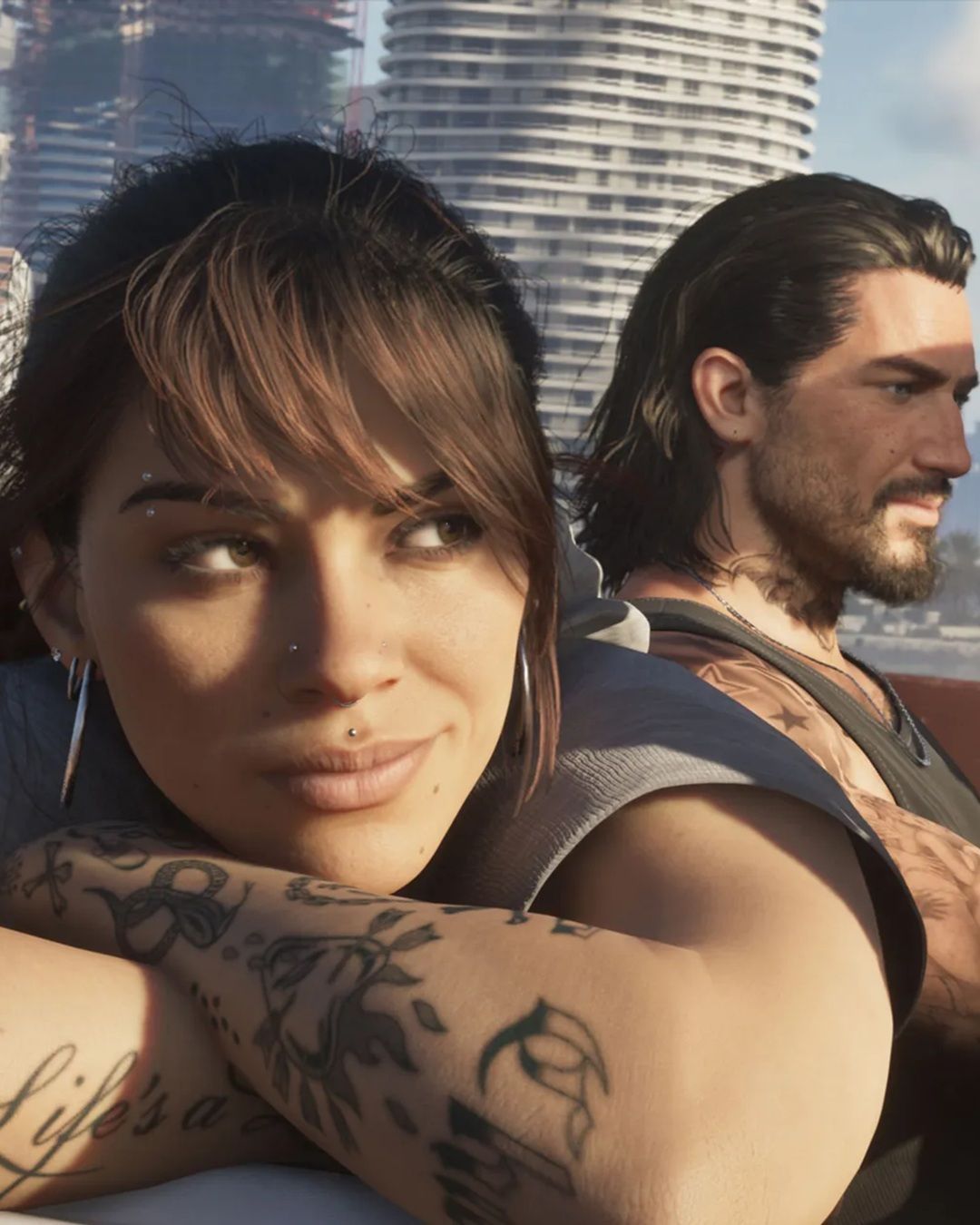
This time around, the storyline follows Jason and Lucia, a couple on the run navigating heists, police chases, and jail time, with Lucia marking a historic milestone for the franchise as its first playable female protagonist. It isn’t merely a matter of symbolic firsts: from what we’ve seen, Rockstar wrote her without pulling punches or leaning into tired stereotypes. At the heart of the game, in fact, aren’t just the robberies, cars, and shootouts, but the way the two of them stick together while everything around them is literally going up in flames. In the game, everyday relationship gestures actually matter: holding hands, showing affection, replying to texts and calls, going out together… ignoring your partner or leaving them behind during an outing pushes the two apart, even if the romantic component remains largely up to the player. Jason and Lucia remain partners in crime regardless of their bond level for most of the gameplay, couple affinity doesn’t unlock concrete gameplay perks (though it does change how they interact), and cheating isn’t an option. Rockstar even removed the ability to solicit sex workers.
The controversy around Jason and Lucia and its real-life ripple effects
This romantic dynamic has sparked more than a few debates within the gaming community, and among girlfriends. On one side are players juggling texts, phone calls, and date nights between one heist and the next; on the other are onlookers pointing out the contrast between what happens on screen and what happens in real life. Online, the question “Is GTA VI training my boyfriend?” has bounced across videos, comment sections, and jokes (including people calling it “The Sims for men”); the result is an open-air relationship court, with Jason and Lucia on the stand for crimes they didn’t commit (strictly speaking of romantic offenses, I’m fairly sure their other crimes are punishable by law in-game).
Before diving into the different perspectives I came across while scrolling through Threads, Instagram, and TikTok (my algorithm, previously locked onto cozy games, makeup, and books, is currently deeply confused), I want to reiterate one thing, and I’ll borrow the words of Anita Sarkeesian, media critic and founder of Feminist Frequency, to do it. As she reminded viewers at the start of every episode of Tropes vs. Women in Video Games, it is entirely possible to enjoy a piece of media while still looking at it critically. That means you can be a fan of a game like GTA while acknowledging its violent content and the fact that it’s definitely not meant for every audience. To me, it also means looking at a video game not just for the story it tells, but for how audiences receive it and what it contributes to the gaming industry.
Who bans it, who protests, who plays together (and who plays solo)
Once you accept the paradox of loving a title that mixes armed robberies, razor-sharp banter, and thoughtful little gestures, it only takes a quick scroll to see that the feed has split in opposite directions. The starting spark blew up on TikTok even before release day, thanks to creators like Shelby Haas and her plea not to let boyfriends and husbands play the game, and from there everything followed: some openly talk about micro-cheating, while others lament the rise of so-called GTA 6 widows. On one side, there are girlfriends strictly forbidding their partners from touching the game out of jealousy toward Lucia and discomfort with the idea of maintaining a virtual relationship. On the other, some flip the script with pure pragmatism, much like Cardi B on Threads, who wrote that she’d rather have a boyfriend locked inside playing GTA IV all day than sneaking around in other people’s DMs, or experience a far more concrete, domestic kind of envy: watching their boyfriend run errands, tidy up, or repaint the house for Lucia while in everyday life those very gestures and chores keep getting indefinitely postponed.
Thankfully, not everyone on the timeline treats the game like a romantic threat. Plenty of girlfriends have welcomed the release with excitement and ended up joining in, sitting on the couch to grab the controller whenever it’s Lucia’s turn and turning gameplay into an endless character customization session packed with haircuts, nails, outfits, and beauty details. And then there are those who shut down the jealousy discourse before it even starts by owning their track record as a gamer or fantasy and RPG reader: how can you genuinely be jealous of Lucia if you’ve already lost your mind over characters like Astarion, Geralt of Rivia, or Lady Dimitrescu?
And there is certainly no shortage of women who aren’t handing the controller over to anyone at all, like Eva Carducci, who took to Instagram to state the obvious: there are women playing GTA VI entirely on their own, with no boyfriend in the picture and zero need to share Lucia and Jason, sharing videos of themselves getting their own fill of heists, high-speed chases, and map exploration (with a playable female protagonist!) just like anyone else who waited thirteen years for this game.
What men are saying (and doing)
On the male side, meanwhile, reactions are split between complaints and self-reflection. A rather vocal subset of players is complaining that you can’t visit prostitutes or cheat on Lucia, as though the freedom to go on rampages or keep a side piece on standby were a birthright of the series. Rockstar, however, wanted to tell the story of a healthy relationship inside a chaotic criminal world. You only have to look at where the video game industry has been heading lately, with story-driven hits like Clair Obscur: Expedition 33 and Baldur’s Gate 3… even Kratos from God of War got called a good boy by his wife Laufey, the very same man who wiped out the Greek pantheon across an iconic PlayStation trilogy.
Then comes a rather peculiar gripe: if Jason does things for Lucia, why doesn’t she reciprocate in the exact same way? According to them, there’s a lack of reciprocity in the relationship. They also complain about having to play as Lucia, picking out clothes, makeup, nails… though I can’t help wondering how that’s any different from customizing an avatar in an MMORPG. Still, others arrive at a conclusion so practical and “guy-brained” that it genuinely warms my heart: if a certain gesture makes Lucia happy on screen, maybe it could work with their girlfriend in real life too. And then there are those who admit doing it for Lucia feels more rewarding because it takes almost zero effort: in the game, a couple of button presses give you instant feedback, whereas in real life you have to get off the couch, leave the house, drive somewhere, and come up with an actual plan. It’s a confession that exposes just how convenient gaming is when a single text reply nudges a meter upward, yet reading through the threads and comments, girlfriends quickly flip that logic on its head: in reality, effort has to be ongoing, and one grand gesture isn’t enough to make a relationship work, especially when off-screen you have to deal with schedules, bad days, and… well, life.
Between memes, feminist readings, and the limits of the screen
Between the jokes about a Good Boyfriend Simulator, interpretations calling it the first truly feminist GTA, and takes viewing it primarily as a female fantasy or power trip centered on Lucia, the takeaway remains the same: these are social media reactions, exaggerated and meant to be taken with a grain of salt. The Internet works like that—it grabs a forty-second clip and turns it into a thesis on modern romance. The game didn’t invent anything new: it simply took everyday arguments over “you never text me back” or “why did you leave me on read” and placed them inside a pixelated frame complete with stolen cars and a fictional Florida backdrop. Jason and Lucia are still two criminals on the run, not a relationship handbook: at most, the game can make you smile or remind you that checking in, listening, and communicating clearly when you need space never hurts, but a video game doesn’t train anyone, nor does it replace real life. I will always stand behind the soft skills you can pick up from video games, yet I highly doubt being a good boyfriend makes that list. Plus, now that GTA VI is finally out, we can’t even use the “we got X before GTA VI” joke anymore, we’ll have to come up with something new. May I suggest “we got X before we remembered it’s just a video game”?
What to read next

Brain stacking: the new antidote to brain rot?
Analog hobbies to break your scrolling habit and regain your focus
Why do we love the nineteenth century so much?
From Bridgerton to new Jane Austen adaptations, cinema and streaming platforms continue to bring stories and worlds from another era back to the screen
Is woke so back? Emily Green, the Grammys and the blue wave
Five nominations and a name on the cover