

Why do we love the nineteenth century so much? From Bridgerton to new Jane Austen adaptations, cinema and streaming platforms continue to bring stories and worlds from another era back to the screen
I’ll confess: every time I open a streaming platform with the intention of watching a new movie, a persistent little voice chimes in from a not-so-distant corner of my brain, why not rewatch Pride & Prejudice? I’m talking about Joe Wright’s 2005 adaptation starring Keira Knightley and Matthew Macfadyen, arguably one of my all-time favorite films, which I have already seen countless times. Yet it never seems to lose its charm, much like the early nineteenth-century novel by Jane Austen on which it is based. There is something about the trials of the Bennet sisters and the wit with which the author recounts them that continues to amuse and surprise me, even when I already know every beat of the story.
A renewed passion for period dramas
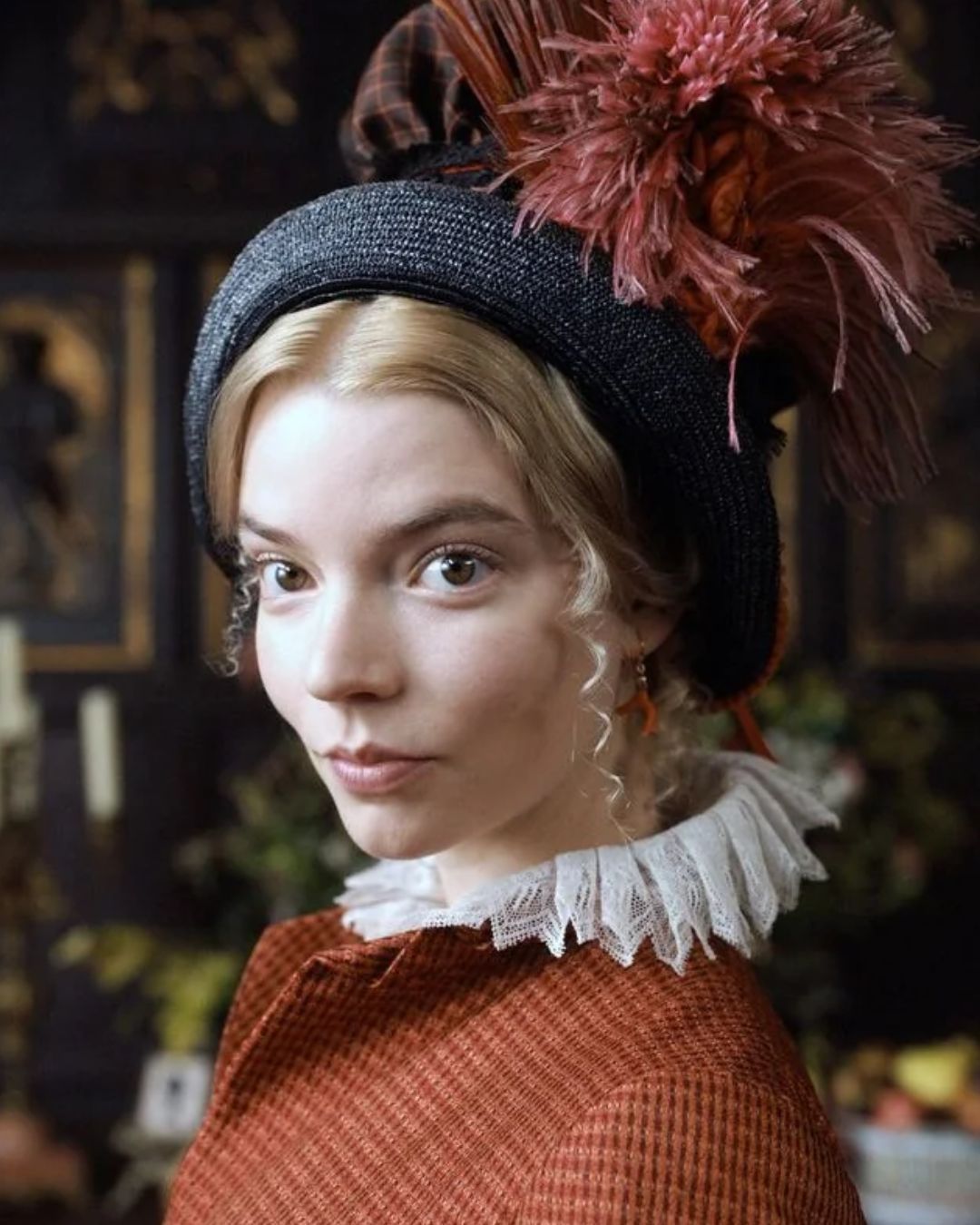
As it turns out, I’m not the only one who can’t let go of that world. Lately, cinema and streaming platforms seem to have rediscovered a genuine passion for the nineteenth century, bringing some of its most celebrated stories back to the screen. From the fourth season of Bridgerton, which continues to turn Regency-era conventions into binge-worthy romantic intrigues, to the new film adaptation of Sense and Sensibility that hit theaters in October, alongside Emerald Fennell’s Wuthering Heights and Dolly Alderton’s Pride and Prejudice miniseries arriving on Netflix in December. Over the past few years, we’ve also seen Emma (2020), starring Anya Taylor-Joy, and Persuasion (2022), featuring a rather cheeky Dakota Johnson as Anne Elliot, who breaks the fourth wall to speak directly to the camera.
Can nineteenth-century novels still feel relevant?
Even when plots and settings stay faithful to the original novels, every new adaptation brings these stories a little closer to the present day. It happens in the way certain characters are drawn, in directorial choices, and even in the liberties taken with costume design. The debate over fidelity to the source material, which inevitably flares up with every new release, is ultimately beside the point: it is precisely the malleability of these stories, their ability to adapt to ever-changing perspectives, that keeps them relevant and rich in meaning.
Jane Austen’s endless success
Take Jane Austen, for instance, one of the most frequently adapted and quoted authors, able to explore issues through her heroines’ romantic lives that have never truly lost their relevance. Love, money, class divides, family expectations, and the possibility of female emancipation: behind marriages and courtships lies a social system in which personal choices are heavily shaped by financial standing and convention. As literature professor Joseph Rezek noted in an interview with Boston University’s magazine, Austen’s two great "obsessions" are love and money, themes that could hardly feel more timely. Her protagonists navigate a society vastly different from our own, yet their ambitions, frustrations, and desire to freely choose their own future continue to resonate with readers and viewers today.
Industry logic and the pull of nostalgia
There is also a more pragmatic reason behind this renewed attention. In an entertainment industry under growing financial pressure and increasingly cautious about betting on original concepts, leaning on familiar stories offers a relatively safe harbor. Adapting a beloved novel means counting on an existing base of readers and viewers, recognizable characters, and an imaginary world that doesn't need to be built from scratch. Then there is the allure of a past that, at least in its cinematic rendering, continues to offer a form of escapism. Balls, letters, courtships, and clandestine encounters conjure a vision of romance built on anticipation and ritual, standing in sharp contrast to the fast pace of modern dating. Of course, life in the nineteenth century was anything but romantic: economic inequality, restrictions placed on women, and rigid social hierarchies were an inescapable part of that reality. Yet the privilege of distance - and above all, of fiction - allows us to curate the elements that enchant us most, leaving everything else out of the frame. As Alessandra Magliano wrote for ANSA, it is a form of nostalgia that signals not regression, but curation: we are choosing, once again, what to carry forward with us.
What to read next

Is woke so back? Emily Green, the Grammys and the blue wave
Five nominations and a name on the cover
We're witnessing the rebirth of Demi Lovato
Is it possible to reinvent yourself starting from nostalgia?