

Brain stacking: the new antidote to brain rot? Analog hobbies to break your scrolling habit and regain your focus
My stack of bedside books has taken on a geological stratification of its own by now. There are novels bought with grand ambitions, journals started with enthusiasm, and at least one title I keep moving from room to room. I could finally pick one back up, yet my phone is closer, faster, and, above all, asks zero effort of me. That is how you end up scrolling for hours, jumping from a Nancy Meyers-style apartment makeover by a complete stranger, to a tutorial on fighting frizzy hair in winter, to a video explaining why layering two differently colored pairs of tights makes an outfit look cool, always left with the lingering feeling of having filled every spare minute while doing practically nothing. For anyone who recognizes this quiet daily drift, TikTok has an evocative suggestion: brain stacking. The idea is to gather books, Sudoku, crosswords, journaling, and creative hobbies, keeping them ready for those moments when your hand reaches for your smartphone before your brain has even decided what to do. Not a new discipline for productivity champions, but an invitation to bring curiosity, focus, and a few analog pleasures back into circulation. Your brain, in short, wants a change of scenery. And maybe we do too.
What is brain stacking and why does TikTok love it?
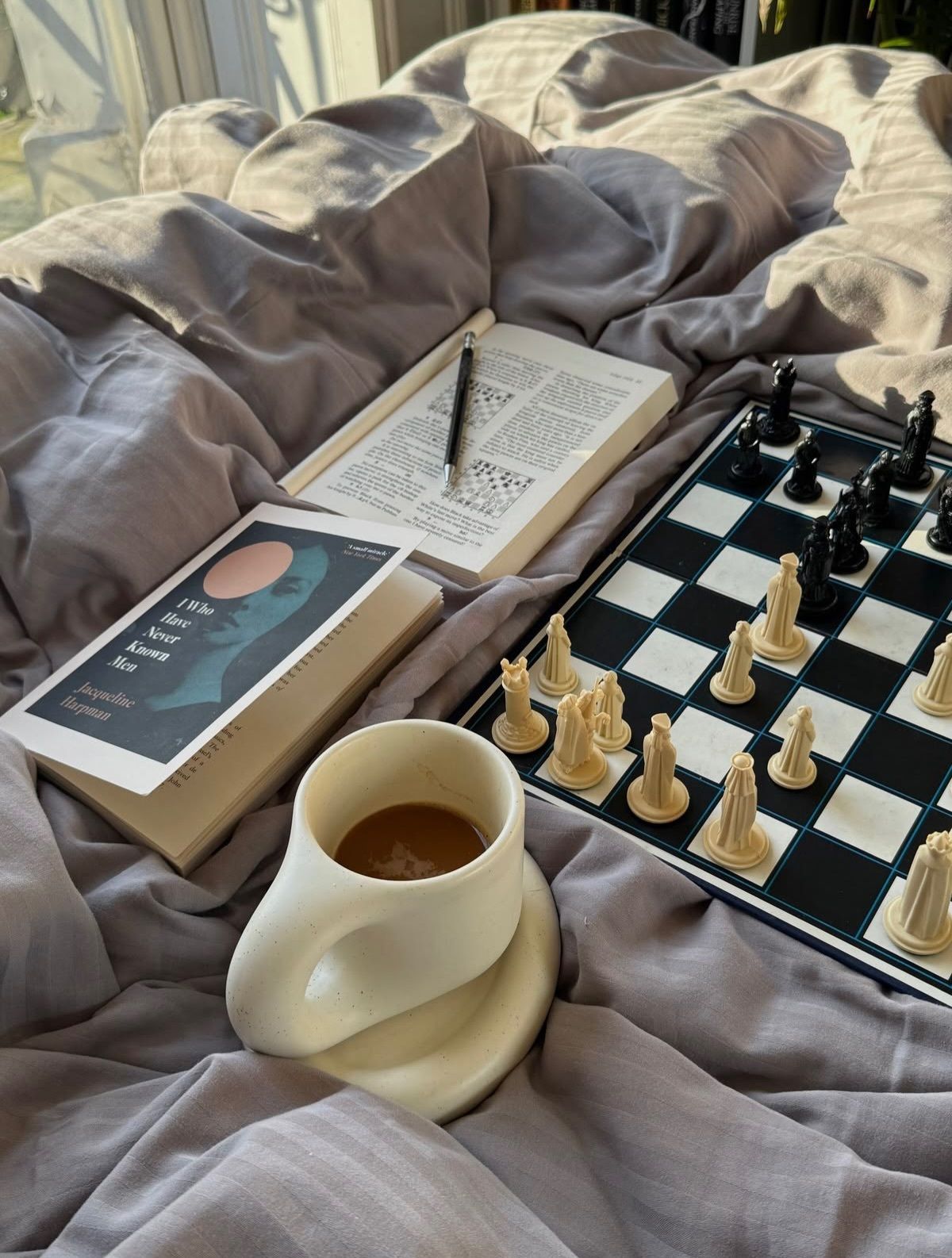
The name itself paints a clear picture: a stack of books, notebooks, games, and small creative projects kept within arm’s reach, ready to step in the moment your hand automatically reaches for your smartphone. Brain stacking began circulating on TikTok in fall 2026, gaining particular traction thanks to Mandy Rulez, an American creator known for her content centered on libraries, reading, and analog hobbies. In videos dedicated to the trend, activities are arranged side by side or physically stacked like a personal library to browse whenever boredom strikes. The pile might include a half-finished novel, a book of crossword puzzles, a journal, a coloring book, an embroidery project, or a logic game. There is no official combination, set order, or mandatory duration. The secret lies in prepping your alternatives in advance, so you don't have to go looking for them the exact second the urge to open Instagram hits. After all, it’s much easier to pick up a book already sitting on the coffee table than to talk yourself into hunting one down while your thumb is on autopilot. Brain stacking taps directly into the craving for a digital detox, the return to analog hobbies, and the desire to reclaim less fragmented pockets of time. And it doesn't take much: that abandoned novel on your nightstand and the half-empty notebook in your drawer are already a solid place to start.
Does brain stacking actually work? What science says
Brain stacking is not a recognized neuroscientific technique, and there are currently no clinical studies proving that this specific combination of activities boosts memory or focus. Individual habits, however, still carry real value. Reading requires following a narrative thread and retaining information, logic games train the cognitive skills involved in problem-solving, while writing by hand and engaging in creative pursuits can offer space to organize thoughts and ideas. The effects of cognitive exercises tend to remain tied to the specific skills being practiced, rather than automatically transferring to every other area of life. Still, existing research helps explain why the trend has struck such a chord. A 2025 meta-analysis observed an association between heavier short-form video consumption and poorer cognitive performance, particularly when it comes to attention and impulse control. Another study, published in PNAS Nexus in 2025, found improvements in sustained attention and overall well-being among participants who limited mobile internet access on their smartphones for two weeks. Neither study tested brain stacking directly, yet both suggest that dialing back certain digital habits can remind us of the pleasure of giving our attention to one thing at a time, free from the constant pull of notifications, messages, and fresh feeds. Any real benefit, then, doesn't come from a magic pile of brainteasers, but from changing how we choose to spend our downtime.
Has even our free time become a performance?
The beauty of brain stacking is that you don't need to be particularly disciplined to try it. You can start with one book, a notebook, and a crossword puzzle, picking activities you genuinely enjoy and leaving them in plain sight. There is no need to finish all of them, set a timer, or turn downtime into yet another checklist routine. Otherwise, free time risks falling straight into the productivity trap, complete with targets, metrics, and a faint pang of guilt for every unread page. Then there is the social media paradox: we learn how to unplug through videos showcasing color-coordinated book stacks, immaculate desks, and stationery hauls capable of making us crave a whole new notebook collection before we’ve even filled a single one. Put simply, it is not a cure for brain rot, it doesn't replace sleep, movement, or real-life connection, and it should never become an obligation—especially for anyone who already struggles with focus and organization. What it can be, however, is a simple way to pick an old hobby back up, experiment with a new one, or take a break without immediately filling it with another piece of content. And if by the end of the day you’ve read ten pages, learned a crochet stitch, or finished a Sudoku, great. Even if you only colored outside the lines, it will still be time better spent than you think. Not everything has to serve a purpose, after all.
What to read next

Why do we love the nineteenth century so much?
From Bridgerton to new Jane Austen adaptations, cinema and streaming platforms continue to bring stories and worlds from another era back to the screen
Is woke so back? Emily Green, the Grammys and the blue wave
Five nominations and a name on the cover
We're witnessing the rebirth of Demi Lovato
Is it possible to reinvent yourself starting from nostalgia?