

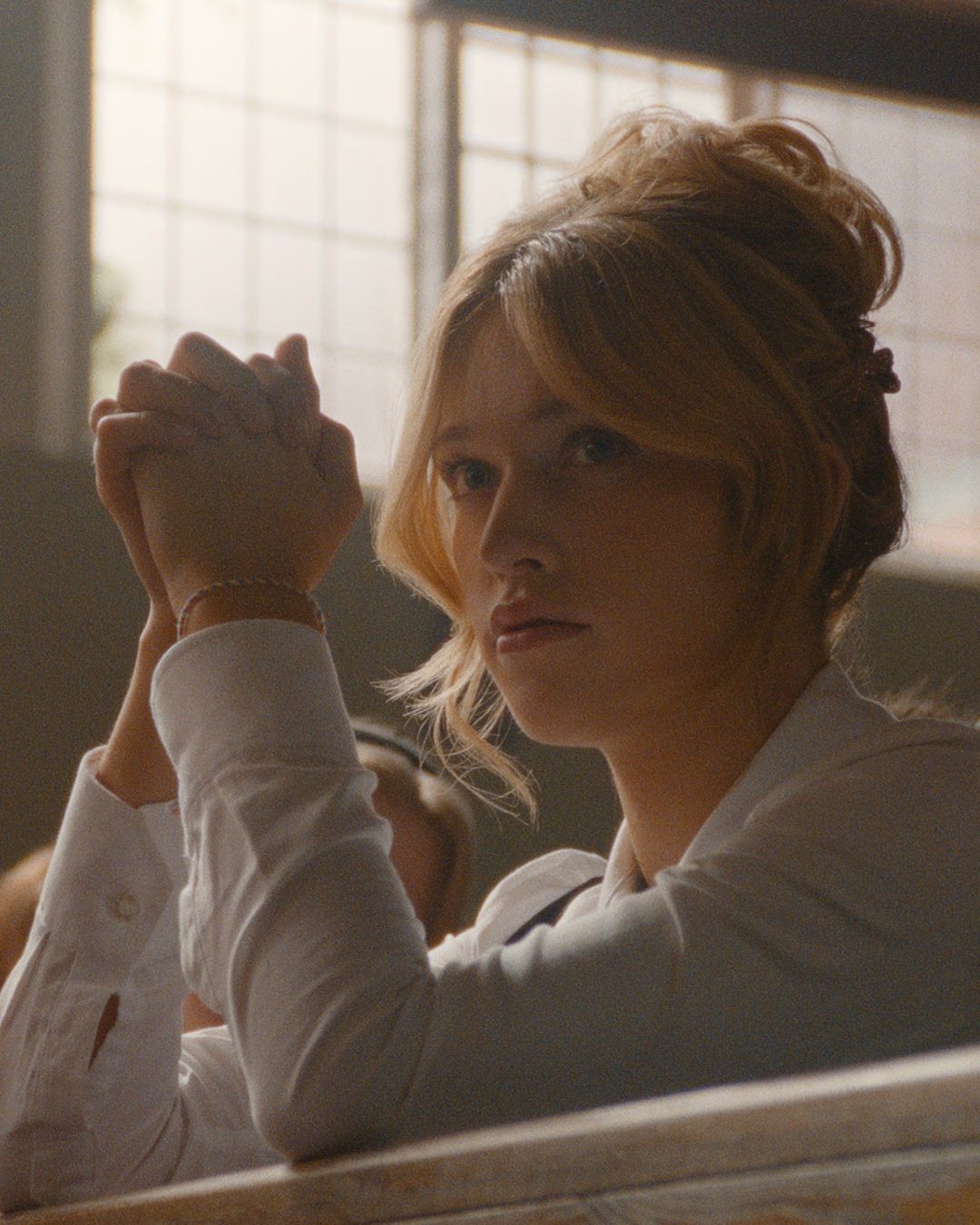
The Body is the teen series that brings together the catholic Church and Mean Girls With a little bit of Jennifer’s Body thrown in for good measure
One thing that adolescence and religion have in common is the body. In the former, it is a battleground for change and discovery, identity and self-identification. In the latter, it is the body of Christ, a symbol suspended between intangibility and physicality, between spiritual meaning and the communion wafer that is consumed and felt within. Perhaps this is why Netflix's new teen drama is called The Body. Created by Quinn Shepard, the eight-episode series is set in a Catholic school, where a group of young female students has sacrificed one of their classmates to the Devil, leaving her lying in a hospital bed in a coma. The ritual was the usual rite of passage. After joining the school's dance team, the Lions, Grace (Sofia Wylie) takes ecstasy for the first time, but something goes wrong. Struck by a sudden fever and collapsing unconscious, she slips into a prolonged state of torpor from which doctors cannot wake her. Worse still, they cannot figure out what caused it. Two of her teammates, Anya (Kristina Bogic) and Lisbeth (Geena Meszaros), are the ones who bring her home and witness what happened. So terrified are they that they refuse to confess the truth, choosing instead to fuel a religious and mystical narrative surrounding Grace.
Miracles, mass hysteria and high school politics in The Body on Netflix
A sort of sleep of faith has engulfed the girl, who now appears as an apparition to the rest of the team. This is where another element connects the spiritual and adolescent worlds: the idea of having witnessed a miracle and the fear of being left out. The need to belong to a community and avoid being cast out of it. One by one, the girls at school begin seeing Grace appear before their eyes. But, as with any inexplicable event, is that really what happened? By bringing together the need to belong, mass hysteria and the mechanisms behind religious phenomena, The Body draws a parallel between the spiritual flock and its more profane counterpart, youth. Immersed in a school environment where it takes very little to become the target of rumours and ridicule, conformity suddenly seems like the safest option. Better to pretend to have witnessed something incomprehensible. A mystical crisis, a supernatural event, the feeling of having received a message that is both crystal clear and impossible to decipher. Even when nobody has really understood what happened.
From Mean Girls to Jennifer’s Body: the pop imagery of The Body
Shepard takes a thoughtful look at how religious practices emerge and has a very specific aesthetic and set of cultural references in mind for her high school characters. These references are not conveyed through music alone, given that The Body is set in 2004, but also through an atmosphere that recalls the great teen movies of the 2000s, from Mean Girls to another kind of body, one that is anything but clerical and instead unapologetically, viscerally carnal, as in Jennifer’s Body. Two reference points that place the series in a universe of school hierarchies, group rituals, the pursuit of popularity and transgression.
The mystery drags on and the writing loses its grip
Repetition, however, is always lurking around the corner. A narrative that seems to have already said so much in its opening episodes gradually loses its grip on the viewer. Even those fascinated by the phenomenology of faith, the mechanisms through which it takes shape and the cultural landscape evoked by the show may not necessarily feel like sticking with this group of girls. As expected, the characters will have to confront the desecration of the body evoked by the title, from corruption through drugs to the discovery of their own bodies through sexual experiences. There are also homoerotic desires deemed illegitimate by the Church, which will further intensify their feelings of guilt. The mystery surrounding Grace's coma, however, runs out of steam over the course of the episodes, exposing a writing problem that is increasingly common among Netflix TV series and streaming platform productions. It is also worth remembering that, in a year when a restored version of Ken Russell's The Devils is making its way through film festivals and cinemas, any discussion of the birth of false beliefs associated with the Church inevitably feels somewhat less powerful. Even so, the series manages to build a coherent and recognisable picture on its own terms. In any case, The Body has the potential to win over an audience, and it had better, considering that it ends on a massive cliffhanger. If it wants to be renewed for a second season, then, there's nothing left to do but start praying.
What to read next

The return of rebel teens in cinema says a lot about how we cope with reality
Just in time for the new installment in the Hunger Games saga, Sunrise on the Reaping
"Making Marie Antoinette" is a beautiful portrait, just not of Sofia Coppola
The documentary is directed by her mother, Eleanor Coppola, the real star of the film available on MUBI