







































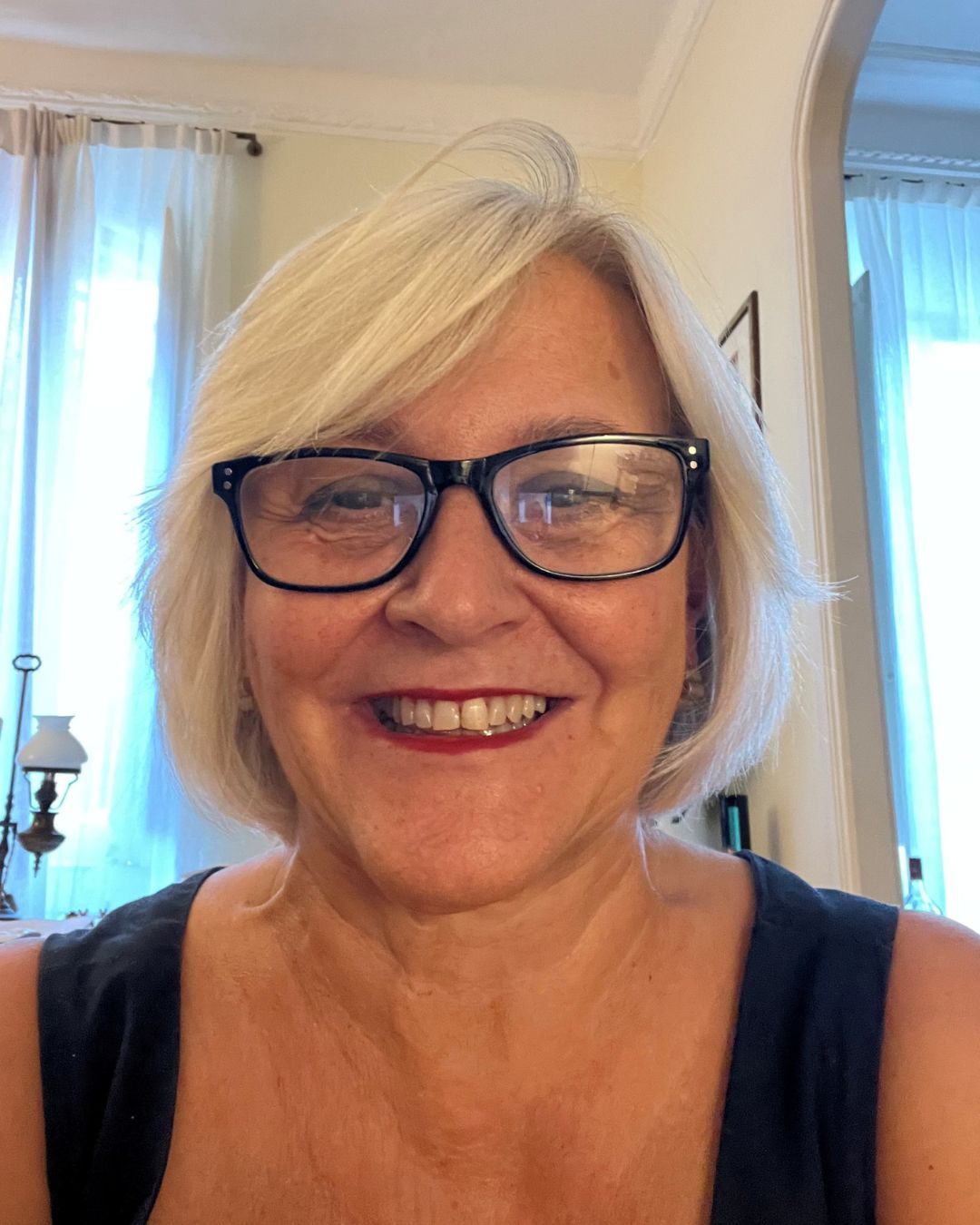
We asked a neuroscientist if there are differences between male and female brains Interview with Raffaella Rumiati on the eve of her speech at the Pianeta Terra Festival
As part of Pianeta Terra Festival, Saturday, October 10 at 3.15 pm at the Lucca Botanical Garden, Raffaella Rumiati professor of neuropsychology and cognitive neuroscience will star in the meeting How does a woman's head work? in dialogue with Francesca Buoninconti. In 2026, Rumiati published The Mind of Women for Editori Laterza. “In the book Women's Minds, I chose to look at some areas in which differences between women and men are often taken for granted and end up translating into inequalities,” she explained to us. “For example, the idea that women are less suited to mathematics or, on the contrary, naturally more empathetic. I have tried to understand what is really behind these convictions, putting together what we know about the brain, behavior and the experiences that form us” and then? This is what he told us, first about the book and then about much more.
Interview with Raffaella Rumiati on the eve of her speech at the Pianeta Terra Festival
At the Pianeta Terra Festival we talk about ecosystems, relationships and sustainability: how does the human and natural environment in which we are immersed shape our brain plasticity and gender identity?
Plasticity is a fundamental property of the brain, but it doesn't mean we start with a clean slate. We come into the world with a biological story that has already begun, on which experience continues to write. For this reason, the contrast between what is biological and what is learned is largely misleading: the experience itself becomes biology when it modifies the brain. And it is precisely plasticity that makes the discourse on differences between women and men more complex. Starting in childhood, different experiences, expectations, and opportunities can reinforce some skills and interests and discourage others. For this reason, observing a functional difference does not mean having identified its origin. It is in the space between brain and biography that we must try to understand how many of the differences that we associate with gender are constructed.

We often hear about the male brain and the female brain: has neuroscience ever found a real distinction or is it just a great myth that is difficult to debunk?
In my book I quote the mosaic model proposed by Daphna Joel and colleagues: each brain has a combination of characteristics, some statistically more frequent in women, others in men, others common to both sexes. The interesting thing is that these characteristics are not consistently arranged along a male-female axis: uniformly male or female brains are rare. Most of us have, in fact, a mosaic brain. The myth was born when from average differences between groups we derive the idea that there are two natural and separate categories of brains. It is a leap that the data do not justify.
In her book The Mind of Women, she analyzes the theme of empathy, defining it as a fragile virtue that can guide us in moral choices but also lead us astray: how is female empathy misrepresented or used as a double-edged stereotype?
Empathy can help us understand others, but it's not necessarily a good moral compass: it's selective and can even distort judgment. For women, there is also an additional problem: the idea that they are “naturally” more empathetic has transformed this ability into a social expectation, that of understanding, caring for and taking charge of others. This is how empathy, from a resource, can become a bond and an invisible form of emotional work.
The text addresses complex topics such as sexuality, misogyny and consent from a neuroscientific and legal perspective: what are the biggest mental traps that our society continues to perpetuate on these issues?
They are three different traps, but they have something in common: they transform social expectations into presumed natural characteristics. In sexuality, we continue to think that men and women have radically different desires, while the differences are much more sensitive to experience and context than we imagine. In misogyny, the trap is objectification: reducing a person to their body means ceasing, at least in part, to represent them as a mind with thoughts, emotions and intentions. Finally, in the consensus, the myth of the 'real victim' persists, the one who reacts and defends himself: on the other hand, we know that in the face of a threat, the brain can also produce a freezing response, which can make it impossible to react as we would expect.
If our mind is transformed based on the experiences we have, how can we 'train' it to free itself from stereotypes?
Stereotypes don't live alone: we all keep them alive. In the way we talk to children, in what we expect from a girl or a boy, in school choices, in the criteria with which we organize work and distribute opportunities and power. It is therefore not enough to teach people to recognize stereotypes: we must stop building a reality that proves them right every day. If the brain is plastic, changing that reality also means changing minds.
What is the message or false myth that you would like to permanently erase from the minds of today's young women?
I would like to erase the idea that being a woman means being naturally carried — or not carried — for something. If we want everyone to be able to truly choose what to become, we must remove expectations, stereotypes and constraints that still guide those choices before they are even made.
