

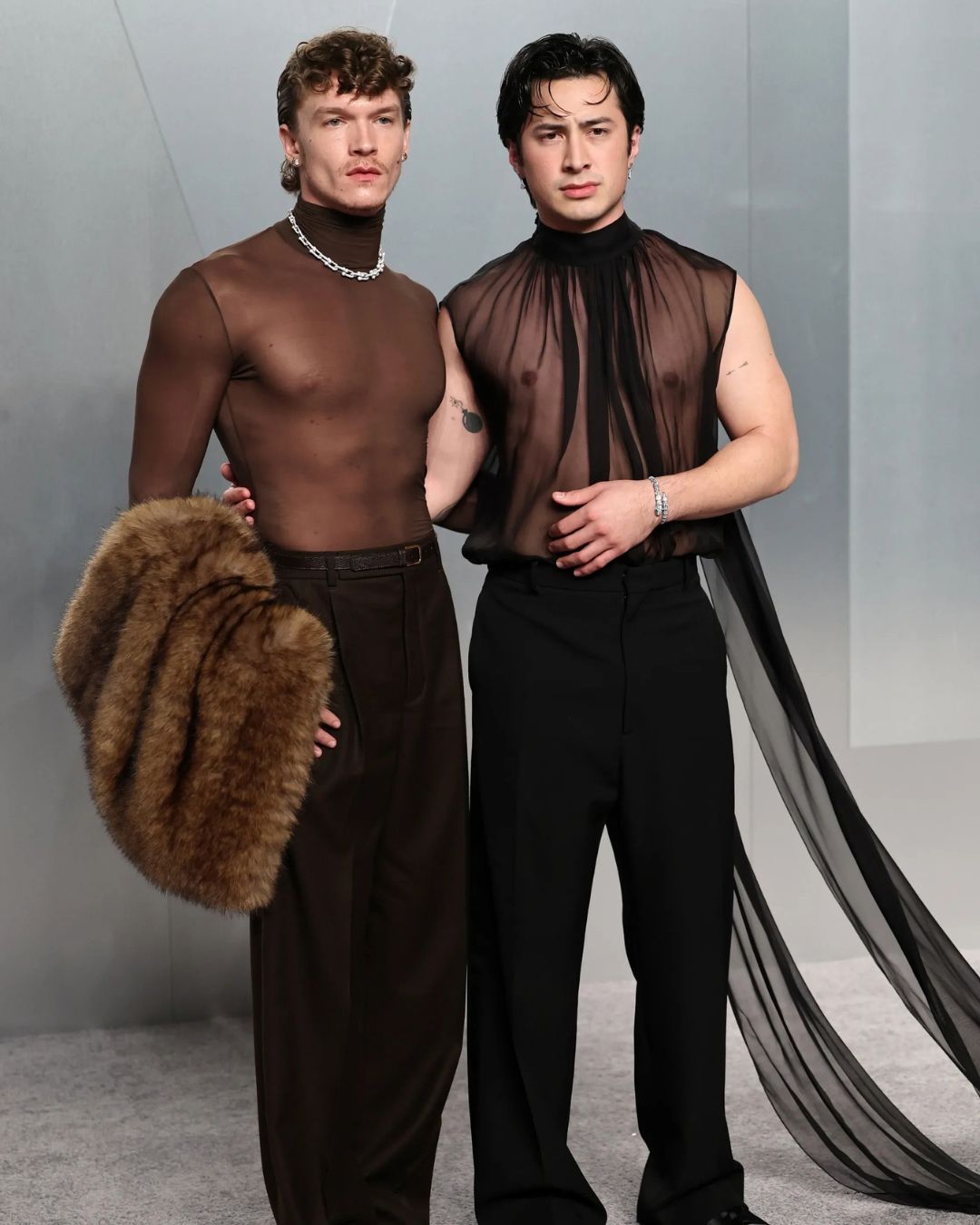
We also consume celebrity crushes The era of streaming produces new Internet boyfriends at the speed of light, and the pattern is now quite recognizable
There was a time - or rather, a period in our lives - when having a celebrity crush required some commitment. Zac Efron hung on the walls of our bedrooms for years, soon accompanied by a diaphanous Robert Pattinson, until falling asleep every night under their languid eyes became too embarrassing. Back then, being in love with Nate Archibald and Ryan Atwood at the same time was a full-time job. Today it is enough to take a look at social media to realize that the situation has become much more crowded.
The Heartthrob Industrial Complex and our collective obsessions
In recent years we have had - to name but a few - Jacob Elordi, Paul Mescal, Noah Centineo, Nicholas Galitzine, Christopher Briney, Hudson Williams, Connor Storrie, Belmont Cameli. As we write, a streaming platform is probably already preparing the next Heartthrob somewhere. NYLON magazine, not surprisingly, spoke of “Heartthrob Industrial Complex”: an ecosystem in which new young actors can go from anonymity to the status of collective obsession within a few months. The merit lies in most of the streaming, its methods of use and above all the engagement it is able to generate outside the platform, on social networks and on traditional media.
From Strangers to Celebrity Crush in a Few Weeks
Take, for example, Heated Rivalry, a queer-themed Canadian-produced sport romance that started quietly and then exploded on a global scale. Before the release of the series, the protagonists Hudson Williams and Connor Storrie were two actors practically unknown to the general public. Soon after, they arrived at the Golden Globes, on the catwalks and on the front rows of Fashion Weeks, while they were the protagonists of interviews, podcasts and thousands of edits on TikTok. Williams even opened Dsquared2's FW26 fashion show, while Storrie entered Saint Laurent's orbit. Yet, while Williams and Storrie were still reaping the benefits of their sudden popularity, the Internet had already identified a new candidate. With the release of Off Campus, Belmont Cameli earned the unofficial title of new internet boyfriend in a few days, including edits, fancams and more or less explicit comments dedicated to his character, Garrett Graham. A particularly timely succession, considering that Off Campus came a few months after the Heated Rivalry phenomenon and was aimed at an audience that was at least partly superimposable.
Are Internet boyfriends the children of Female Gaze
The coincidence, however, helps to identify another piece of this cog. Heated Rivalry and Off Campus share something that goes beyond very handsome men engaged in playing sports on screen: both derive from romance sagas that already had an enormous fandom before becoming a TV series. The same goes for some of the titles that have delivered us a considerable amount of heartthrobs in recent years, from The Summer I Turned Pretty a Red, White & Royal Blue and To All The Boy I've Loved Before. And these are books written mainly by women, read by women and, above all, discussed for years in online communities that had already imagined those characters, chosen their fancasts and established with some precision how desirable they should be. When they arrive on the screen, in short, these men find an audience already trained to love them. And even the model of masculinity they embody tends to follow rather recognizable coordinates: sculpted jawbone and abs continue to help, of course, but added to the package are vulnerability, devotion, torment, and an almost superhuman capacity to experience feelings. Garrett Graham may be the star of the hockey team, but much of his charm lies in the way he falls in love and, above all, in the emotional maturity with which he expresses his feelings.
The Era of Heteropessimism and the Consecration of a Heartthrob
The timing of the phenomenon is not random. While romantic fiction refines its masculine ideal with almost scientific precision, the online story of heterosexual dating is filled with ghosting, situationship, breadcrumbing and men 'not ready for a relationship'. NYLON also links the success of contemporary Heartthrobs to heteropessimism, the growing disillusionment with which many straight women look at relationships with men: the distance between what is desired and what seems available to us in real life makes these characters even more attractive. But how does the transformation from a sexy protagonist to a real phenomenon take place? Podcaster Evan Ross Katz, interviewed by NYLON, makes an effective distinction: “The It boy is chosen by the media, the heartthrob by the fans.” Covers, castings and campaigns may suggest the next face to focus on, but today it's edits, fancams, thirst tweets, memes and millions of views that decide who can truly catalyze collective desire. From there, the vortex starts: red carpet, talk shows, podcasts, interviews, advertising campaigns, front rows and contracts with big brands. Each appearance generates new content, each content fuels obsession and the new shared crush becomes omnipresent just as quickly as, in many cases, we will forget about him. If Zac Efron had a wall all to himself, Belmont Cameli must make his way through a series of sculpted abs. And we're enjoying the show.