

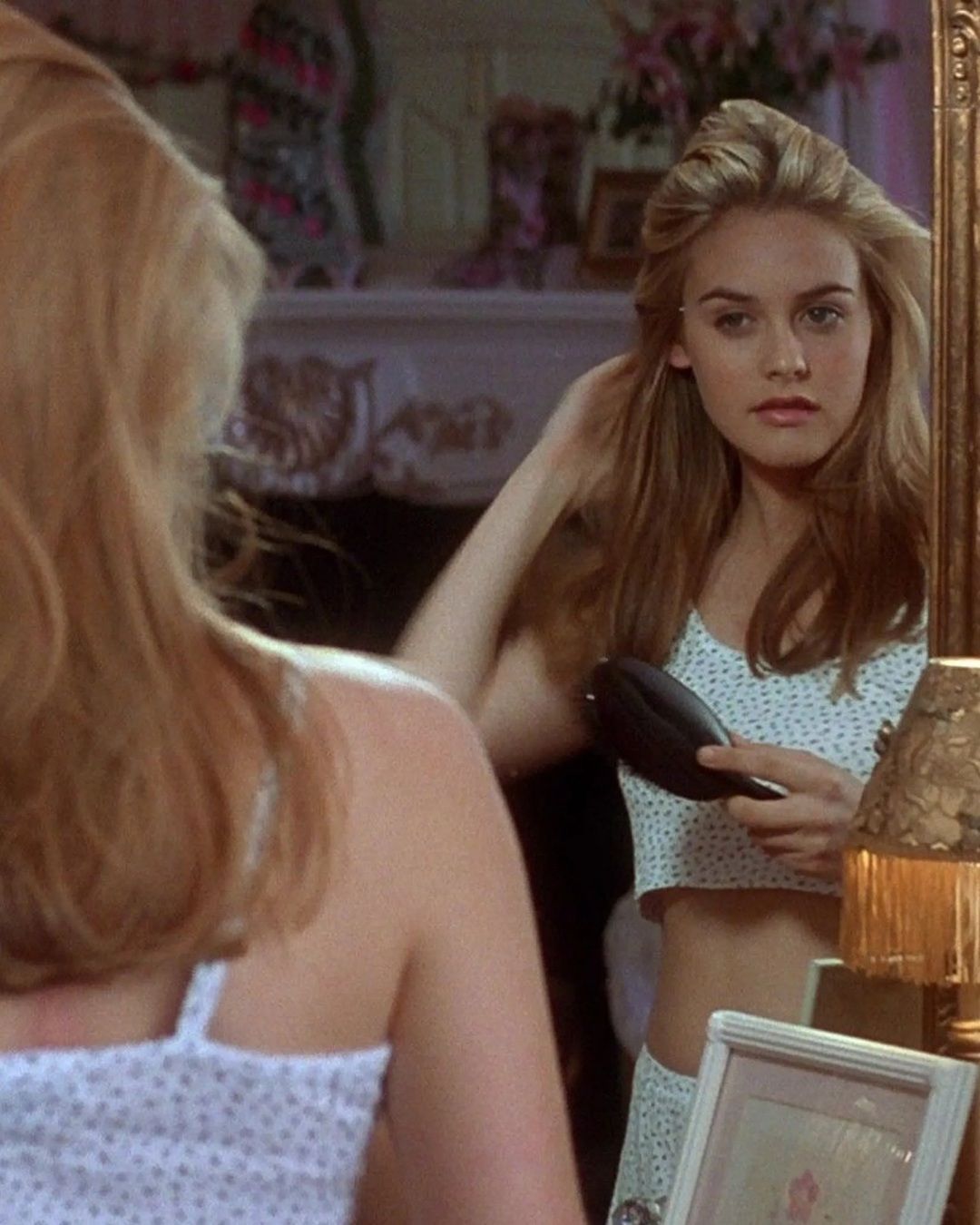
Are we nostalgic for our own faces? And what if imperfection became precisely what makes us recognizable?
For a long time, we wanted to look like an improved version of ourselves. The one with more even skin, slightly higher cheekbones, fuller lips, a nose that catches the light in exactly the right place in photographs, and no dark circles under our eyes to remind us that we went to bed too late the night before. First, we did it with makeup, then with filters, Facetune, increasingly forgiving front-facing cameras and, in some cases, aesthetic medicine. The line between our face and its idealized version gradually became thinner, until we almost stopped asking ourselves which of the two actually looked like us. And yet, precisely as technology becomes capable of creating perfect faces that belong to no one, beauty seems to be developing an opposite desire: to have a face again. With pores, texture, asymmetries, dark circles, expression lines and all those little characteristics we spent years trying to make less visible. Maybe we haven't suddenly learned to love every single flaw. Maybe we've simply started to feel nostalgic for something we were in danger of losing: the ability to recognize ourselves.
@mimiermakeup finally dissolving my lip fillers #natural original sound - Mirta Miler
We used to want to look like filters. Now filters look like us
There is something paradoxical about the beauty moment we're living through. For years, we asked technology to improve our faces; now technology has become remarkably good at creating new ones. You only have to scroll through social media for a few minutes to come across images generated or altered by artificial intelligence that are increasingly convincing, with flawless skin, harmonious proportions and that strange kind of beauty that often makes us stop for a second to figure out whether the person we're looking at actually exists. Meanwhile, on the runways and in makeup, seemingly small but interesting signals are returning: visible skin, less sculpted brows, natural textures, less contouring, even looks created by working with models' skin rather than completely covering it. This doesn't mean that full-coverage foundation is suddenly wrong, or that no-makeup is morally superior to contouring. The interesting point is something else: the easier it becomes to construct a perfect face, the more an imperfect face can start to feel special.
What if we don't want to go back, but simply recognize ourselves?
In the United States, people have also started talking about the Great Cosmetic Undoing, a phrase that captures something about this reversal. The phenomenon has been described through med spas, dermatologists and plastic surgeons seeing people who want to reduce or reverse previous aesthetic procedures, from fillers to other treatments. It would be too simple to interpret this as the end of aesthetic medicine or the beginning of a suddenly “natural” era. It is probably neither. And, above all, dissolving a filler doesn't automatically make someone more authentic than someone who chooses to keep it. The question we should be asking instead is what happens when the version of ourselves we've built no longer feels like ours? We are constantly changing: we cut our hair, dye it, wear makeup, reshape our eyebrows and can choose to alter our faces. There isn't necessarily something to “recover”, as though somewhere out there an original, untouched version of ourselves still existed. But there can be a desire to see again a certain curve of the lip, an expression, a proportion we had almost forgotten. More than nostalgia for the face we had at twenty, then, it could be nostalgia for the feeling of looking in the mirror without immediately comparing ourselves to our improved version.
Maybe the new luxury will be having a face that could belong to no one else
Perfection has a problem: it tends to look the same. If we remove, one by one, all the things we consider imperfections, one eyelid slightly different from the other, an asymmetrical smile, freckles, a wrinkle that always appears in exactly the same place, we also erase some of the information that makes a face immediately recognizable. Not because we should stop using concealer, give up treatments or turn pores into yet another thing we are expected to celebrate. We don't have to love every detail of our face to allow it to exist. We can keep wearing makeup, change something we don't like, look for brighter skin or want different lips without having to erase everything that makes us recognizable. In a world where it will become increasingly difficult to tell whether the face we're looking at belongs to a person, a filter or a prompt, perhaps our little inconsistencies will become a kind of signature. And maybe, a few years from now, we'll look at a photograph with unblurred skin, without perfect symmetry and with a wrinkle we never thought to erase, and we won't think that we could have looked better. We'll simply think: here I am, unique, beautiful and unrepeatable.