Why are we so obsessed with historical female figures? We asked the experts
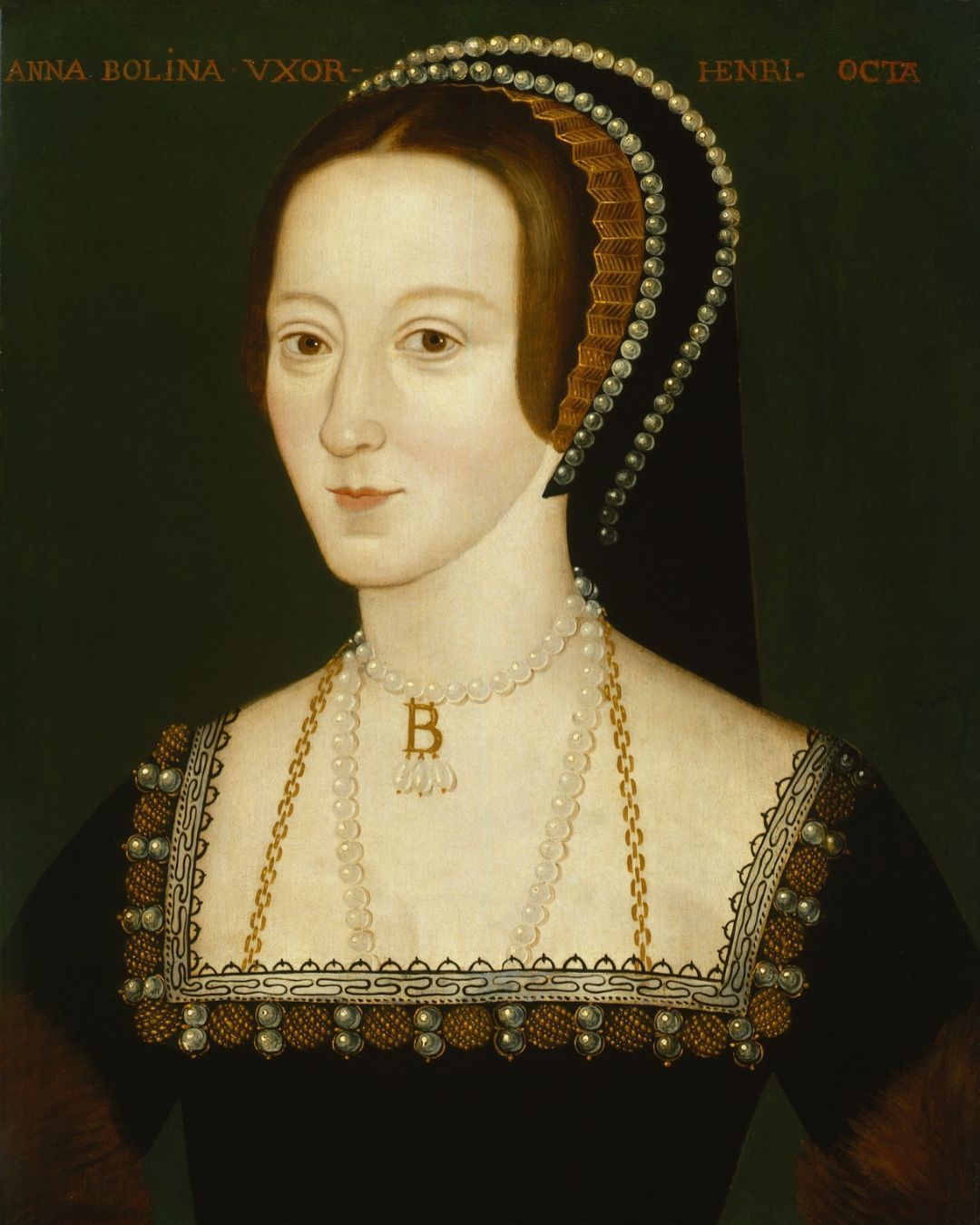
My Roman Empire is the six wives of Henry VIII. I practically became an expert in the summer after graduating with my bachelor’s degree in 2020, and since then I’ve read every article, essay, and book I could get my hands on about them (especially Anne Boleyn and Anne of Cleves). Over the years - at university, chatting with friends, or simply scrolling through Instagram Reels - I realized I’m far from the only one obsessed with historical female figures. One of my friends became fixated on the Romanov family after watching Anastasia (yes, the 1997 animated movie), while another insists that Marie Antoinette is the ultimate style icon.
History as a source of exemplary female figures
Right now, looking back in time and finding examples of strong women who remind us that it’s possible to change the world even in the face of adversity brings comfort, and helps us bear the weight a little better whenever we hear about yet another femicide on TV and feel like there is still such a long way to go (and we know it all too well). Yet I started wondering if that was really all there is to it. Could a queen who died nearly five centuries ago truly make us feel less alone, or does this obsession reveal more about us than it does about them? So I did what you do when curiosity takes over: I started asking questions.
Why are we so fascinated by women of the past? And more importantly: what are we looking for in them?
I put these questions to two novelists, Carla Maria Russo and Alessandra Giovanile, followed by Chiara Lipari, a writer who brings myths to life on social media, and historian and popularizer Guido Damini. Carla Maria Russo, author of historical novels such as La sposa normanna and Il velo di Lucrezia, says that in women from the past we are looking for "ourselves": the deep-rooted reasons behind our condition and its origins, because understanding where a problem comes from helps us figure out how to dismantle it. We also look for role models, examples of resilience and strength in contexts far harsher than our own. For her, there is also a debt of gratitude: studying the fight for women’s suffrage, she tells me, made her realize just how real the stakes were. In Italy in 1912, universal male suffrage granted the vote to all men, even those who were illiterate, while a woman - even with a university degree - remained excluded, deemed inferior by definition under the logic of the time. Those who endured beatings and imprisonment to change things left all of us a legacy we should never take for granted.
Answers from Alessandra Giovanile and Chiara Lipari
For Alessandra Giovanile, also a novelist and the author of Marmo e fango (NuaEdizioni, 2025), it comes down to roots: those drawn to the lives of women from the past are searching for a connection to a "female lineage stretching back into the mists of time." We recognize ourselves in their battles, fought inside convents or within domestic walls—and in their desire for self-determination. And that fascination, she notes, has a very current root: we still have so much ground to gain when it comes to equality. Chiara Lipari offers a different image. Myth, she explains, has always served to fill in the gaps of a past we cannot directly access, while also gifting us nobler ancestors—like Aeneas, son of Aphrodite and forefather of the Romans. Today, we do the same with historical women: "We trace outlines where our gaze cannot reach and color inside the lines, imagining the hardships they faced in their era and how they navigated them." In part, we see our own reflection; in part, we feel a "genuine pride," because we feel descended from them.
Until recently, women’s stories were told by men
There is a reason the female past feels like uncharted territory waiting to be rediscovered: for centuries, women weren't the ones writing it. According to Russo, women were "rarely written about." History was left to men, who only paid attention to women when it was impossible to ignore them, such as when they held positions of power (Elizabeth I) or when their lives intersected with those of powerful men (Lucrezia Borgia). And whoever wrote about Lucrezia had an agenda, because "if the papal chancery was writing about her, they would emphasize favorable circumstances while omitting embarrassing ones; conversely, if it was the chancery of one of the many Italian lords fiercely opposed to the Borgias, the account would be the exact opposite, driven by an interest in smearing her." Giovanile echoes this view: for centuries, she notes, an extraordinary life was passed down almost exclusively in the masculine. Men of mythical deeds were, after all, models to emulate, while women were treated as "a curious exception."
Mythologizing is an acceptable risk
Today we are bringing these figures back into the spotlight and risk mythologizing them, yet for her that price is worth paying: "If we have to go through a phase of mythologizing these figures to bring them back to the forefront, so be it!" Anne Boleyn is one of the most recent examples: from traitor and "incestuous shrew," she has been reimagined—thanks to The Other Boleyn Girl (adapted from Philippa Gregory’s novel of the same name) and the musical Six—as a sharp, brilliant young woman cut down by a capricious king. Giovanile, too, reclaimed a historical woman in her novel Marmo e fango: Costanza Piccolomini, reduced for centuries by Bernini’s biographers to an adulteress or, at best, a muse. "Reclaiming certain figures, including through a conscious use of language, therefore becomes an obligation for anyone who cares about feminist issues," says Giovanile. With one caveat, however: the primary sources behind these rehabilitations, letters and wills, must be "re-read with empathy, yet also with objectivity."
We love imperfect women
Not all women from the past captivate us in the same way. For Russo, the most beloved are those with controversial reputations. Lucrezia Borgia and Artemisia Gentileschi, she says, possess "just enough darkness" to draw us in. Yet behind the facade constructed over the centuries, she adds, there are often women very different from how we have remembered them, frequently crushed by circumstances larger than themselves, protagonists of complex, tormented lives. It is that deep, human dimension that Russo is interested in bringing back to light. For Lipari, what resonates most today are stories of struggle and redemption, where a woman fights against the odds and earns recognition on her own merits. Artemisia is the textbook example: raped by her father’s colleague, Agostino Tassi, she saw her attacker convicted in 1612 yet never punished, but she refused to let violence and slander define her story. Today, we remember her as an artist.
The historian’s suspicion: we use the past to comment on the present
So far, it sounds like an uplifting picture of identification and reclamation, doesn't it? Yet Guido Damini, historian and author (of Quasi sapiens. Dalla scimmia a Trump. Come l'umanità se l'è cavata in 100 cenni storici), offers a less comforting perspective: we use the past to say something about the present. When reality is hard to read, he explains, everyone—"commentators, journalists, prophets", fishes in the past to back up their own thesis. A society needs memory to legitimize the present, or to delegitimize it. And women in history have become leverage to that end. The problem, according to Damini, is that the conversation gets flattened into a horizontal clash - men versus women, stripping away its complexity. Look at it vertically instead - elites (at the top) versus the masses (at the bottom) and the dynamics shift: "Elites have no gender." Roman matrons, he points out, couldn't vote and didn't sit in the Senate, yet in 195 BC they successfully pushed for the repeal of the Lex Oppia, the law restricting female luxury (jewelry, carriages in the city, colorful garments) passed twenty years earlier at the height of the war against Hannibal, despite Cato’s fierce opposition. The masses, by contrast, are subjugated "regardless of gender." The risk, he warns, is turning historical figures into banners. If someone like Cleopatra fascinates us, it’s because we hold her up as the emblem of a struggle that, on closer inspection, was never hers, and she certainly didn't feel oppressed by being a woman and a queen.
This is where viewpoints begin to collide. Russo argues that her protagonists feel "strikingly modern" for a reason: human desires haven't changed since antiquity, and there have always been women who wanted to be free and choose their own destiny. Lipari, on the other hand, cautions against viewing history solely through a modern lens: judging Artemisia because she initially agreed to marry her rapist, a reparative marriage that at the time was a way to salvage her honor, would be a mistake: "Our job, when looking at history, is not to judge, but to understand."
Kardashians, memes, and the risk of flattening history
Then there is language. On social media, people talk about iconic queens and problematic monarchs, and I do it constantly myself, which is precisely the kind of shortcut Lipari warns against: memes and slang are a great way to reach audiences who might otherwise find the subject "distant and almost alien, simply because it’s ancient," but we have to be careful not to flatten the narrative. Keeping things engaging while respecting complexity is possible, though undeniably hard. Damini feels much the same way, and offers an example. If he needs to explain what a Roman matron was to an audience unfamiliar with the term, he says, all it takes is this: "She’s a Kardashian with a mafia network." Suddenly the synapses fire, and you can unpack the Roman patronage system. That kind of comparison, he argues, is a great teaching tool when grounded in real knowledge; when it’s sloppy, it’s just bad popularization.
The women left out of history books
Who is missing from the roll call of History? Lipari explains it through There’s Still Tomorrow by Paola Cortellesi: the protagonist, she notes, "isn't a chemist, a painter, an author, or even a pirate." She is Delia, an ordinary woman in 1946 trapped in a cycle of domestic violence within a society that oppresses her simply for being a woman, and all she wants is a better tomorrow for her daughter. Stories like hers don't make it into history textbooks, yet they are everywhere: "Sometimes you don't even have to look that far back to uncover stories like this. Sometimes, all you have to do is ask your parents or grandparents." Damini reaches a similar conclusion from a different angle. The women who draw attention in history, he observes, are the famous and powerful ones, and not by accident. Those who make it into the books are the ones who had fame and power. All the others, even when they fought hard, are left outside.
Patriarchy then and now
At one point, the conversation turned to violence against women. Lipari links the viral resurgence on social media of Giulia Tofana to media coverage of femicides in which victims had turned to the authorities without receiving adequate protection. She is careful, however, not to pass moral judgment or justify anything: she simply points out two connected phenomena, gender-based violence unfolding behind closed doors and the grassroots emergence of an idealized heroine defending victims. Looking to the past, Giovanile says, "teaches us how to reckon with what has changed and what remains, all too often, sadly the same." The violent values of patriarchal society still surface today "in the most horrific news stories," and that, to her, "says a great deal about what our society still needs to confront and resolve once and for all."
After listening to all these voices, the question I asked myself at the start has an answer that is probably far from neat: it’s entirely possible that both things are true. Women from history make us feel less alone, while revealing more about us than about them at the very same time. I still can't say which one holds truer for my Anne; all I know is that my Romanov-obsessed friend will keep rewatching Anastasia, my Marie Antoinette friend will keep defending her iconic status, and I will keep reading about Anne Boleyn, sporting a tattoo whose irony I genuinely appreciate: her motto was "the most happy"… and we all know how that ended.
What to read next
The Hunger Games: Sunrise on the Reaping sparks the dawn of the revolution
The second film prequel in the hit franchise arrives in theaters

Is woke so back? Emily Green, the Grammys and the blue wave
Five nominations and a name on the cover

We're witnessing the rebirth of Demi Lovato
Is it possible to reinvent yourself starting from nostalgia?