







“I believe that no one can achieve a full recovery without reconnecting to the collective dimension.” Interview with Sarah Aziza for the YAWP Festival in Milan
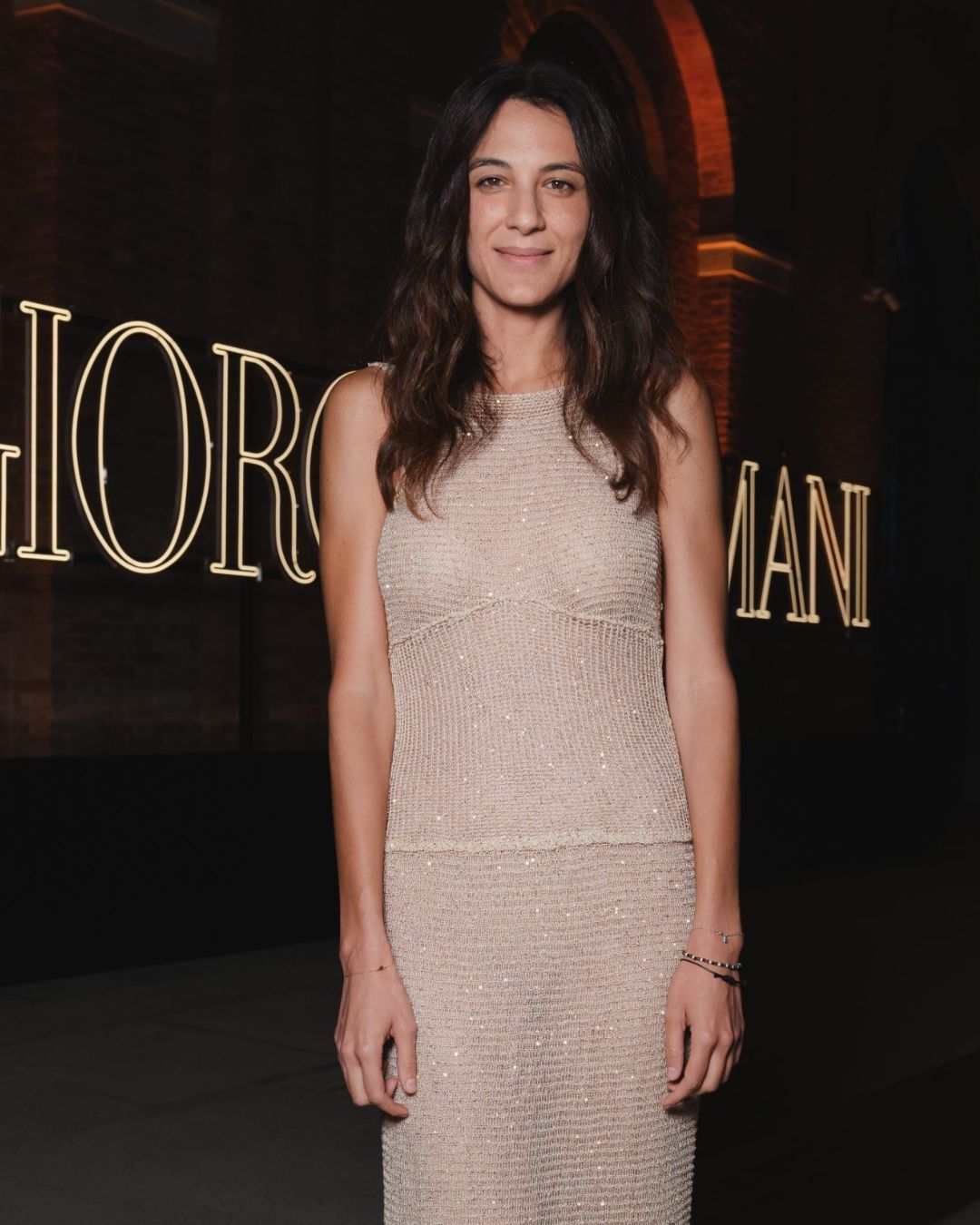
Friday 2 and Saturday 3 October will take place at the Teatro Franco Parenti in Milan, YAWP Festival_Standing on the School Desk, the third edition of the multidisciplinary festival promoted and organized by the Francesco Morelli Foundation, under the artistic direction of Benedetta Marietti and under the patronage of the City of Milan, dedicated to the world of school: a reflection on education, on the need for a training revolution and on the possibility of imagining together an ever more school as a place of listening, knowledge, exchange and shared growth. Life before you is the common thread of this edition, inspired by the homonymous novel by Romain Gary. Having “your life ahead of you” means growing in a time marked by uncertainty, transformations and new questions about the future. For younger generations, tomorrow appears both open and fragile: a promise, but also a responsibility. In this context, the Palestinian-American writer Sarah Aziza will also speak, who will tell the experience of anorexia and the search for the origins of her Gazawa family, exiled for three generations. In dialogue with the writer Arianna Montanari, she will question the value of writing in the face of the martyrdom of an entire country and the meaning of the words resist, remember and heal. We interviewed her.
Interview with Sarah Aziza, Palestinian-American writer who will speak at the YAWP Festival, in Milan
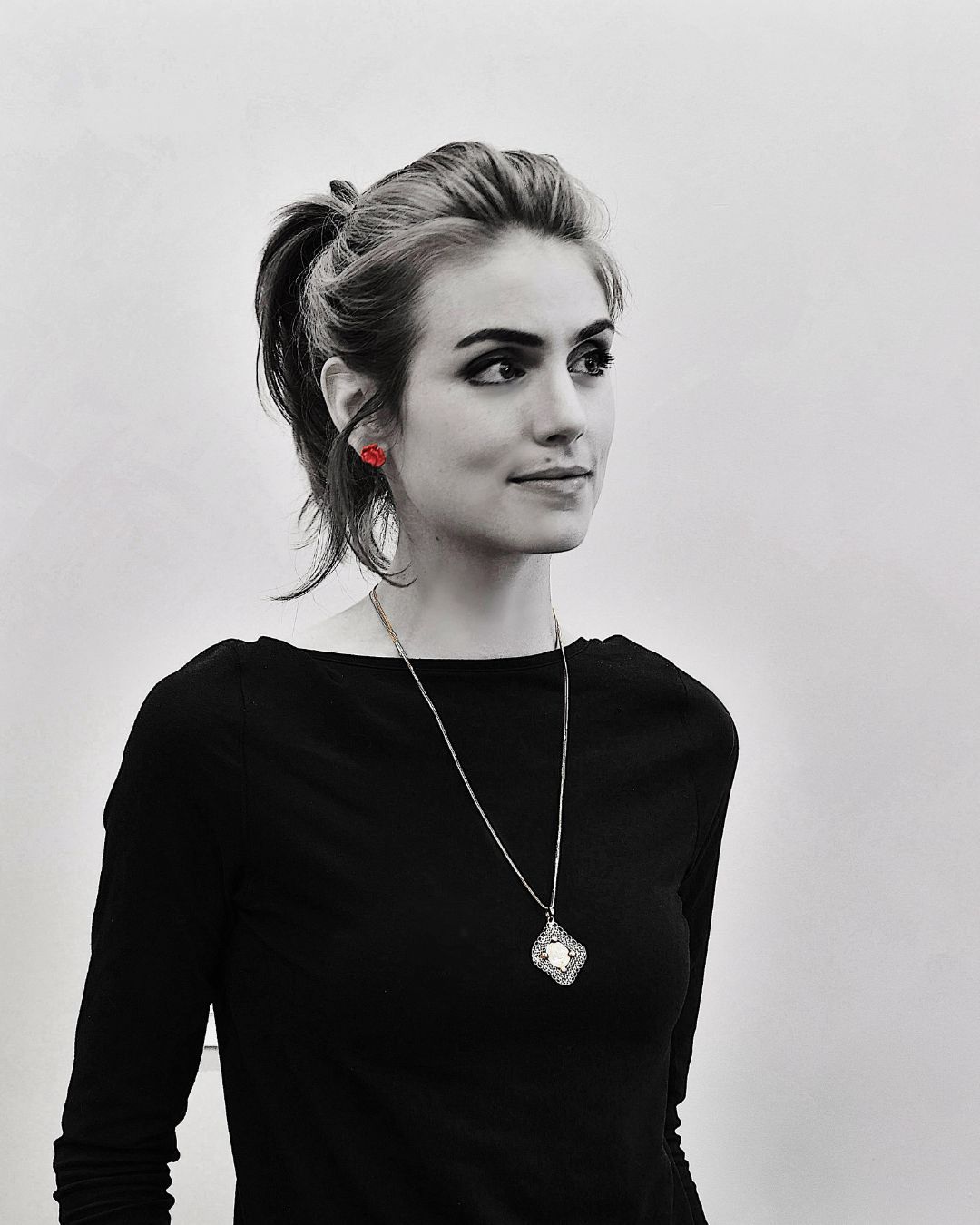
“I am a Palestinian-American writer and translator with roots in 'Ibdis and Deir al-Balah, Gaza. I would define myself as a profoundly hybrid artist: I combine archival and contemporary research, personal experience, journalistic reportage and speculative imagination with work on my roots and dreams. As a Palestinian in the West, my identity, my people and my very existence are often questioned; this is why my writing is always political. At the same time, I refuse to be reduced to a simple subject of debate: I try to create a solid, rich and multifaceted Palestinian presence on the page, which overcomes the suffocating violence of our occupants. I firmly believe in writing for 'us' - for other indigenous and queer people, for those who have been or are still colonized, for those living in exile and migration - instead of trying to demonstrate my humanity to those who aim only to destroy us. I live in New York (unceded land of Canarsie and Munsee Lenape), where I work, write and do research: in addition to my creative projects, I am in fact working on a doctorate in Palestinian poetics.”
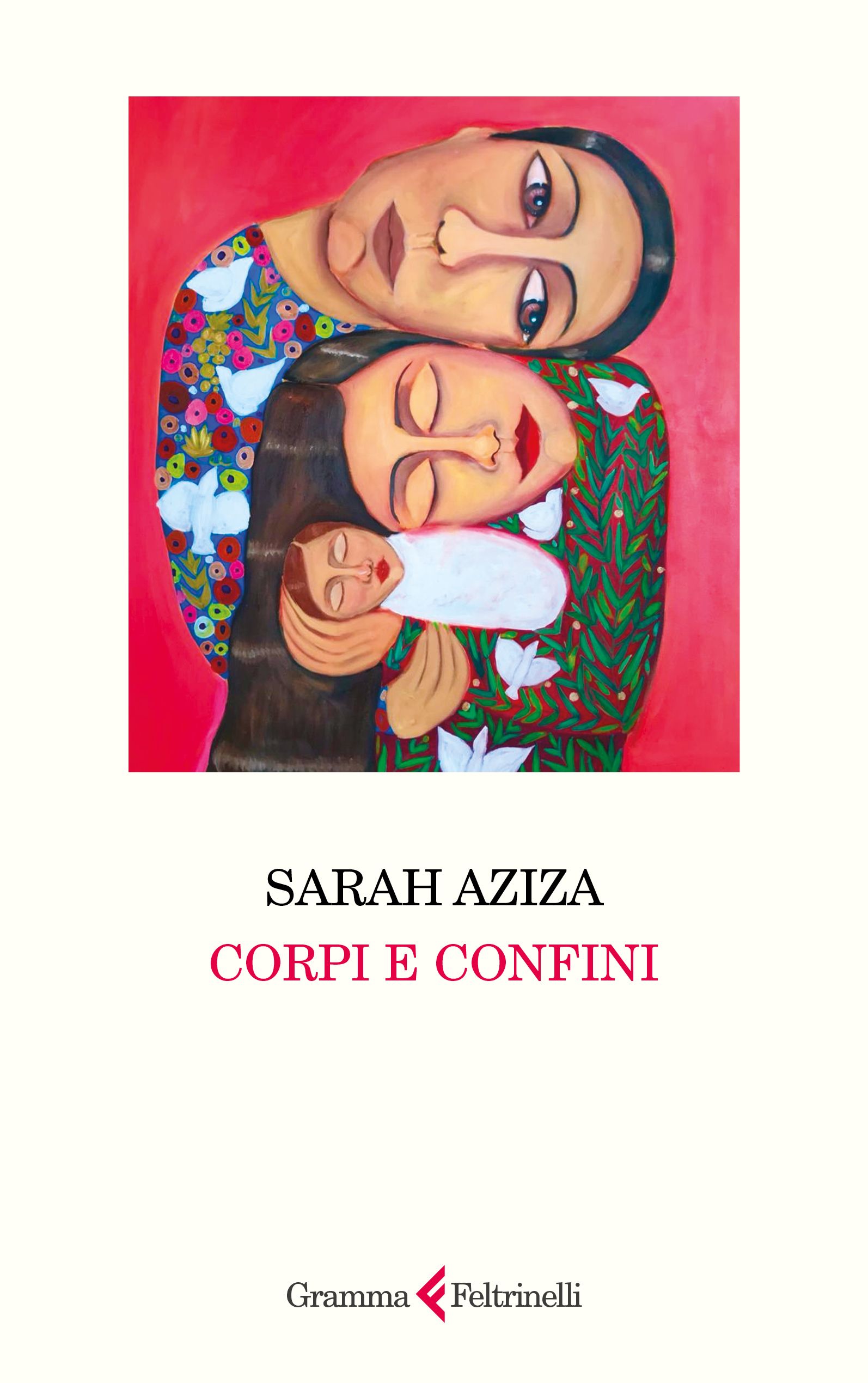
In your memoir “Bodies and Borders”, published by Feltrinelli, your personal battle with an eating disorder runs parallel to the story of your family's exile from Gaza. How did you come to understand that your body was carrying the burden of generational trauma?
I think it was, after all, my own body that taught me: sometimes, while discovering details of our history, I had very strong and strange physical reactions. Other times, the parallels were so obvious that I simply had to give myself permission to believe that the personal and historical dimensions could be so closely intertwined. For example, the Zionist project aims to erase Palestinian life and even the traces of its history, just as anorexia is, in its own way, a form of cancellation. It seemed almost too trivial, but as I allowed myself to explore this connection, I began to admit to myself that yes, I had felt the need to erase many parts of myself, because in my experience those parts had always triggered violent retaliation when I tried to embody them. It was not 'safe' to show myself as a Palestinian, as a complex woman or as a queer person: I had internalized the colonizing and patriarchal values that had been imposed on me while moving around the world. Starting to rehabilitate those parts of me has undoubtedly made my life more difficult! But as I returned to my Palestinian identity, I noticed that depression, anxiety, and anorexia were slowly starting to subside, and vice versa. Direct experience taught me how connected all this was, long before I found literature and research to confirm it. Today, when I speak openly about Palestine, I am exposed to forms of violence or threat, but I also feel more alive, more capable of loving, creating and getting in harmony with others.
How have you managed the contrast - and perhaps even the overlap - between a personal crisis and a collective struggle?
The Palestinians' struggle is the fight for return, and I needed to return to my body. Sometimes, even today, it may seem wrong to dedicate energy to my personal healing when such extreme violence against the Palestinians and against so many other people takes place every day. However, I've learned over and over again that I simply can't have one without the other. If I don't take care of my personal state, if I allow myself to be worn out too much by the violence of this world, I will soon become useless for collective struggle. At the same time, if I get too lost in my 'personal betterment', I lose touch with what makes life worth living, not to mention that I would end up losing myself. I don't think that we are isolated individuals, we are collectives and we are part of a great network of life, ancestral and contemporary, human and non-human. Convincing us that we are individual entities is a debilitating lie, and I sincerely believe that no one can achieve full recovery without reconnecting to this collective dimension.
In the book, the language itself seems to be a place of resistance, with English and Arabic almost merging. How did moving between these two languages help you articulate what you were feeling?
One of my favorite quotes is: “What would it mean to speak as if the world you know were 'the' world?” It is a question that Dionne Brand, a Caribbean and Canadian poet, asks herself. For most of my life, before writing this book, I didn't describe the world as I lived it, I didn't even feel that I had the right to identify with that 'you' mentioned by Brand. The truth is that the world presents itself to me as multilingual, multi-temporal, as a chorus of souls: being in tune with my story has helped me to understand my body as a point of confluence, where the lives and legacies of my ancestors continue to animate and shape me. By this I mean that I wanted to try to represent this hybridization on the page, playing with the concept of opacity that Édouard Glissant writes about. It was a bet: I knew that some non-Arabic-speaking readers might have found it alienating. However, I thought it might be a good political exercise for them: those who speak English in the United States often forget that millions of people around them have a different mother tongue. When English speakers enjoy a work without friction, they often don't realize that people are bowing to their needs, repressing their mother tongue and modifying their grammar to make Anglophone, white and “American” culture at ease. How does it feel to be denied access, even for a moment, for a phrase or for a single word? If that bothers them, it might be good. Being destabilized from time to time can generate empathy or, at least, awareness for the experience of many others. For those who speak Arabic, on the other hand, it was a moment of welcome, of home. There are simply things that cannot be translated, and I didn't want to compromise on those words.
Your speech at the YAWP Festival revolves around the concepts of resisting, remembering and healing. For you, is the act of writing a tool for personal recovery, a form of political action, or are the two things fundamentally inseparable?
I'm not someone who would say that writing for publication is a personal healing tool. However, my personal healing nourishes and makes possible the creative and public writing that I offer to the world. And I think that both forms of writing, as well as the work of healing, are absolutely political! As I said before, the Palestinian body and voice are constantly being questioned at this historic moment, and therefore to be there, and to exist in a more solid, complete, stronger and uncompromising way, is in itself a form of resistance to the Zionist project of cancellation. Personally, I don't want my political action to stop there, but it's an essential starting point.
Despite the complex themes of loss and uprooting, your family's story is also deeply anchored in love and the ability to resist. Where do you find hope today, and what does' healing 'mean for you right now?
I think that Bodies and Borders speaks first of all about the ever new project of care and survival, which is guided by love, even when it is hindered and is imperfect. Writing it was in turn an act of love and survival: it was difficult, sometimes heartbreaking, but it was the love for Palestine and for my people that allowed me to go through it and complete the project, and I am really happy with it. It may seem difficult and even wrong to speak of hope while there is an ongoing genocide, while my family in Gaza continues to suffer from hunger and to be denied medical treatment. To continue to live, when so many loved ones have died, may seem wrong, but I remember that Refaat Al-Areer wrote “If I must die, you must live”, so I try to honor the dead by living fully, with intention and with dedication to our cause. In this, in addition to continuing to denounce Zionist violence, I found hope in getting closer to nature to root myself more deeply in the great project of Life. The Palestinians come from a long history of deep connection with the land: my grandparents tended a small plot by hand, and I feel something profoundly rejuvenating in imitating that gesture, in my own small way. Nature, the earth, beings that go beyond the human: this is our family of origin, and attuning to my place within this network helps me when I despair for the destiny of humanity. It also allows me to embody the Palestinian ethic of caring for the ecosystem. All these renewal practices help me to believe in the future and in love for every form of life, including my own.
