

Who actually manufactures our cosmetics? Behind the most famous beauty brands lies an industry that often goes unnoticed. It’s called contract manufacturing, and its heart beats in the Lombardy Plain
The viral blush on TikTok comes in irresistible packaging, the mascara promises doe-eyed lashes, and the foundation carries the name of a celebrity who seems to have solved every skin problem imaginable. We know the logo, perhaps even the creative director's name, but have we ever wondered who actually filled that bottle? Behind many of the beauty brands filling our feeds and bathroom shelves lies an industry that receives far less attention than glamorous advertising campaigns, yet is much closer to home than we might think. A significant share of Italian cosmetics manufacturing takes place in Lombardy, across Milan, Bergamo, Crema and Brianza, where specialist companies develop formulas, manufacture products and package them on behalf of Italian and international brands. These are the so-called third-party manufacturers, the names we rarely find on the label but the people who know exactly what goes into those colourful bottles lining our beauty cabinets. This is no niche industry hidden away in some warehouse on the Po Valley. In 2025, the Italian cosmetics industry generated €18 billion in revenue, while the wider supply chain, including packaging, machinery, raw materials and distribution, was worth approximately €49 billion and employed around 500,000 people. Lombardy is its main manufacturing hub, generating €11.3 billion in revenue, equivalent to 63% of the national total, and accounting for more than half of the industry's direct workforce. The so-called Cosmetics Quadrilateral also plays a significant role, although its geographical boundaries depend on the definition being used. In everyday industry parlance, it is associated with the manufacturing hubs of Milan, Bergamo, Crema and Brianza. The Quadrilateral identified in Assolombarda's 2026 Observatory, however, comprises Milan, Monza and Brianza, Lodi and Pavia. In 2025, these four provinces were home to 434 companies, approximately 39,000 employees and €8.7 billion in revenue, accounting for almost half of the country's total cosmetics turnover. Its international reach is equally impressive. Of the €8.6 billion worth of Italian cosmetics exported in 2025, €6 billion came from Lombardy and €3.9 billion from the provinces belonging to the Quadrilateral.
The logo belongs to the brand, but the work often doesn't
The business model that allows a brand to launch a new eyeshadow palette without necessarily owning a factory is called contract manufacturing or third-party cosmetics manufacturing. In practice, a brand entrusts a specialist company with making its cosmetics, avoiding the need to invest directly in laboratories, machinery and manufacturing expertise. Depending on the agreement, the manufacturer may handle production alone or oversee almost the entire process, from cosmetic research and development and formulation to testing, filling and packaging. This is the so-called full-service model, in which the brand brings an idea, an identity and a product brief, while the manufacturing company provides the expertise needed to turn them into a market-ready cosmetic. The brand gets the spotlight, in other words, but behind its image there may be an entire team of chemists, technicians and manufacturing specialists. In Lombardy, this system has reached considerable proportions. In 2025, revenue generated by Italian companies manufacturing cosmetics for other brands exceeded €4.3 billion, accounting for 24% of the national cosmetics industry's total turnover. Lombardy alone generated €3.7 billion, approximately 85% of the Italian total, and is home to 45% of the country's third-party manufacturers and 63% of the sector's workforce. Manufacturing without a consumer-facing brand of its own is therefore anything but a side business. In 2024, unbranded activities, mainly linked to contract manufacturing and private-label cosmetics, accounted for 32.4% of Lombardy's cosmetics revenue. That figure was close to the share generated by Italian brands, at 33.9%, and higher than that of foreign brands, at 29.9%. To see how this manufacturing machine works up close, we need only travel to Crema, one of the symbolic centres of Italian cosmetics production, with a particularly strong specialisation in make-up. According to figures released by the Lombardy regional government in 2025, the Crema district is home to more than 90 companies, approximately 3,000 employees and over €700 million in revenue. One of its major players is Intercos, founded in 1972 by Dario Ferrari and now one of the world's leading cosmetics contract manufacturers. In 2025, the company reported revenue of €1.047 billion. It employs more than 4,190 people, works with over 700 clients and operates 12 research and development centres and 15 manufacturing facilities. Other major companies in the area include Ancorotti Cosmetics, founded by Renato Ancorotti and primarily specialised in make-up, and Chromavis, based in Offanengo and part of the French Fareva Group. The company reports six innovation laboratories, 350 clients and eight production sites. Alongside them are companies such as Regi Group, as well as a network of suppliers, component manufacturers and cosmetics packaging specialists. The proximity of these businesses is a tangible advantage. Laboratories, factories and packaging manufacturers can work together over short distances, coordinating the different stages of the same project so that a formula can move from the lab to industrial-scale production without having to travel halfway across the continent.
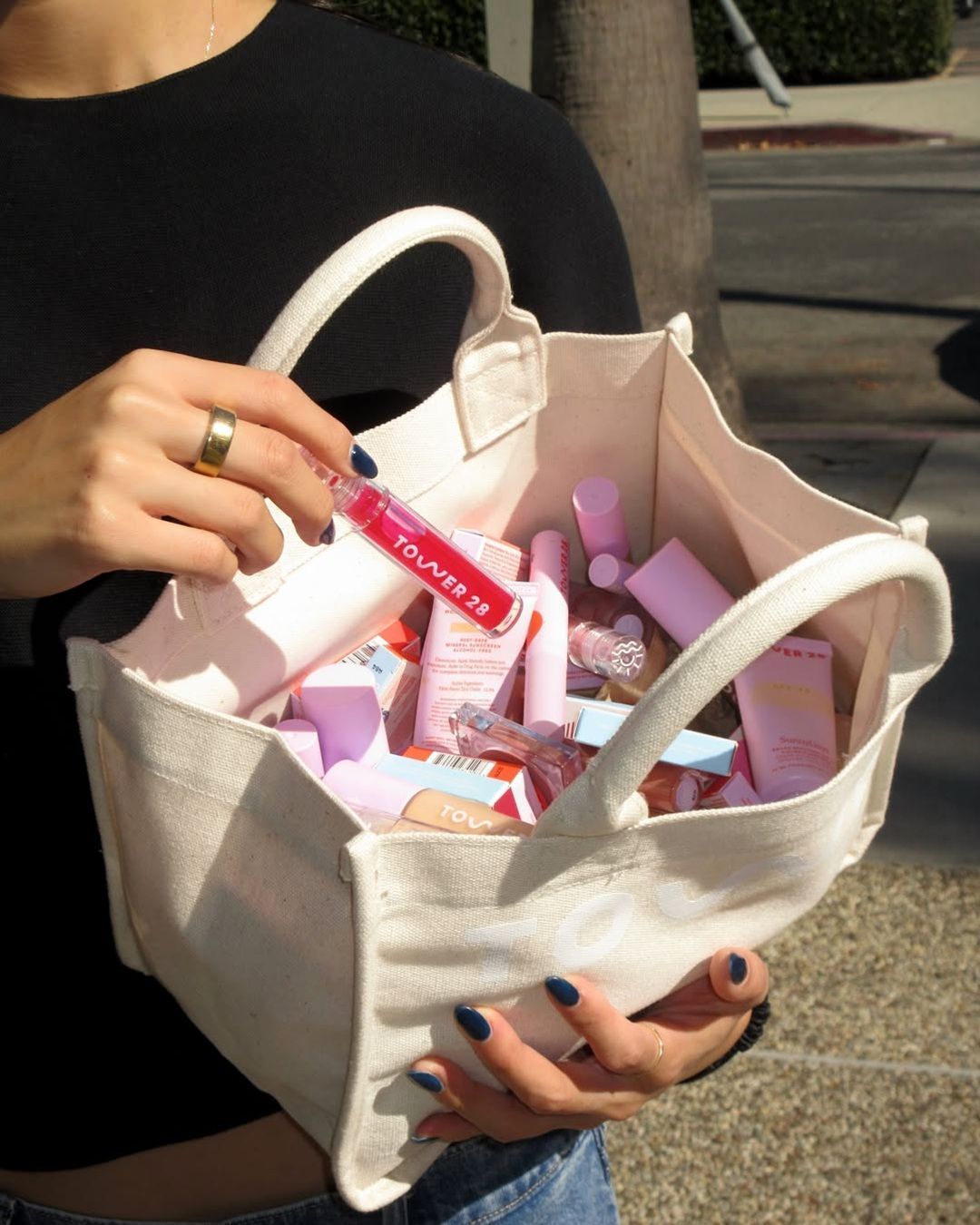
And it isn't just traditional cosmetics giants turning to Italy. As Susanna Macchia, beauty director at La Repubblica, explains in her newsletter, some of the most coveted names in the new generation of beauty brands also rely on Italian manufacturing. Rare Beauty, Selena Gomez's brand, Rhode, founded by Hailey Bieber, and Tower 28 are among the brands that, according to Macchia, manufacture part of their product ranges in Italy. Confidential agreements often make it difficult to identify the factories involved officially, but social media occasionally offers a glimpse behind the scenes. Selena Gomez visited a factory in Fornovo San Giovanni, in the province of Bergamo, sharing footage of the production process behind her Positive Light Tinted Moisturizer. Kylie Jenner, meanwhile, posted a video filmed during a visit to an Italian manufacturing facility responsible for some Kylie Cosmetics products, including blushes, foundations and pressed powders.
Formulas, robots and the next generation of beauty brands
A cosmetic product doesn't come into existence simply because someone wakes up one morning with the idea of a cherry-red blush. Before reaching beauty stores, it must pass through a cosmetic formulation laboratory, where raw materials are combined to achieve the colour, texture and performance specifications requested by the brand. Each formula then undergoes tests to assess its efficacy, stability and compatibility with its packaging. A waterproof mascara must withstand water, a cream must maintain its properties over time, and its container must not alter its composition. According to a report by Il Post, the approval process can take up to six months. And that's not all. In addition to complying with European regulations, every product must meet the requirements of its target markets and any additional restrictions imposed by individual brands. Ancorotti Cosmetics has a seven-person team dedicated to checking formulas and says it manages around 90 blacklists, or lists of ingredients that certain clients or markets prefer to exclude even when they are legally permitted. It's hardly the most Instagrammable part of the business, but it's essential to turning an idea into a product ready to hit the shelves. Meanwhile, make-up and skincare are increasingly overlapping. Intercos CEO Renato Semerari describes to Francesco Gaeta a growing demand for “hybrid, multifunctional products that combine aesthetic results, skincare benefits and comfort”. Formulas are becoming more ambitious, while their market lifespan is shrinking from five to seven years to just two or three. Keeping up requires flexible manufacturing facilities and significant technological investment. The most advanced, fully automated production lines can cost as much as €500,000. The clients themselves have changed, too. Alongside major international groups, manufacturers are now receiving enquiries from content creators, influencers, public figures and small digital entrepreneurs who have a community and an idea for a beauty brand, but lack the laboratories and technical expertise to bring it to life. According to Ancorotti's comments to Il Post, these new commissions account for approximately 30% of the company's business. So why not launch a brand of its own? The answer is pragmatic. It would mean “competing with some of our own clients”. For third-party manufacturers, the real luxury is being able to work with countless brands without having to become one themselves. And while founders pose for pictures with their latest launches, somewhere in Lombardy someone is already working on the next formula.
Made in Italy goes beyond the packaging
The Lombardy supply chain doesn't just manufacture cosmetics; it is also trying to build a stronger network across the industry. On 13 April 2026, the Lombardy Technological Cluster for Made in Italy – Cosmetics System was presented at Palazzo Lombardia, becoming the region's tenth recognised technological cluster. Its founding members include Ancorotti Cosmetics, REGI Laboratories, Omnicos Group, Lumson, Eurofins Cosmetics and Personal Care, the Municipality of Crema, REI – Reindustria Innovazione and the Cosmetics Technology Hub. Its goal is to pool expertise and resources to support innovation, technology transfer and the industry's competitiveness. Luca Fumagalli, chair of the Cluster's Scientific Committee and representative of the Polytechnic University of Milan, has emphasised that innovation isn't limited to product formulation, but also concerns the economic and environmental sustainability of manufacturing processes. This includes sustainable cosmetics packaging, from recycled materials to lighter containers that are easier to dispose of. But the story can't end with immaculate laboratories and robotised machinery. Cosmetics manufacturing also relies on the people who fill bottles, assemble palettes, apply labels and prepare packages, tasks that may be outsourced to external companies and subcontractors. This was precisely the issue raised by the Bergamo branch of the CGIL trade union during Beauty to Business in October 2026. The union highlighted the contractual and wage differences that can exist between workers employed within the same production cycle. It's a reminder to look at the entire supply chain without assuming that industrial excellence automatically translates into uniform working conditions. Made in Italy beauty is more than a label printed on the bottom of a bottle or a marketing slogan for the next advertising campaign. It's an entire ecosystem of expertise that allows a brand born in Los Angeles, an American celebrity or a French fashion house to turn an idea into a product capable of generating millions of views. The next time a blush takes over our For You Page, we might want to ask ourselves who actually made it. After all, the logo may be international, but the cosmetic's journey could have started in a factory somewhere on the Lombard plain.
What to read next

Black Friday beauty 2026: the beauty products actually worth buying
From hair styling tools to LED masks, including luxury skincare, perfumes, make-up and intimate wellness
Jennifer Lawrence, blepharoplasty and the obsession with an ever-wider gaze
Where did the hooded eyes go?