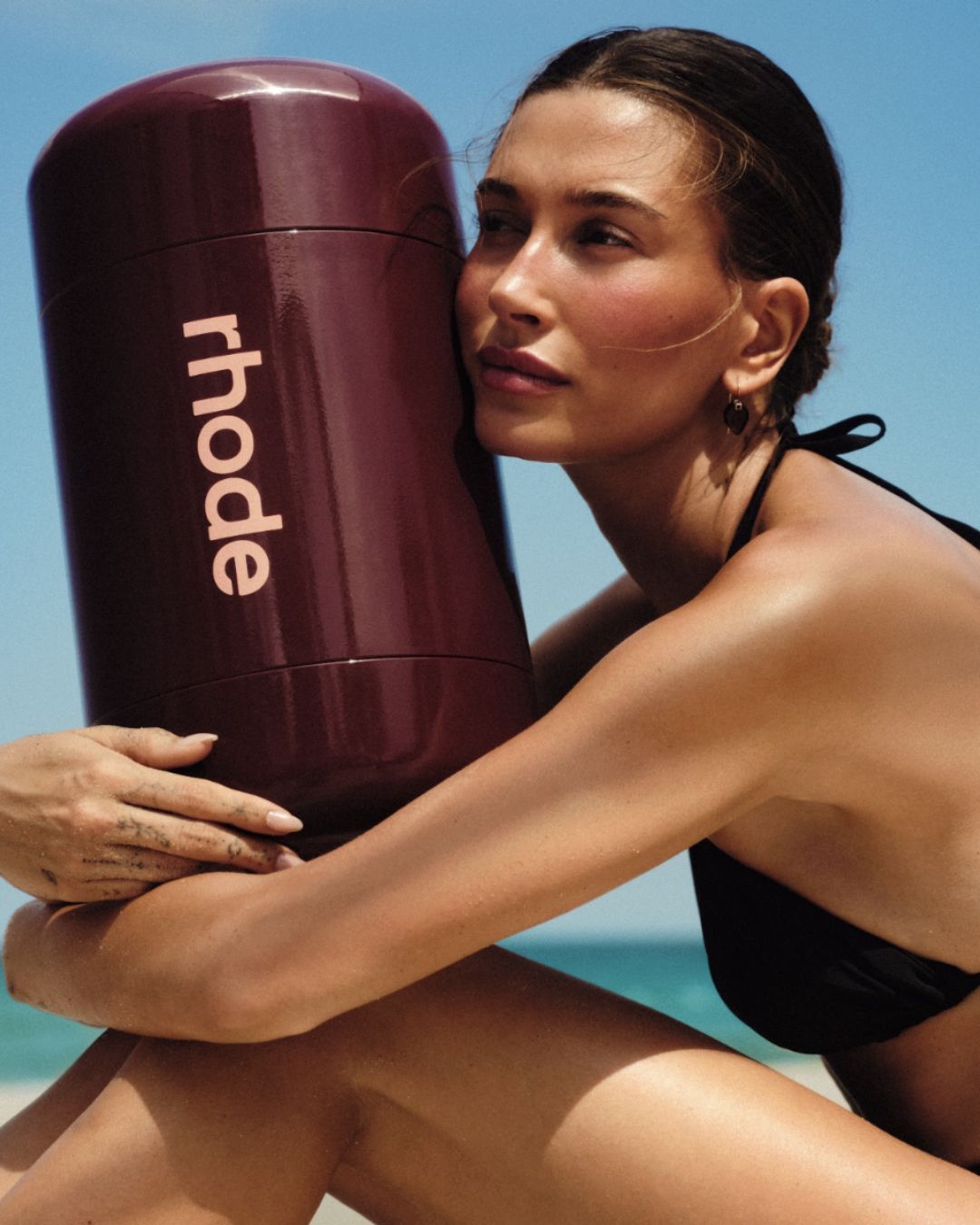
Hailey Bieber invests $5 million in women's health Rhode has partnered with the Foundation for Women's Health to support medical research
Hailey Bieber has built an empire around skincare, but her idea of beauty now seems to have ambitions that go well beyond a glazed donut complexion. The founder of Rhode has announced a $5 million, three-year partnership with the Foundation for Women’s Health, marking the brand’s largest philanthropic investment to date. The funding will support women’s health research, focusing on medical conditions that have long been overlooked. It is also a cause Bieber knows on a personal level. Following the birth of her son Jack Blues in 2024, she revealed that she had experienced premenstrual dysphoric disorder (PMDD), a particularly severe form of premenstrual syndrome. Pregnancy, childbirth and the postpartum period bring profound changes to the female body, yet research and conversations surrounding these experiences remain limited. “I feel very drawn to women’s health,” she told WWD. “When we’re able to relate to one another and talk about the struggles we’re going through, the journey feels less lonely.” Her own experiences, along with those of women close to her, have helped make this cause a priority.
Rhode: $5 million to address the gender gap in medicine
The funding will support medical research, education and healthcare, focusing on historically underfunded areas including maternal health, postpartum care and autoimmune diseases. Research institutions across the United States have already submitted proposals, with grant recipients expected to be announced in 2027. The partnership also includes the creation of the Foundation for Women’s Health Evergreen Fund, to which Rhode will contribute $1 million. The fund will invest in companies developing diagnostic tools and treatments for women’s health, reinvesting its proceeds into future research. The goal is to help innovation move from the laboratory to the market, ensuring promising discoveries do not remain confined to theory. Katy Brodsky Falco, founder and executive director of the Foundation for Women’s Health, highlights how the partnership provides not only financial resources but also visibility that an independent organization would struggle to achieve on its own. Because for scientific discoveries to make a real difference, they must translate into faster diagnoses, accessible treatments and tools that can genuinely improve patients’ lives. The problem, after all, is not simply a lack of funding, but the gender gap in medical research, meaning the persistent shortage of studies dedicated to several women-specific health conditions. For decades, the female body has been studied through an incomplete lens, leaving many conditions in a grey area between delayed diagnoses, dismissed symptoms and limited awareness. Endometriosis, premenstrual syndrome and pregnancy-related complications are just some of the areas where significant gaps remain. And while the beauty industry has learned to sell women increasingly sophisticated versions of self-care, medicine still has to contend with a structural lack of attention. The investment builds on the work of the Rhode Futures Fund, which allocated $2 million to ten organizations supporting mothers and caregivers between 2025 and 2026. Rhode also contributed $1 million to support families affected by the 2025 Los Angeles wildfires.
Hailey Bieber, beauty business success and the responsibility to do something
The announcement comes at a particularly successful moment for Rhode. Acquired by Elf Beauty in 2025 in a deal valued at up to $1 billion, the brand has continued to exceed expectations. In May 2026, the company reported that Rhode had reached more than $500 million in annualized global retail sales and approximately $390 million in net sales for fiscal year 2026, representing growth of more than 80% compared with the previous year. These are impressive figures for a brand launched in 2022 with just three products, one that has managed to turn Bieber’s personal aesthetic into a recognizable, desirable universe that can be endlessly replicated across social media. Rhode’s success demonstrates that the contemporary beauty economy sells more than formulas and ingredients: it sells imagery, lifestyles and a sense of belonging. In this context, philanthropy also becomes a form of responsibility for those with enough resources and visibility to bring overlooked issues to a massive audience. The risk, of course, is that women’s health becomes absorbed into branding strategies, turning into yet another trend that fades after a season or a new skincare category. What will make the difference is the results, the transparency of funding and the ability to support concrete projects over time. Because talking about the gender gap in medical research matters, but funding studies, developing treatments and improving access to care matter even more. As Rhode continues to expand internationally, Bieber seems determined to redefine the ambitions of her project. The goal is not simply to build a brand capable of selling millions of products, but a business that can invest in issues affecting millions of women. Because skincare can wait a few minutes. Women’s health research, decidedly less so.
What to read next

Warsaw launches the world’s first abortion pill dispenser
A pink locker to circumvent Poland’s abortion restrictions and make medications for voluntary termination of pregnancy more accessible

Women-only gyms: the boom of a trend that says much more than fitness
It highlights the shift in attitudes toward fitness, women's health, and safer workout environments