




































Pierre Laroche, the make-up artist who changed the face of glam rock And not only that
If you’ve ever been even remotely interested in makeup or music, you’ve probably come across the name Pierre Laroche. A French makeup artist, he worked across fashion, music and cinema, becoming one of the most interesting figures of the beauty scene in the Seventies, as well as the man behind David Bowie’s many faces. Here’s who Pierre Laroche was.
Pierre Laroche, the makeup artist who changed the face of glam rock
A makeup artist who played by his own rules
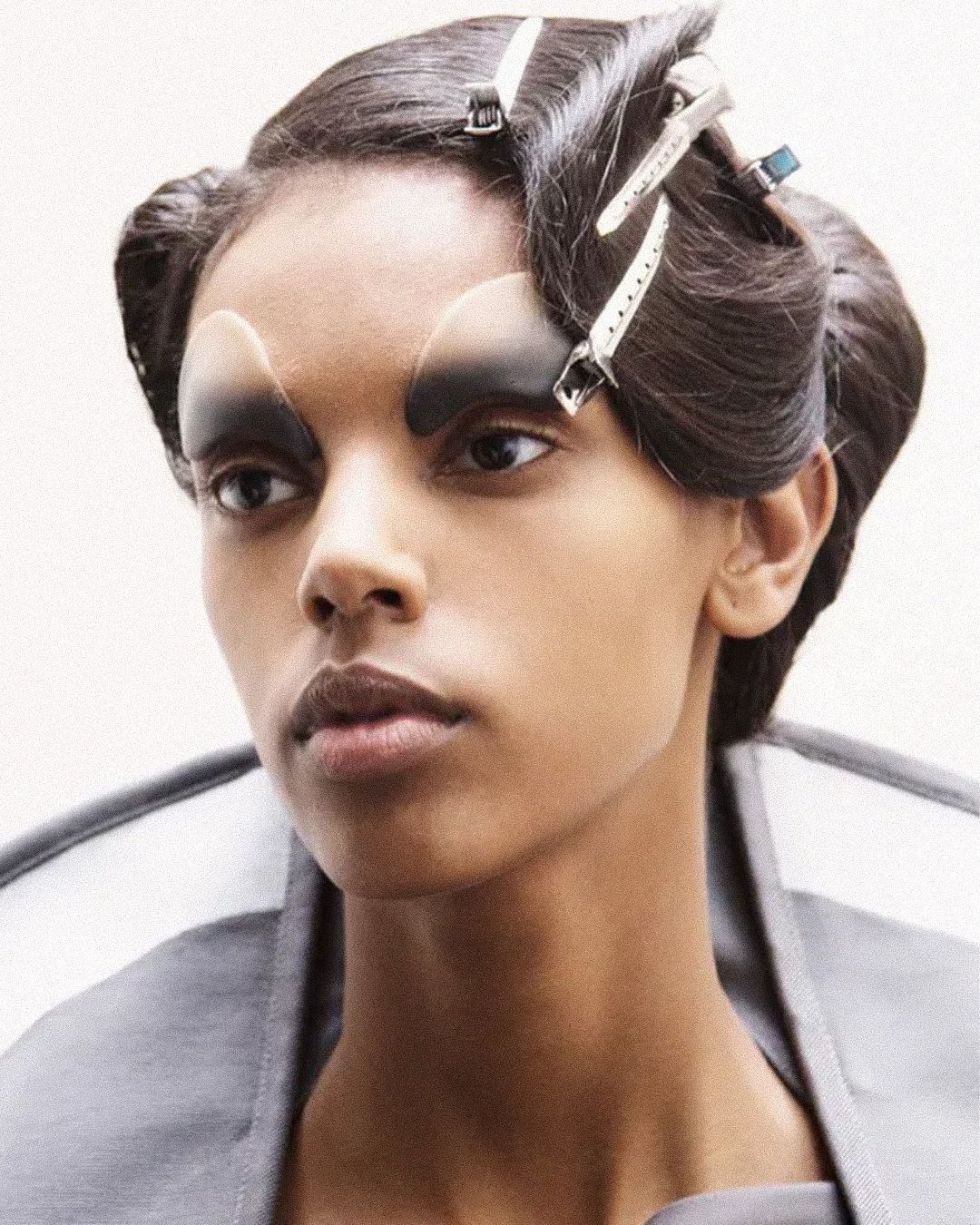
Born in Algiers in 1946, Laroche first became interested in makeup by watching the women around him apply kohl to their eyes. That relationship with pigment, contrast and definition remained a constant thread throughout his work. Laroche moved to London at the end of the Sixties and began working for Elizabeth Arden, but his approach to makeup was too innovative and didn’t fit with the conventional standards of the cosmetics company. When he left in 1972 to work as a freelancer, London was in the middle of the glam era. Surrounded by musicians, photographers, designers and performers, image was everything, and Laroche found himself in an environment where he could finally experiment. His signature would become glitter, which he didn’t simply use to add luminosity, but to make makeup feel more alive, almost three-dimensional. In his makeup looks, colour and texture become something that takes up space on the face rather than simply completing it. For him, the face becomes a real canvas to finally let loose on.
Bowie and the creation of a thousand characters
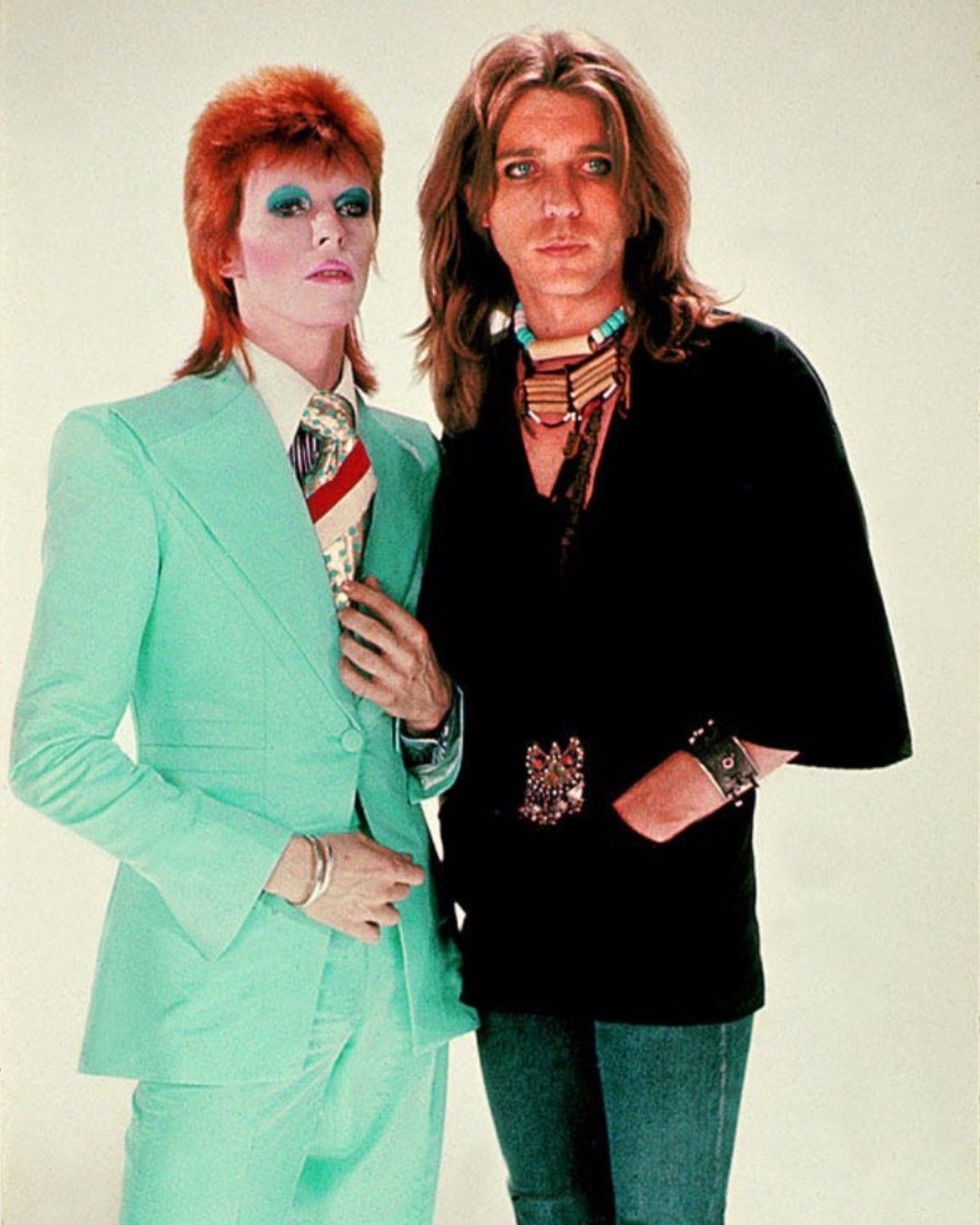
Meeting David Bowie led him to create some of the most important work of his career. For Ziggy Stardust, Laroche worked with very pale skin, defined eyes, red lips and the small golden circular detail on the forehead. For Aladdin Sane, meanwhile, came the red and blue lightning bolt that cuts across Bowie’s face, becoming one of the most recognisable elements of his entire career. Laroche’s work always started with the face in front of him. He knew Bowie’s proportions, his cheekbones, his mouth. It wasn’t simply about applying an image to the face: the makeup had to work with the features of the person wearing it. That’s what makes his approach so interesting: Laroche didn’t think of makeup as something that necessarily had to correct or make a face more harmonious. What interested him was changing the way the face itself was perceived. An eye could look bigger, skin could become almost unreal, a simple line of colour could completely change the way a face was read.
Mick Jagger, Frank-N-Furter and everything else
After Bowie, things only kept growing. He worked with Mick Jagger, Twiggy, Bianca Jagger and Nona Hendryx and brought his visual language to cinema with The Rocky Horror Picture Show. In fact, he was the one who created the look of Frank-N-Furter, played by Tim Curry. In the following years, his work also made its way into fashion magazines, where that freedom became part of an editorial language. With Pierre Laroche, makeup became theatrical and deliberately artificial; it could demand attention instead of trying to go unnoticed. This is what Laroche left behind in the beauty world: the possibility of treating the face as part of the image, on the same level as clothes, hair and styling. Makeup can be a form of personal escape, it can change the way we perceive ourselves and completely transform us.