


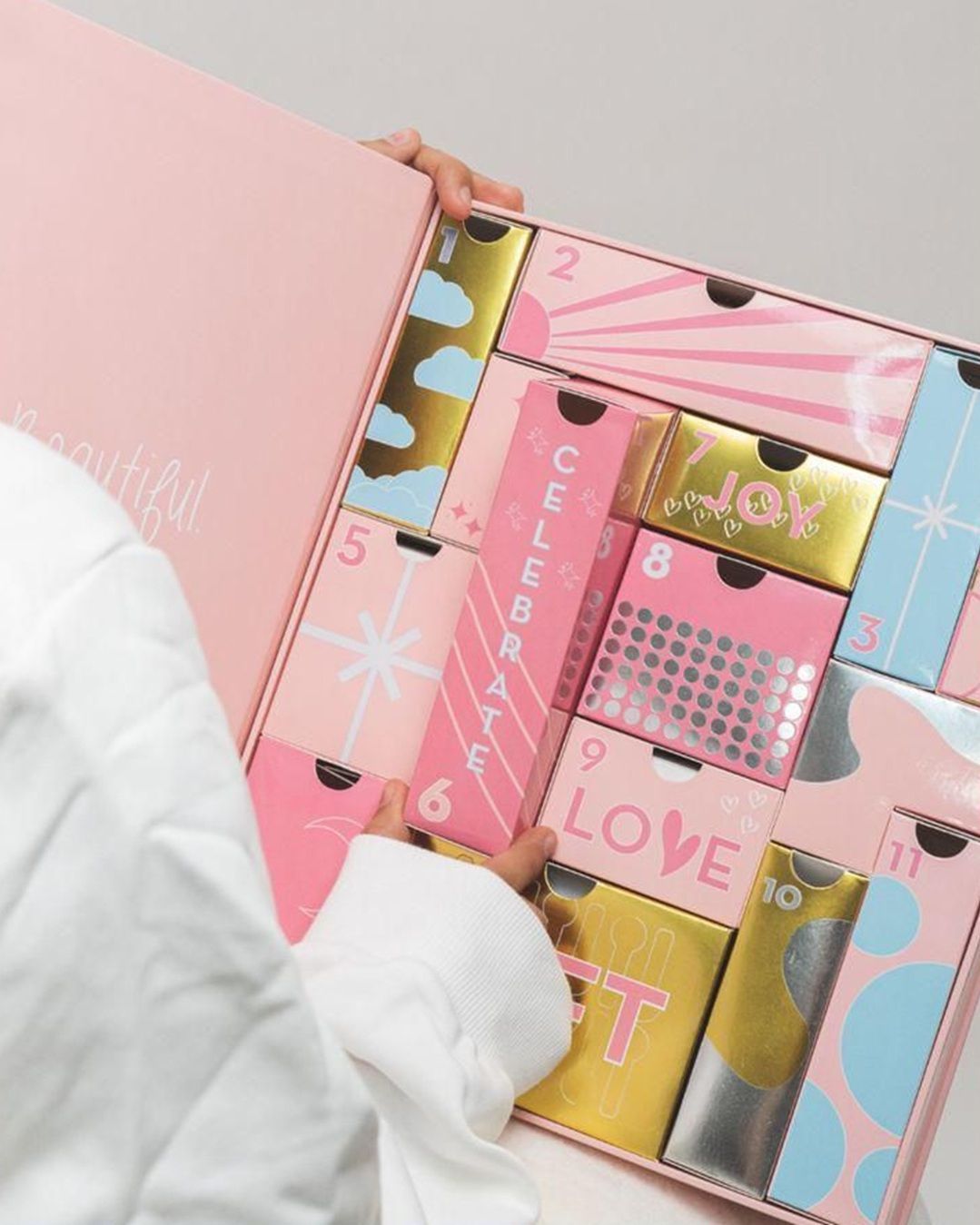
We don't need all these Advent calendars From the viral SKIMS controversy to endless beauty launches, the Christmas countdown has become yet another excuse to buy something we probably don't need
$148 for twelve days of surprises, although there's very little that's actually surprising about them. That's the price of the 2026 SKIMS Advent Calendar, from the brand founded by Kim Kardashian, which found itself at the centre of a social media controversy after customers started sharing videos of their unboxings. Instead of clothing items or the brand's iconic products, the little compartments mostly contained hair ties, bobby pins, claw clips, keychains and small accessories. The disappointment was enough to push SKIMS to offer customers either a full refund or store credit to spend online or in-store. The whole affair has reignited a question that, at this point, concerns pretty much everyone: how many Advent calendars do we actually need? After all, if we're already busy commenting on what's inside each compartment before December has even begun, perhaps we've lost sight of the tradition's original purpose. Originally designed to mark the days leading up to Christmas, Advent calendars now seem to have anticipated even their own reason for existing: before we can enjoy the wait, we need to know what's waiting for us. And preferably show everyone else, too.
The Advent calendar market: beauty and make-up take the lead
The Advent calendar business has grown into a major market. According to data released by idealo in 2025, online searches for these products increased by 347% between September 15 and October 13 compared with the same period the previous year, with more than half specifically concerning beauty, skincare and make-up Advent calendars. Available options include Sephora (€59.99 to €99.99), Douglas (€36.99 to €79.99), Beauty of Joseon (€112.39), as well as luxury names such as Dior (€7,500), Guerlain (€620), Giorgio Armani (€380.99) and Byredo (€715). And that's just a small selection. The proliferation of product categories, in fact, seems to know no limits: alongside the classic chocolate Advent calendars, there are now versions dedicated to jewellery, tea, books, toys and even pets. Since last year, there's even been one featuring Beretta Salamini sausages.
Why do we love Advent calendars so much?
But why does this format have such a strong hold on us? Part of the answer lies in our almost childlike relationship with anticipation. Many of us grew up opening Advent calendar compartments, back when they were much simpler, made of fabric or cardboard, or filled with a little chocolate surprise. It's a ritual that adds a touch of magic to an especially meaningful time of year. As we've grown older, however, the contents of those little compartments have changed along with our desires. A beauty Advent calendar, for example, can give us the chance to try products we might not be able to afford in their full-size versions, bringing us closer to brands that would normally be out of reach. Alternatively, it can let us discover several products without having to settle for just one. The total value of the products inside an Advent calendar, often higher than the calendar's retail price, also reinforces this perception: a promise of savings (which isn't always fulfilled) that makes the purchase even more tempting. The problem is that it's unlikely all twenty-four surprises will match our tastes. More often than not, we end up buying a collection of products when there's only a handful we actually want.
And why do brands love them?
For brands, on the other hand, the formula is particularly advantageous. A calendar allows them to bundle multiple products into a single purchase, introduce customers to less popular items, build brand loyalty and attract new consumers. It's also a way to turn a selection of products, some of which may already be part of their regular range, into an exclusive limited-edition release. Then there's the social media factor: an Advent calendar is practically a ready-made content format. Twenty-four little compartments, twenty-four potential posts, and just as many opportunities to showcase products and compare our surprises with everyone else's.
When anticipation turns into content
And this is where a rather obvious contradiction comes into play: an Advent calendar is supposed to celebrate the pleasure of anticipation, yet increasingly, people open the whole thing at once in front of a camera. Twenty-four days are compressed into a few minutes of Advent calendar unboxing, turning a daily ritual into content to be published and consumed immediately. The SKIMS case is a perfect example: even customers' disappointment has turned into a huge visibility opportunity for the brand. In an ecosystem where controversies generate views too, even a product deemed mediocre can attract the kind of attention that a conventional advertising campaign might struggle to achieve.
The environmental issue: packaging waste shouldn't be overlooked
There's another issue, less spectacular but considerably more tangible: the environmental impact of Advent calendars. In an article published by The Guardian, several environmental organisations criticised the growing popularity of Advent calendars for adults, describing them as an example of unnecessary consumerism. Anna Diski, a Greenpeace UK activist, pointed out that out of twenty-four products, often only two or three are genuinely wanted, while the rest risk becoming pointless purchases. Daniel Webb, founder of the organisation Everyday Plastic, described these calendars as a symbol of a system that keeps producing objects we simply don't need. Many will end up forgotten in a drawer or thrown straight into the bin, while their boxes and packaging contribute to the growing amount of plastic and cardboard waste. So no, we don't need all these Advent calendars (and, just to be clear, the person writing this is certainly not immune to their appeal…). We can buy separately whatever we actually need or want. As for the ritual of anticipation, perhaps it's time to go back to the good old cardboard Advent calendar filled with chocolates. It might not make for particularly exciting TikTok content, but it will make us feel like children again, at least for a little while.